Department of Chemistry, Biochemistry and Pharmaceutical Sciences, University of Bern, Freiestrasse 3, 3012 Bern, Switzerland.
Graduate School for Cellular and Biomedical Sciences, University of Bern, Bern, Switzerland.
Nucleic Acids Res. 2021 Feb 22;49(3):1647-1661. doi: 10.1093/nar/gkaa1261.
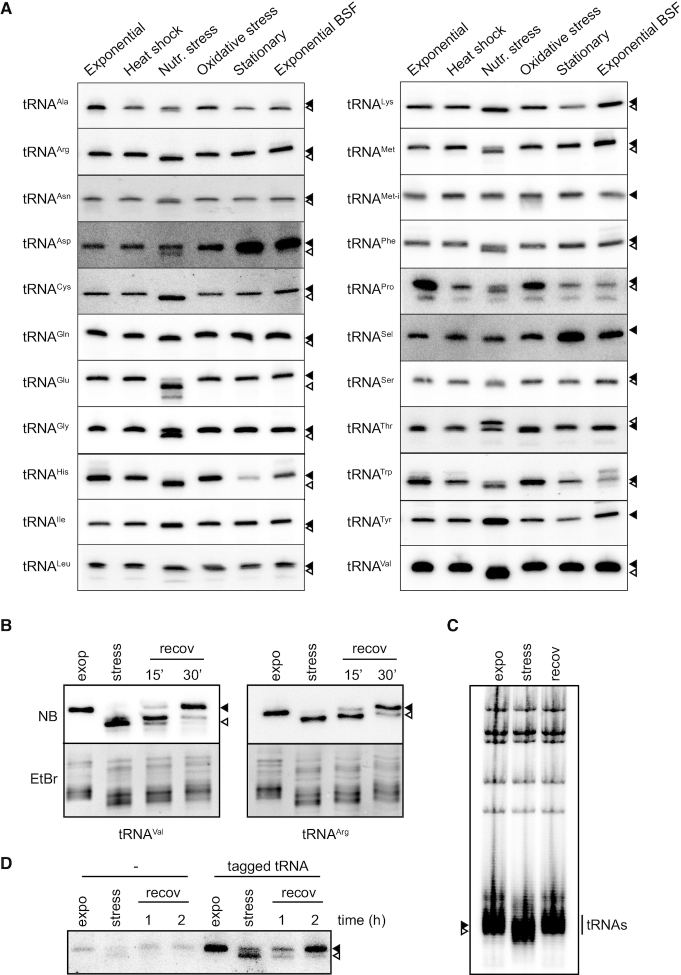
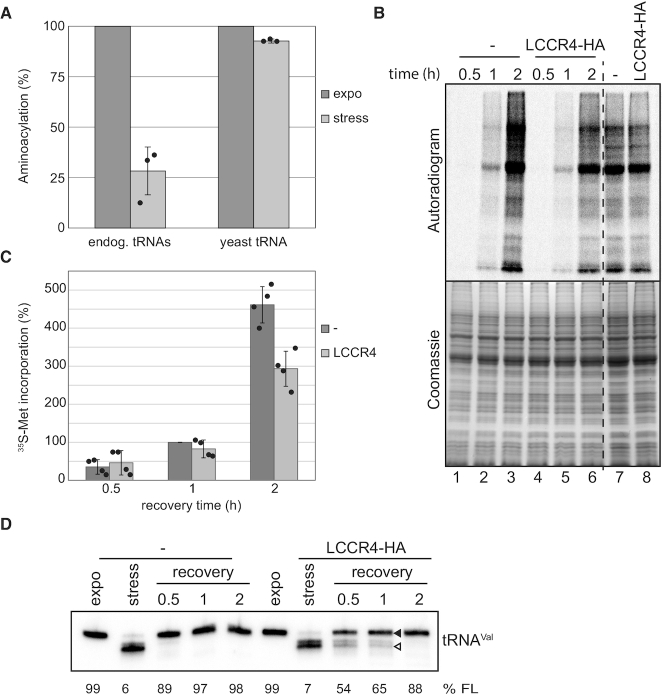
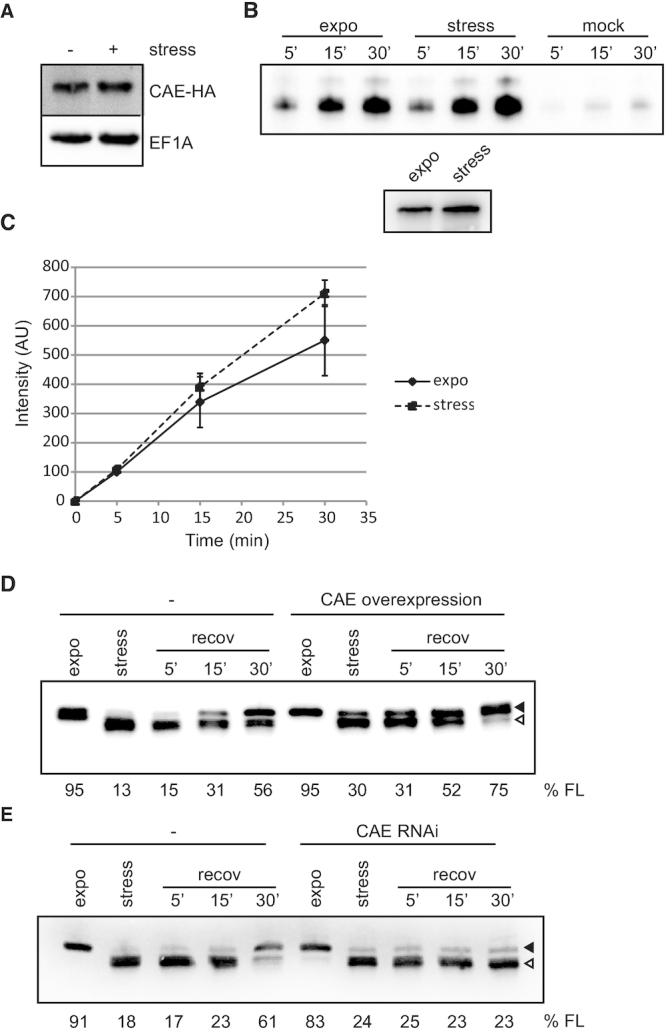
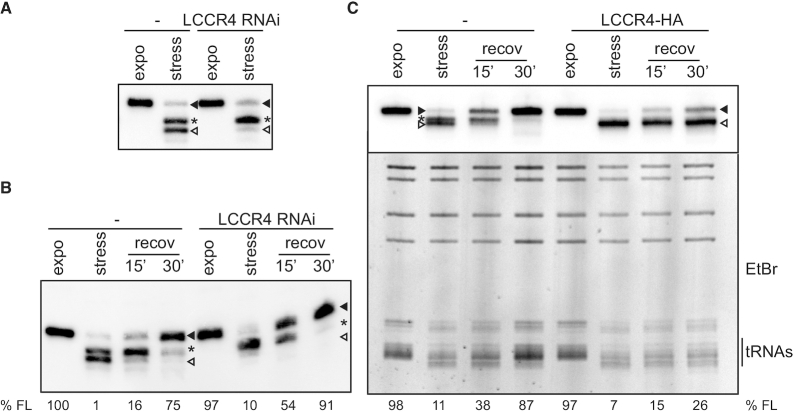
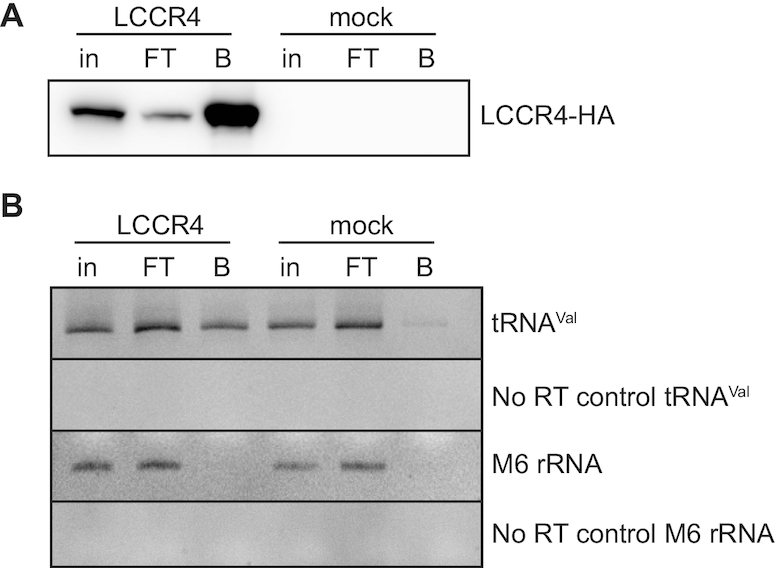
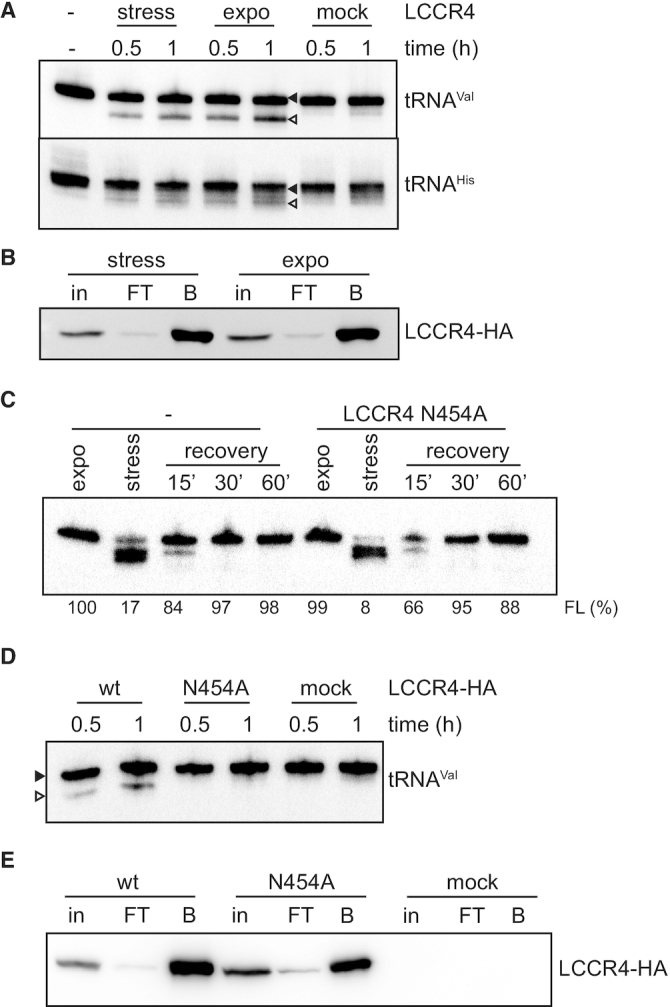
Sensing of environmental cues is crucial for cell survival. To adapt to changes in their surroundings cells need to tightly control the repertoire of genes expressed at any time. Regulation of translation is key, especially in organisms in which transcription is hardly controlled, like Trypanosoma brucei. In this study, we describe the shortening of the bulk of the cellular tRNAs during stress at the expense of the conserved 3' CCA-tail. This tRNA shortening is specific for nutritional stress and renders tRNAs unsuitable substrates for translation. We uncovered the nuclease LCCR4 (Tb927.4.2430), a homologue of the conserved deadenylase Ccr4, as being responsible for tRNA trimming. Once optimal growth conditions are restored tRNAs are rapidly repaired by the trypanosome tRNA nucleotidyltransferase thus rendering the recycled tRNAs amenable for translation. This mechanism represents a fast and efficient way to repress translation during stress, allowing quick reactivation with a low energy input.
环境线索的感知对细胞存活至关重要。为了适应周围环境的变化,细胞需要严格控制任何时候表达的基因组合。翻译的调控是关键,特别是在转录几乎不受控制的生物中,如布氏锥虫。在这项研究中,我们描述了在应激条件下,细胞 tRNA 的大部分被缩短,而保守的 3' CCA-尾则被牺牲。这种 tRNA 缩短是营养应激特异性的,使 tRNA 不再适合作为翻译的底物。我们发现核酸内切酶 LCCR4(Tb927.4.2430)是保守脱腺苷酶 Ccr4 的同源物,负责 tRNA 的修剪。一旦恢复最佳生长条件,锥虫 tRNA 核苷酸转移酶就会迅速修复 tRNA,使回收的 tRNA 可用于翻译。这种机制代表了一种在应激期间快速有效地抑制翻译的方法,只需低能量输入即可快速重新激活。