Picton Aled
College of Medical and Dental Sciences, University of Birmingham, Edgbaston, Birmingham, B15 2TT, UK.
BMC Med Educ. 2021 Jan 6;21(1):8. doi: 10.1186/s12909-020-02434-5.
Work-life balance is a key contributor to doctors' wellbeing and consequently is a central factor in their career decisions. General Medical Council guidance outlines the importance of work-life balance as part of compassionate self-care. Learning self-care should begin as an undergraduate, when academic and clinical workload can contribute to stress, anxiety and burnout.
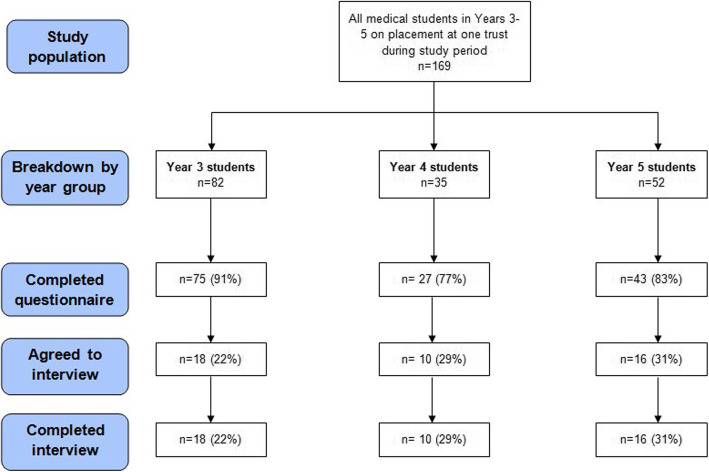
Sequential mixed methods study of medical students in Years 3-5 at the University of Birmingham, UK. Students (n = 145) defined work-life balance in free-text answers and self-assessed their current work-life balance via questionnaires. Following this, a sub-sample of students (n = 44) participated in exploratory individual mini-interviews.
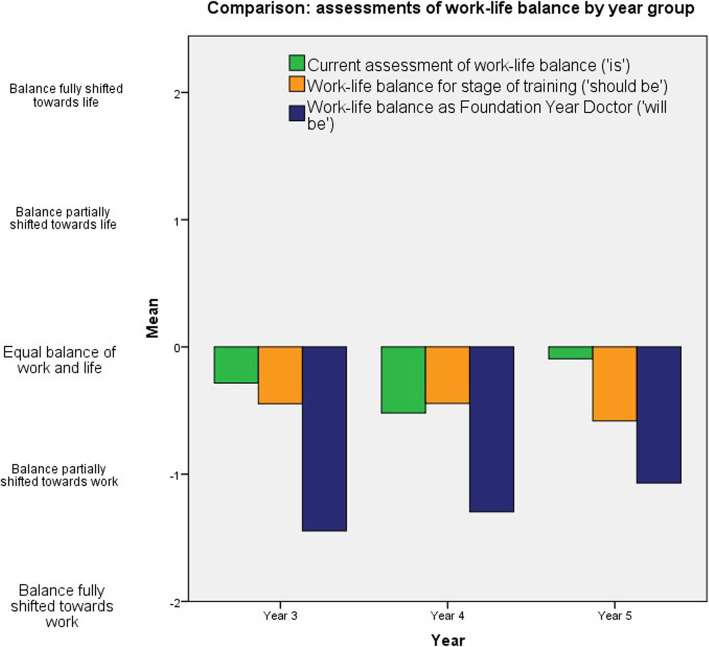
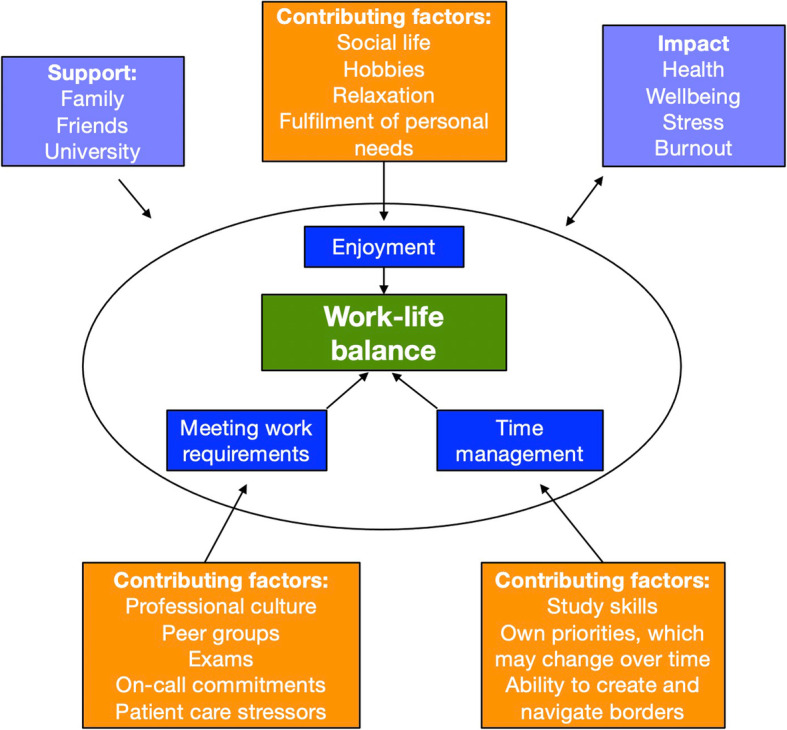
Work-life balance emerged as a broad and multifactorial concept. Questionnaire respondents most frequently referenced enjoyment, meeting work requirements and time management in their definitions. Interview participants highlighted additional influencing factors such as peer groups, study skills, family and professional culture. Students expect a significant shift towards work after graduating and expressed concerns about the stresses of delivering patient care. 42% (n = 60) of students felt they had received support with their work-life balance during their training, mostly from family and friends. Most students had not received support or advice on their work-life balance from University or hospital staff.
Self-care and work-life balance are essential for medical students and doctors to cope with lifelong learning and deliver effective care. Medical school staff should be pro-active in supporting students to develop these skills, particularly during critical transition periods. Early interventions targeting study skills and time management may be beneficial. Further research should include students in Years 1-2 and compare different institutions.
工作与生活的平衡是医生幸福感的关键因素,因此也是他们职业决策的核心要素。英国医学总会的指导方针概述了工作与生活平衡作为富有同情心的自我关怀一部分的重要性。自我关怀的学习应从本科阶段开始,此时学术和临床工作量可能会导致压力、焦虑和职业倦怠。
对英国伯明翰大学3至5年级的医学生进行顺序混合方法研究。学生(n = 145)通过自由文本回答定义工作与生活的平衡,并通过问卷调查对自己当前的工作与生活平衡进行自我评估。在此之后,一部分学生样本(n = 44)参与了探索性的个人小型访谈。
工作与生活的平衡是一个广泛且多因素的概念。问卷调查的受访者在定义中最常提到享受、满足工作要求和时间管理。访谈参与者强调了其他影响因素,如同伴群体、学习技能、家庭和职业文化。学生们预计毕业后工作会有重大转变,并对提供患者护理的压力表示担忧。42%(n = 60)的学生觉得他们在培训期间在工作与生活平衡方面得到了支持,主要来自家人和朋友。大多数学生没有从大学或医院工作人员那里得到关于工作与生活平衡的支持或建议。
自我关怀和工作与生活的平衡对于医学生和医生应对终身学习以及提供有效的护理至关重要。医学院校工作人员应积极支持学生培养这些技能,尤其是在关键的过渡时期。针对学习技能和时间管理的早期干预可能会有所帮助。进一步的研究应纳入1至2年级的学生,并比较不同的机构。