Ach Medical University, Peace Avenue-11, Songino-Khairkhan district-18, Ulaanbaatar, Mongolia.
Institute of Public Health, National Yang-Ming University, (112) 155 Linong St. Sec 2, Peitou, Taipei, Taiwan.
Int J Equity Health. 2021 Jan 6;20(1):7. doi: 10.1186/s12939-020-01343-9.
High out-of-pocket health expenditure is a common problem in developing countries. The employed population, rather than the general population, can be considered the main contributor to healthcare financing in many developing countries. We investigated the feasibility of a parallel private health insurance package for the working population in Ulaanbaatar as a means toward universal health coverage in Mongolia.
This cross-sectional study used a purposive sampling method to collect primary data from workers in public and primary sectors in Ulaanbaatar. Willingness to pay (WTP) was evaluated using a contingent valuation method and a double-bounded dichotomous choice elicitation questionnaire. A final sample of 1657 workers was analyzed. Perceptions of current social health insurance were evaluated. To analyze WTP, we performed a 2-part model and computed the full marginal effects using both intensive and extensive margins. Disparities in WTP stratified by industry and gender were analyzed.
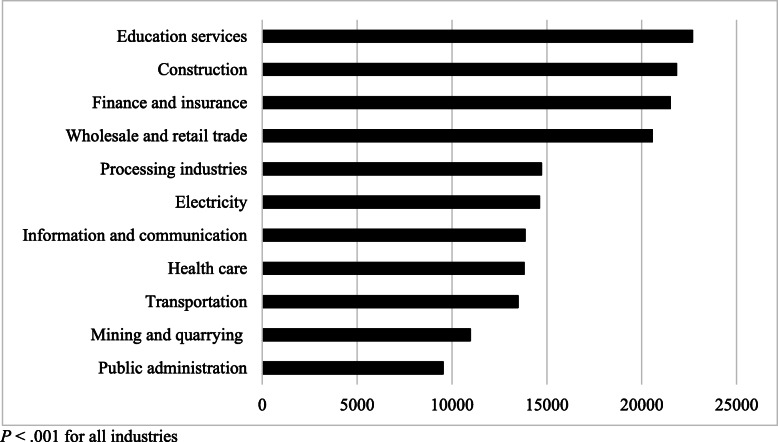
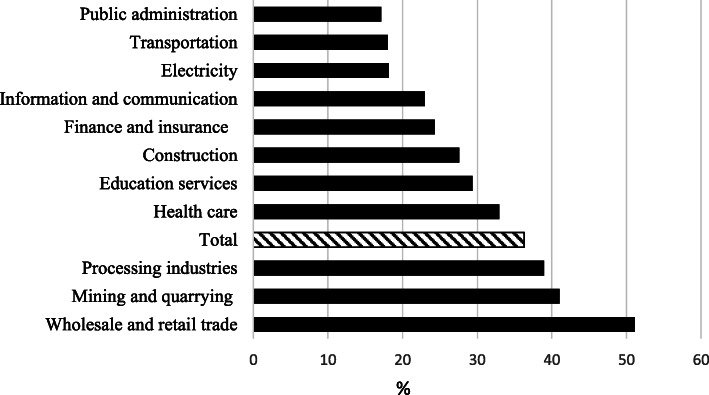
Only < 40% of the participants were satisfied with the current mandatory social health insurance in Mongolia. Low quality of service was a major source of dissatisfaction. The predicted WTP for the parallel private health insurance for men and women was Mongolian Tugrik (₮)16,369 (p < 0.001) and ₮16,661 (p < 0.001), respectively, accounting for approximately 2.4% of the median or 1.7% of the average salary in the country. The highest predicted WTP was found for workers from the education industry (₮22,675, SE = 3346). Income and past or current medical expenditures were significantly associated with WTP.
To reduce out-of-pocket health expenditure among the working population in Ulaanbaatar, Mongolia, supplementary parallel health insurance is feasible given the predicted WTP. However, given high variations among different industries and sectors, different incentives may be required for participation.
高自付医疗支出是发展中国家的一个常见问题。在许多发展中国家,有工作的人群而非普通民众被认为是医疗保健融资的主要贡献者。我们研究了在蒙古国乌兰巴托为劳动人口推出平行私人健康保险计划的可行性,以期实现全民健康覆盖。
本横断面研究采用目的抽样法,从乌兰巴托公共和初级部门的工人中收集原始数据。使用条件价值评估法和双边界二分选择 elicitation 问卷评估支付意愿 (WTP)。对 1657 名工人进行了分析。评估了对当前社会健康保险的看法。为了分析 WTP,我们进行了 2 部分模型,并使用密集和广泛的边缘分别计算了完全边际效应。分析了按行业和性别划分的 WTP 差异。
只有不到 40%的参与者对蒙古当前强制性社会健康保险感到满意。服务质量低是不满的主要原因。男性和女性对平行私人健康保险的预测 WTP 分别为蒙古图格里克 (₮)16369(p<0.001)和₮16661(p<0.001),分别占该国中位数的 2.4%或平均工资的 1.7%左右。教育行业的工人预测的 WTP 最高(₮22675,SE=3346)。收入和过去或当前的医疗支出与 WTP 显著相关。
为了降低乌兰巴托劳动人口的自付医疗支出,在预测的 WTP 基础上,推出补充平行健康保险是可行的。然而,鉴于不同行业和部门之间存在较大差异,可能需要不同的激励措施来参与。