Department of Pathology, the First Affiliated Hospital of Xi'an Jiaotong University, 277 West Yanta Road, 710061, Xi'an, Shaanxi, China.
Department of Structural Heart Disease, the First Affiliated Hospital of Xi'an Jiaotong University, Xi'an, China.
J Ovarian Res. 2021 Jan 6;14(1):4. doi: 10.1186/s13048-020-00752-2.
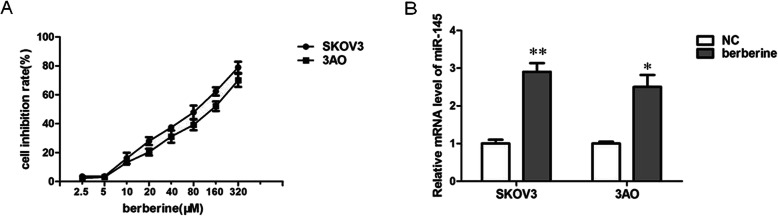
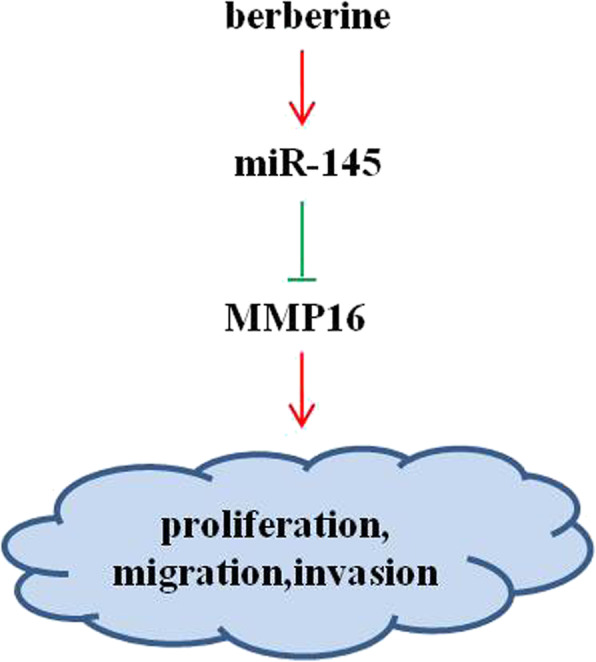
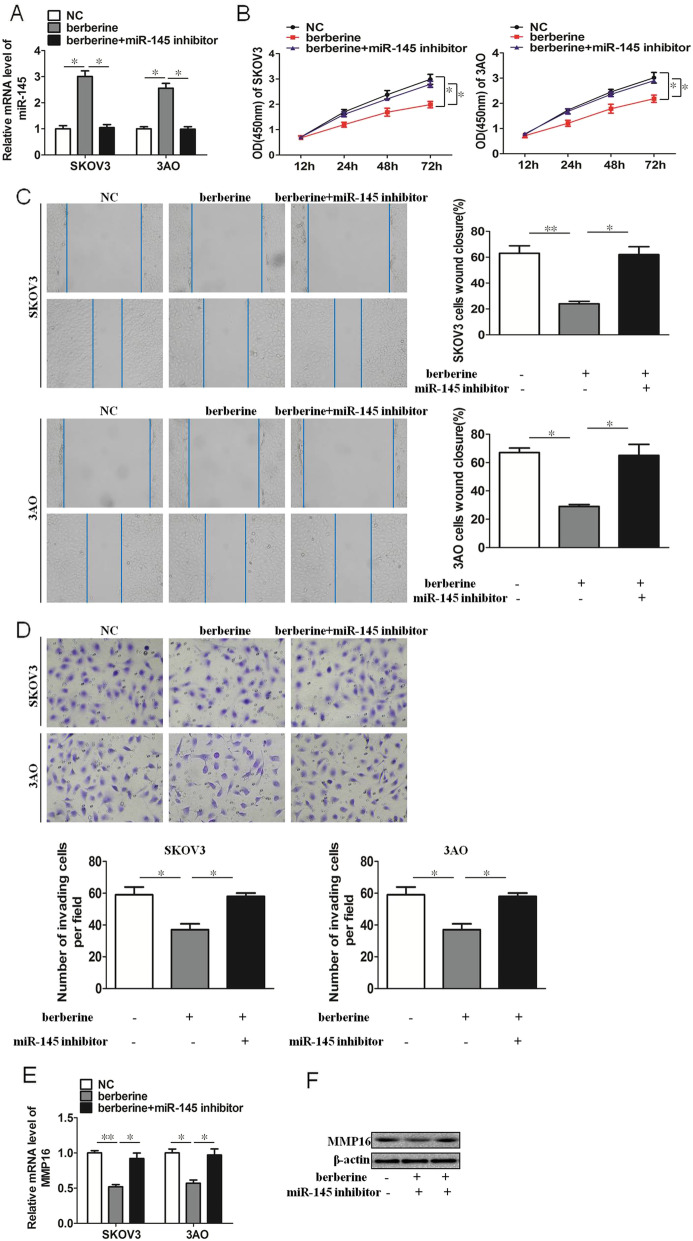
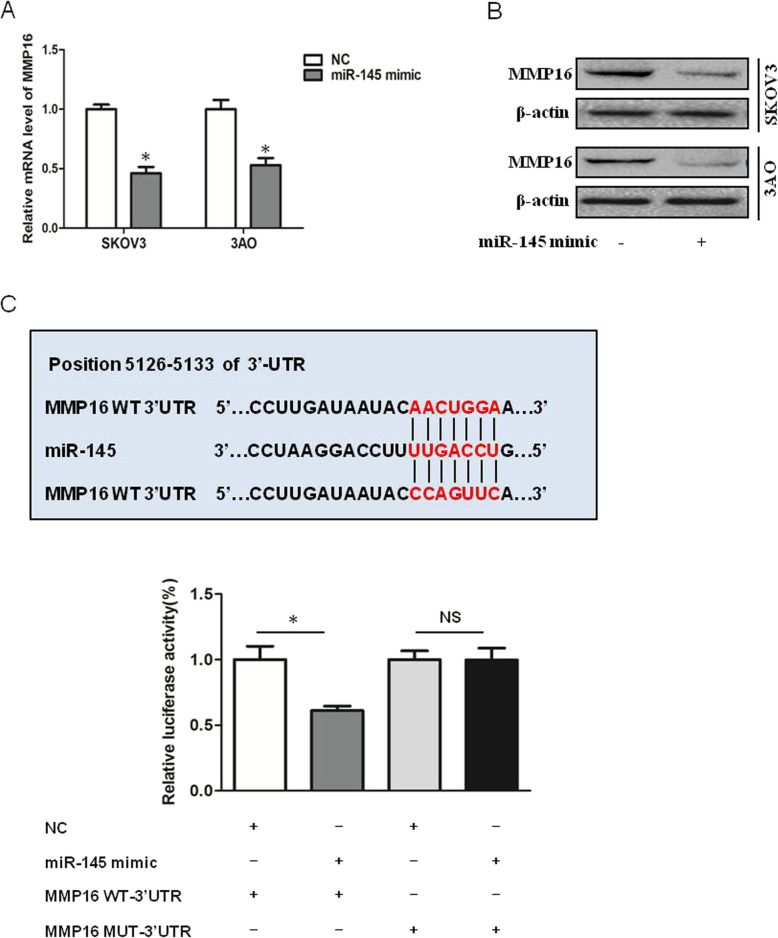
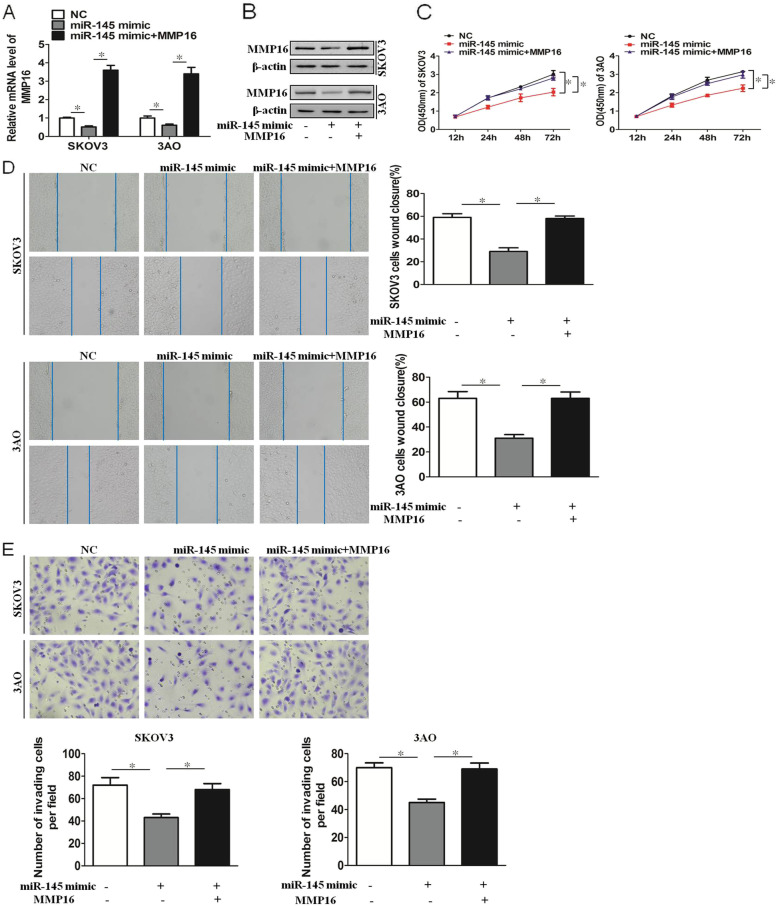
Ovarian cancer is the first leading cause of death in gynecological cancers. The continuous survival and metastasis of cancer cells are the main causes of death and poor prognosis in patients with ovarian cancer. Berberine is an effective component extracted from the rhizomes of coptis chinensis and phellodendron chinensis. In our study, we aim to explore the molecular mechanism underlying the regulation of proliferation, migration and invasion by berberine in ovarian cancer cells. CCK8 assay was used for detection of proliferative capacity of SKOV3 and 3AO cells. Wound healing assay was used to estimate cell migration and transwell assay was used to assess cell invasion. The mRNA expression of miR-145 and MMP16 were examined by quantitative real-time polymerase chain reaction (qRT-PCR). The protein level of MMP16 was detected by western blot analysis. In addition, luciferase reporter assays were used to demonstrate MMP16 was a target of miR-145. The results demonstrated berberine inhibited proliferation, migration and invasion, promoted miR-145 expression, and decreased MMP16 expression in SKOV3 and 3AO cells. MMP16 was a target of miR-145. Moreover, downregulation of MMP16 contributed to the inhibition of proliferation, migration and invasion by berberine. Together, our results revealed that berberine inhibited proliferation, migration and invasion through miR-145/MMP16 in SKOV3 and 3AO cells, highlighting the potentiality of berberine to be used as a therapeutic agent for ovarian cancer.
卵巢癌是妇科癌症死亡的首要原因。癌细胞的持续存活和转移是卵巢癌患者死亡和预后不良的主要原因。小檗碱是从黄连和黄柏的根茎中提取的有效成分。在我们的研究中,我们旨在探讨小檗碱调节卵巢癌细胞增殖、迁移和侵袭的分子机制。CCK8 检测用于检测 SKOV3 和 3AO 细胞的增殖能力。划痕愈合实验用于评估细胞迁移,Transwell 实验用于评估细胞侵袭。通过实时定量聚合酶链反应(qRT-PCR)检测 miR-145 和 MMP16 的 mRNA 表达。通过 Western blot 分析检测 MMP16 的蛋白水平。此外,还使用荧光素酶报告实验证明 MMP16 是 miR-145 的靶基因。结果表明,小檗碱抑制 SKOV3 和 3AO 细胞的增殖、迁移和侵袭,促进 miR-145 的表达,降低 MMP16 的表达。MMP16 是 miR-145 的靶基因。此外,下调 MMP16 有助于小檗碱抑制增殖、迁移和侵袭。总之,我们的研究结果表明,小檗碱通过 miR-145/MMP16 抑制 SKOV3 和 3AO 细胞的增殖、迁移和侵袭,突出了小檗碱作为卵巢癌治疗剂的潜力。