Marken John, Muralidharan Sujatha, Giltiay Natalia V
Division of Rheumatology, Department of Medicine, School of Medicine, University of Washington, 750 Republican St, Seattle, WA, 98109, USA.
Kiniksa Pharmaceuticals Corp, Lexington, MA, 02421, USA.
Arthritis Res Ther. 2021 Jan 6;23(1):5. doi: 10.1186/s13075-020-02372-z.
CD40-CD40L is a key co-stimulatory pathway for B cell activation. As such, its blockade can inhibit pathogenic B cell responses in autoimmune diseases, such as Sjogren's syndrome (SjS) and systemic lupus erythematosus (SLE). In this study, we examined the in vitro effects of KPL-404, a humanized anti-CD40 monoclonal antibody (Ab), on primary human B cells derived from either healthy donors (HD) or autoimmune patients and compared them to the effects of G28-5, a partially antagonistic anti-CD40 antibody.
PBMCs from HD or SjS and SLE patients were cultured in high-density cell cultures in the presence of IgG4 isotype control or anti-CD40 Abs KPL-404 or G28-5. Cells were stimulated with anti-CD3/CD28 cross-linking reagent ImmunoCult (IC) to induce CD40L-CD40-mediated B cell responses. B cell proliferation and activation, measured by dilution of proliferation tracker dye and the upregulation of CD69 and CD86, respectively, were assessed by flow cytometry. Anti-CD40 Ab cell-internalization was examined by imaging flow cytometry. Cytokine release in the PBMC cultures was quantified by bead-based multiplex assay.
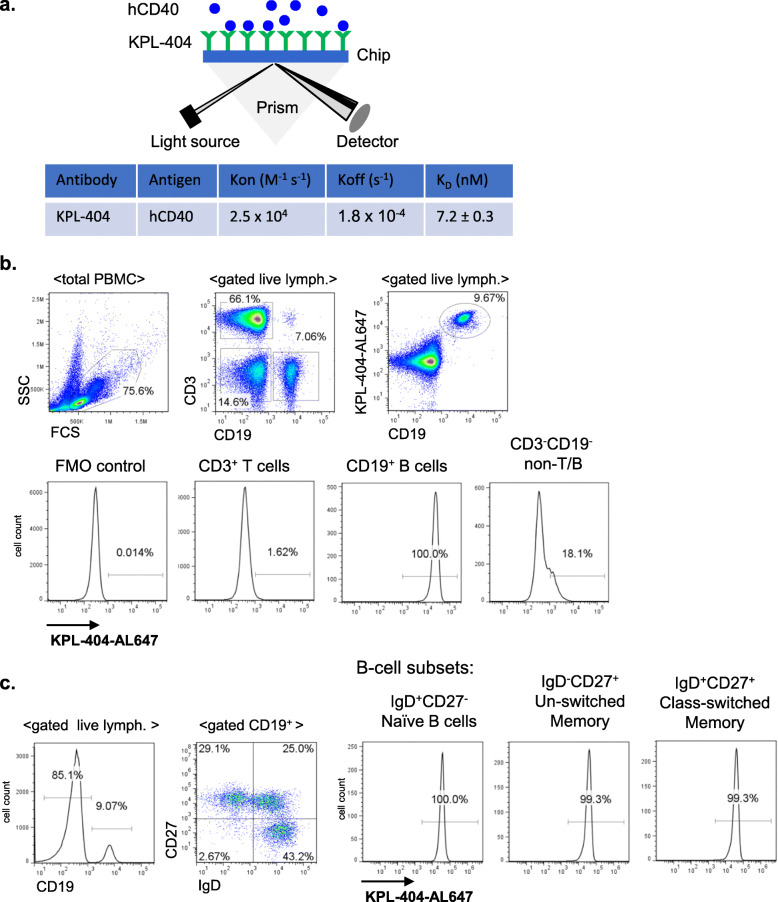
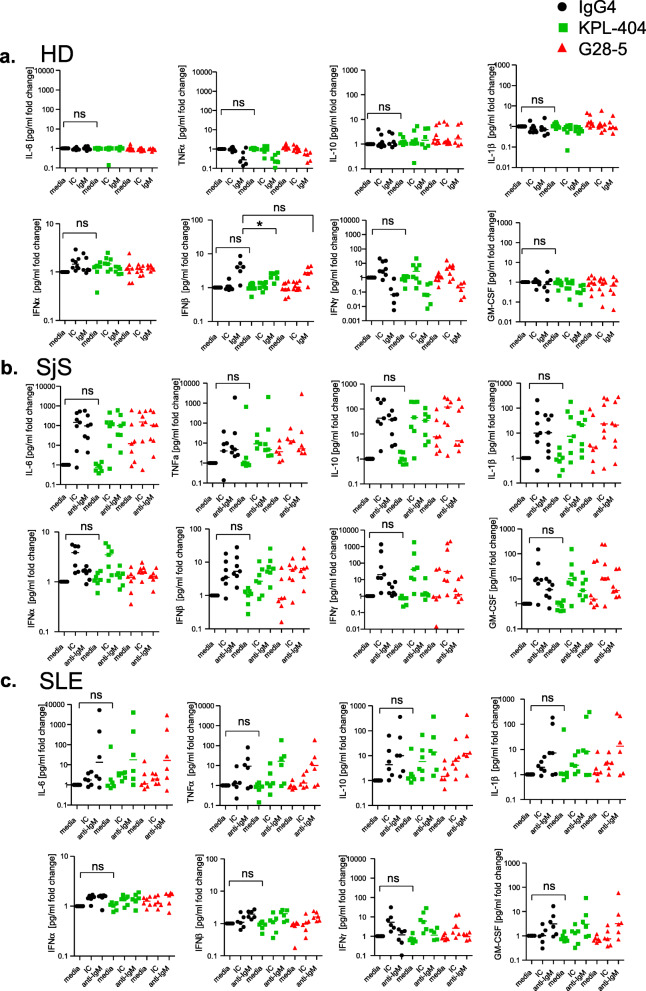
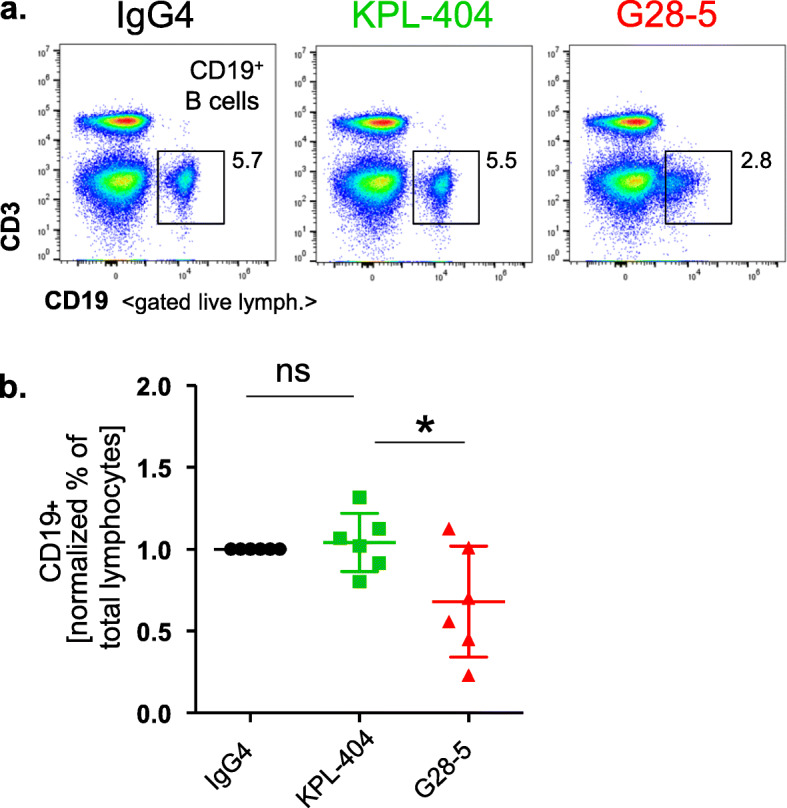
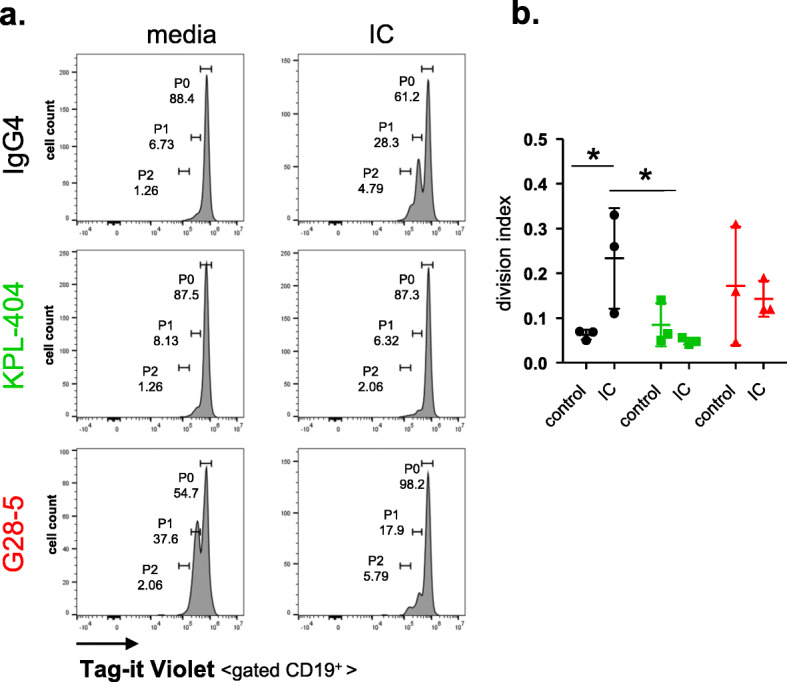
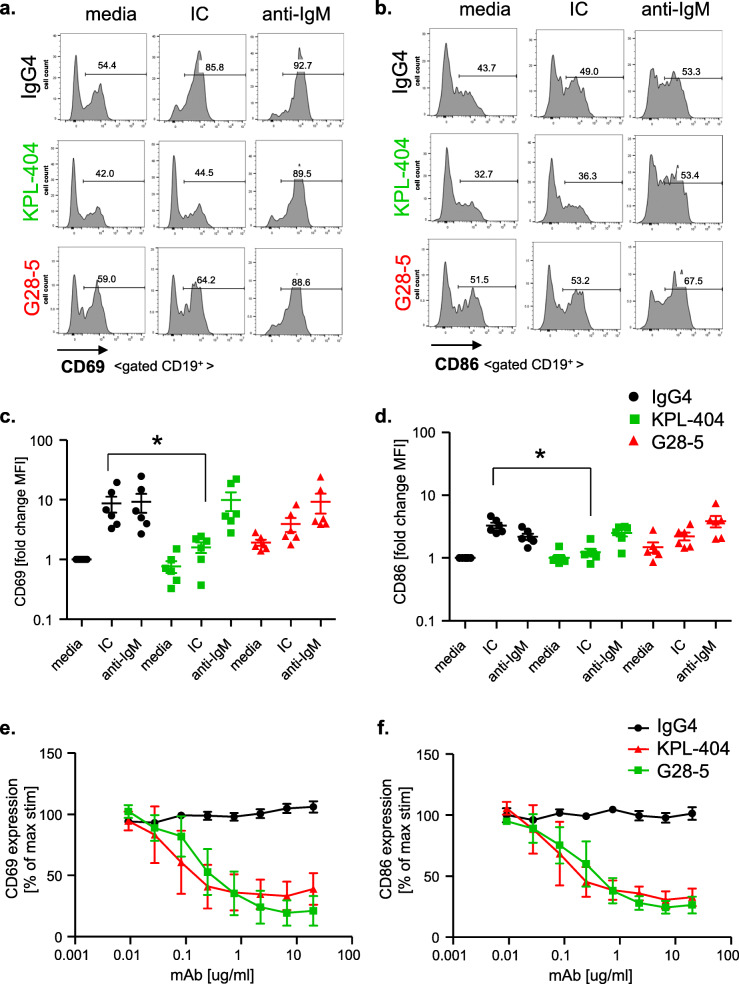
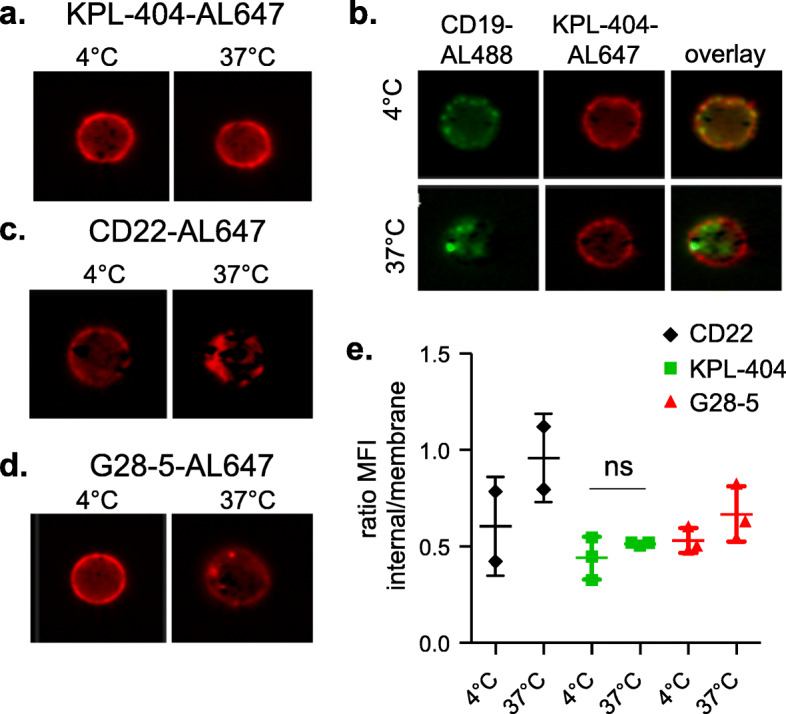
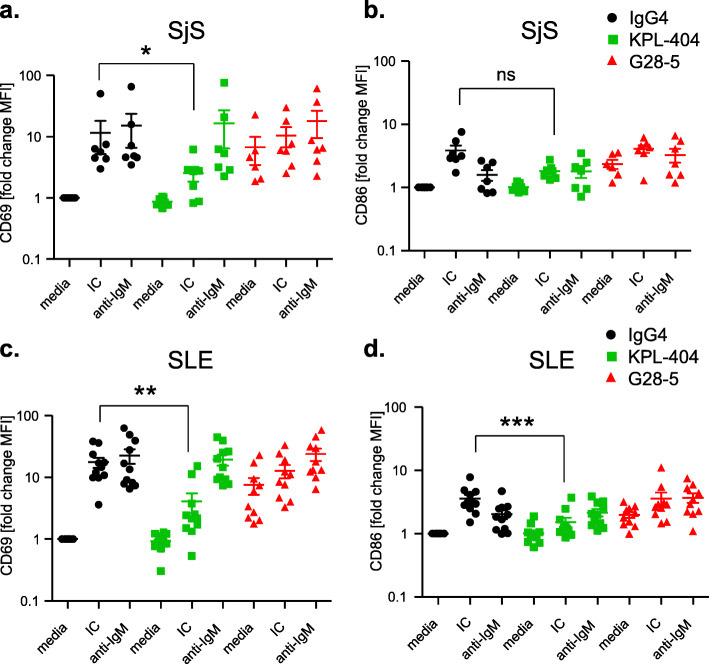
KPL-404 binds to CD40 expressed on different subsets of B cells without inducing cell depletion, or B cell proliferation and activation in in vitro culture. Under the same conditions, G28-5 promoted proliferation of and increased CD69 expression on otherwise unstimulated B cells. KPL-404 efficiently blocked the CD40L-CD40-mediated activation of B cells from HD at concentrations between 1 and 10 μg/ml. Treatment with KPL-404 alone did not promote cytokine production and blocked the production of IFNβ in healthy PBMC cultures. KPL-404 efficiently blocked CD40L-CD40-mediated activation of B cells from patients with SjS and SLE, without affecting their anti-IgM responses or affecting their cytokine production. Consistent with the differences of their effects on B cell responses, KPL-404 was not internalized by cells, whereas G28-5 showed partial internalization upon CD40 binding.
Anti-CD40 mAb KPL-404 showed purely antagonistic effects on B cells and total PBMCs. KPL-404 inhibited CD40L-CD40-mediated B cell activation in PBMC cultures from both healthy controls and autoimmune patients. These data support the therapeutic potential of CD40 targeting by KPL-404 Ab for inhibiting B cell responses in SjS and SLE.
CD40 - CD40L是B细胞活化的关键共刺激途径。因此,阻断该途径可抑制自身免疫性疾病(如干燥综合征(SjS)和系统性红斑狼疮(SLE))中致病性B细胞反应。在本研究中,我们检测了人源化抗CD40单克隆抗体(Ab)KPL - 404对来自健康供体(HD)或自身免疫性疾病患者的原代人B细胞的体外作用,并将其与部分拮抗抗CD40抗体G28 - 5的作用进行比较。
将来自HD或SjS及SLE患者的外周血单核细胞(PBMC)在IgG4同型对照或抗CD40抗体KPL - 404或G28 - 5存在的情况下进行高密度细胞培养。用抗CD3/CD28交联试剂ImmunoCult(IC)刺激细胞,以诱导CD40L - CD40介导的B细胞反应。通过增殖追踪染料稀释以及分别通过CD69和CD86上调来测量B细胞增殖和活化,采用流式细胞术进行评估。通过成像流式细胞术检测抗CD40抗体的细胞内化。通过基于微珠的多重测定法定量PBMC培养物中的细胞因子释放。
KPL - 404与B细胞不同亚群上表达的CD40结合,在体外培养中不诱导细胞耗竭、B细胞增殖或活化。在相同条件下,G28 - 5促进未刺激B细胞的增殖并增加CD69表达。KPL - 404在1至10μg/ml的浓度下有效阻断HD来源的B细胞的CD40L - CD40介导的活化。单独用KPL - 404处理不促进细胞因子产生,并阻断健康PBMC培养物中IFNβ的产生。KPL - 404有效阻断SjS和SLE患者来源的B细胞的CD40L - CD40介导的活化,而不影响其抗IgM反应或细胞因子产生。与其对B细胞反应的作用差异一致,KPL - 404不被细胞内化,而G28 - 5在与CD40结合后显示部分内化。
抗CD40单克隆抗体KPL - 404对B细胞和总PBMC显示出纯粹的拮抗作用。KPL - 404抑制健康对照和自身免疫性疾病患者PBMC培养物中CD40L - CD40介导的B细胞活化。这些数据支持KPL - 404抗体靶向CD40在抑制SjS和SLE中B细胞反应方面的治疗潜力。