Jang Seil, Yang Esther, Kim Doyoun, Kim Hyun, Kim Eunjoon
Center for Synaptic Brain Dysfunctions, Institute for Basic Science, Daejeon, South Korea.
Department of Anatomy and Division of Brain Korea 21, Biomedical Science, College of Medicine, Korea University, Seoul, South Korea.
Front Synaptic Neurosci. 2020 Dec 21;12:567075. doi: 10.3389/fnsyn.2020.567075. eCollection 2020.
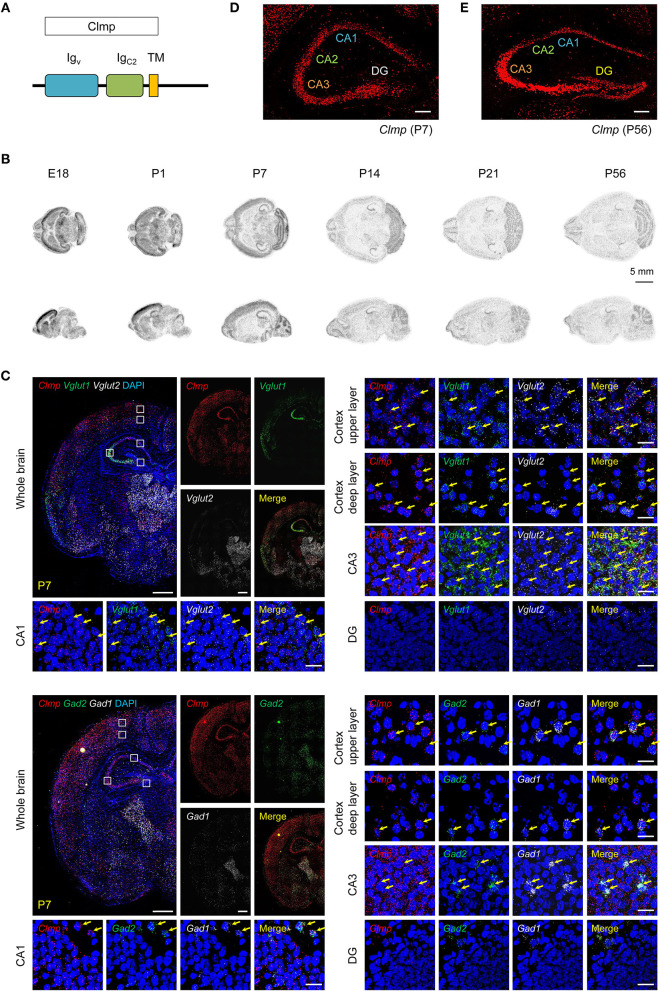
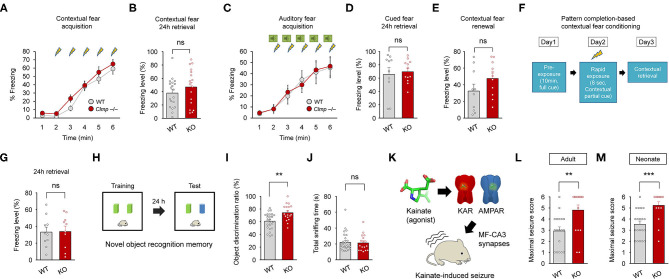
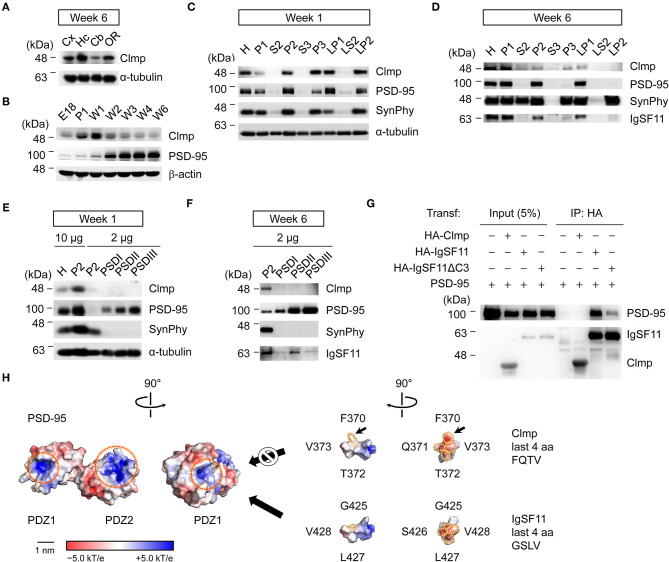
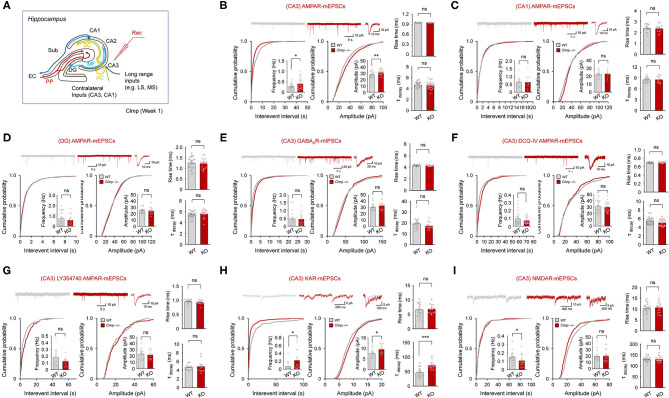
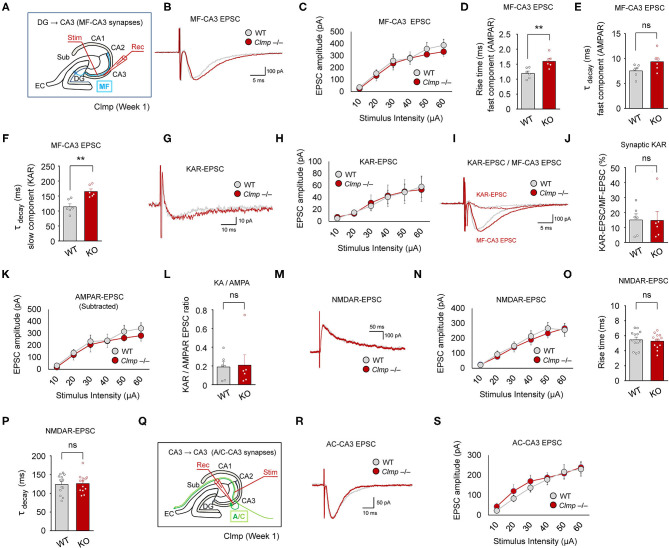
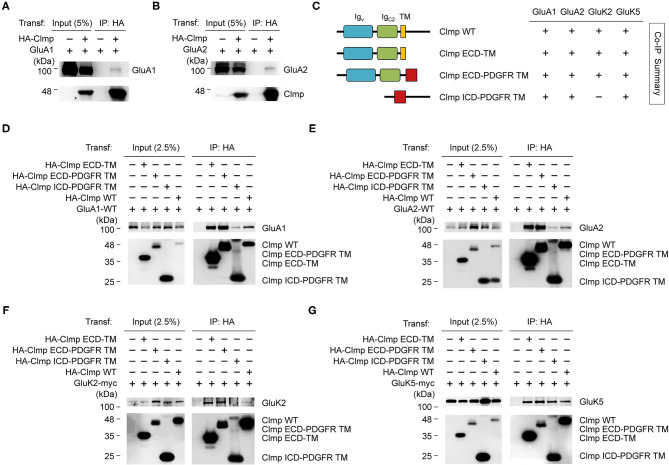
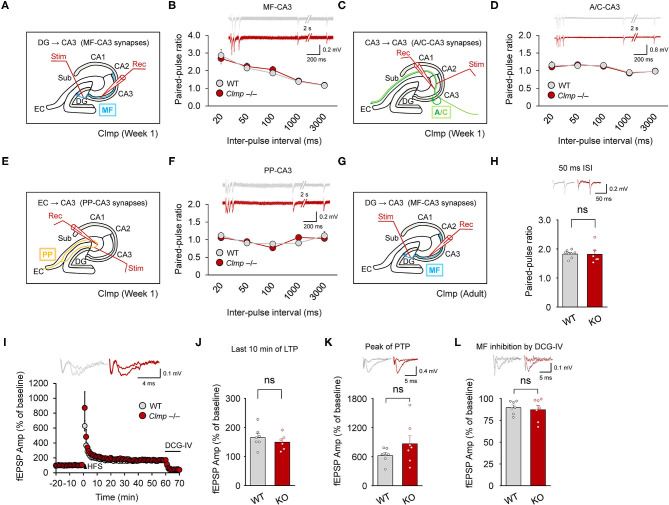
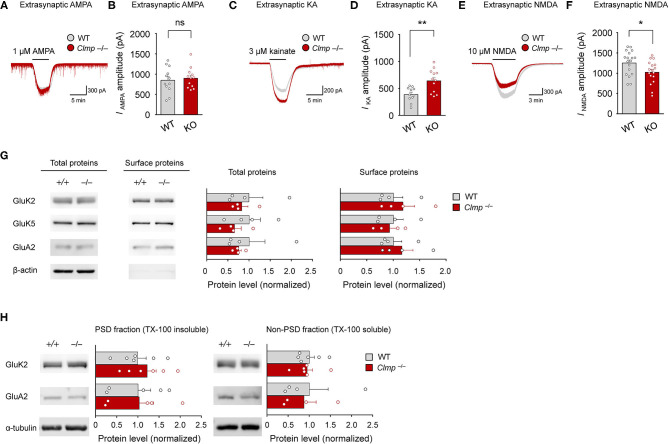
Synaptic adhesion molecules regulate synapse development through trans-synaptic adhesion and assembly of diverse synaptic proteins. Many synaptic adhesion molecules positively regulate synapse development; some, however, exert negative regulation, although such cases are relatively rare. In addition, synaptic adhesion molecules regulate the amplitude of post-synaptic receptor responses, but whether adhesion molecules can regulate the kinetic properties of post-synaptic receptors remains unclear. Here we report that Clmp, a homophilic adhesion molecule of the Ig domain superfamily that is abundantly expressed in the brain, reaches peak expression at a neonatal stage (week 1) and associates with subunits of AMPA receptors (AMPARs) and kainate receptors (KARs). deletion in mice increased the frequency and amplitude of AMPAR-mediated miniature excitatory post-synaptic currents (mEPSCs) and the frequency, amplitude, and decay time constant of KAR-mediated mEPSCs in hippocampal CA3 neurons. deletion had minimal impacts on evoked excitatory synaptic currents at mossy fiber-CA3 synapses but increased extrasynaptic KAR, but not AMPAR, currents, suggesting that Clmp distinctly inhibits AMPAR and KAR responses. Behaviorally, deletion enhanced novel object recognition and susceptibility to kainate-induced seizures, without affecting contextual or auditory cued fear conditioning or pattern completion-based contextual fear conditioning. These results suggest that Clmp negatively regulates hippocampal excitatory synapse development and AMPAR and KAR responses in the neonatal hippocampal CA3 as well as object recognition and kainate seizure susceptibility in mice.
突触粘附分子通过跨突触粘附和多种突触蛋白的组装来调节突触发育。许多突触粘附分子对突触发育起正向调节作用;然而,有些则发挥负向调节作用,尽管这种情况相对较少。此外,突触粘附分子可调节突触后受体反应的幅度,但粘附分子是否能调节突触后受体的动力学特性仍不清楚。在此,我们报告Clmp是免疫球蛋白(Ig)结构域超家族的一种同源粘附分子,在大脑中大量表达,在新生阶段(第1周)达到表达峰值,并与α-氨基-3-羟基-5-甲基-4-异恶唑丙酸受体(AMPAR)和红藻氨酸受体(KAR)的亚基相关联。小鼠体内的Clmp缺失增加了海马CA3神经元中AMPAR介导的微小兴奋性突触后电流(mEPSC)的频率和幅度,以及KAR介导的mEPSC的频率、幅度和衰减时间常数。Clmp缺失对苔藓纤维-CA3突触处诱发的兴奋性突触电流影响最小,但增加了突触外KAR电流,而不是AMPAR电流,这表明Clmp对AMPAR和KAR反应具有明显的抑制作用。在行为方面,Clmp缺失增强了对新物体的识别能力以及对红藻氨酸诱导癫痫发作的易感性,而不影响情境性或听觉线索恐惧条件反射或基于模式完成的情境性恐惧条件反射。这些结果表明,Clmp在新生小鼠海马CA3中对海马兴奋性突触发育、AMPAR和KAR反应以及物体识别和红藻氨酸癫痫发作易感性起负向调节作用。