• 文献检索
  • 文档翻译
  • 深度研究
  • 学术资讯
  • Suppr Zotero 插件Zotero 插件
  • 邀请有礼
  • 套餐&价格
  • 历史记录
应用&插件
Suppr Zotero 插件Zotero 插件浏览器插件Mac 客户端Windows 客户端微信小程序
定价
高级版会员购买积分包购买API积分包
服务
文献检索文档翻译深度研究API 文档MCP 服务
关于我们
关于 Suppr公司介绍联系我们用户协议隐私条款
关注我们

Suppr 超能文献

核心技术专利:CN118964589B侵权必究
粤ICP备2023148730 号-1Suppr @ 2026

文献检索

告别复杂PubMed语法,用中文像聊天一样搜索,搜遍4000万医学文献。AI智能推荐,让科研检索更轻松。

立即免费搜索

文件翻译

保留排版,准确专业,支持PDF/Word/PPT等文件格式,支持 12+语言互译。

免费翻译文档

深度研究

AI帮你快速写综述,25分钟生成高质量综述,智能提取关键信息,辅助科研写作。

立即免费体验

精准医学炎症中的干细胞和类器官技术:我们做到了吗?

Stem Cells and Organoid Technology in Precision Medicine in Inflammation: Are We There Yet?

机构信息

Institute of Clinical Molecular Biology, University of Kiel, Kiel, Germany.

Klinik für Innere Medizin I, Universitätsklinikum Schleswig-Holstein, Kiel, Germany.

出版信息

Front Immunol. 2020 Dec 21;11:573562. doi: 10.3389/fimmu.2020.573562. eCollection 2020.

DOI:10.3389/fimmu.2020.573562
PMID:33408713
原文链接:https://pmc.ncbi.nlm.nih.gov/articles/PMC7779798/
Abstract

Individualised cellular models of disease are a key tool for precision medicine to recapitulate chronic inflammatory processes. Organoid models can be derived from induced pluripotent stem cells (iPSCs) or from primary stem cells . These models have been emerging over the past decade and have been used to reconstruct the respective organ-specific physiology and pathology, at an unsurpassed depth. In cancer research, patient-derived cancer organoids opened new perspectives in predicting therapy response and provided novel insights into tumour biology. In precision medicine of chronic inflammatory disorders, stem-cell based organoid models are currently being evaluated in pre-clinical pharmacodynamic studies (clinical studies in a dish) and are employed in clinical studies, e.g., by re-transplanting autologous epithelial organoids to re-establish intestinal barrier integrity. A particularly exciting feature of iPSC systems is their ability to provide insights into organ systems and inflammatory disease processes, which cannot be monitored with clinical biopsies, such as immune reactions in neurodegenerative disorders. Refinement of differentiation protocols, and next-generation co-culturing methods, aimed at generating self-organised, complex tissues , will be the next logical steps. In this mini-review, we critically discuss the current state-of-the-art stem cell and organoid technologies, as well as their future impact, potential and promises in combating immune-mediated chronic diseases.

摘要

个体化细胞疾病模型是精准医学重现慢性炎症过程的关键工具。类器官模型可源自诱导多能干细胞 (iPSC) 或源自原代干细胞。这些模型在过去十年中不断涌现,并被用于以无与伦比的深度重建各自的器官特异性生理学和病理学。在癌症研究中,患者来源的癌症类器官为预测治疗反应开辟了新的视角,并为肿瘤生物学提供了新的见解。在慢性炎症性疾病的精准医学中,基于干细胞的类器官模型目前正在临床前药效学研究(在培养皿中的临床研究)中进行评估,并在临床研究中得到应用,例如,通过重新移植自体上皮类器官来重建肠道屏障完整性。iPSC 系统的一个特别令人兴奋的特点是它们能够深入了解器官系统和炎症性疾病过程,而这些过程无法通过临床活检来监测,例如神经退行性疾病中的免疫反应。改进分化方案和下一代共培养方法,旨在生成自组织的复杂组织,将是下一个合乎逻辑的步骤。在这篇迷你综述中,我们批判性地讨论了当前最先进的干细胞和类器官技术,以及它们在对抗免疫介导的慢性疾病方面的未来影响、潜力和承诺。
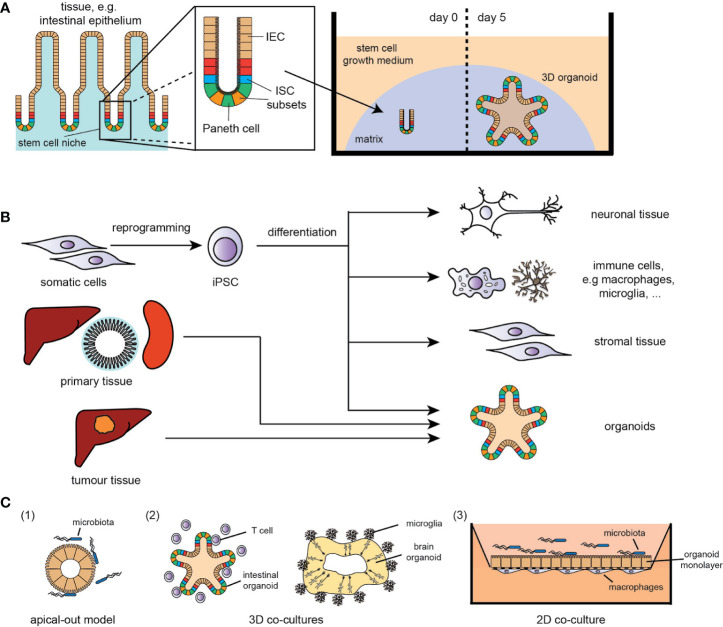
https://cdn.ncbi.nlm.nih.gov/pmc/blobs/c3d8/7779798/e283af803f6c/fimmu-11-573562-g002.jpg
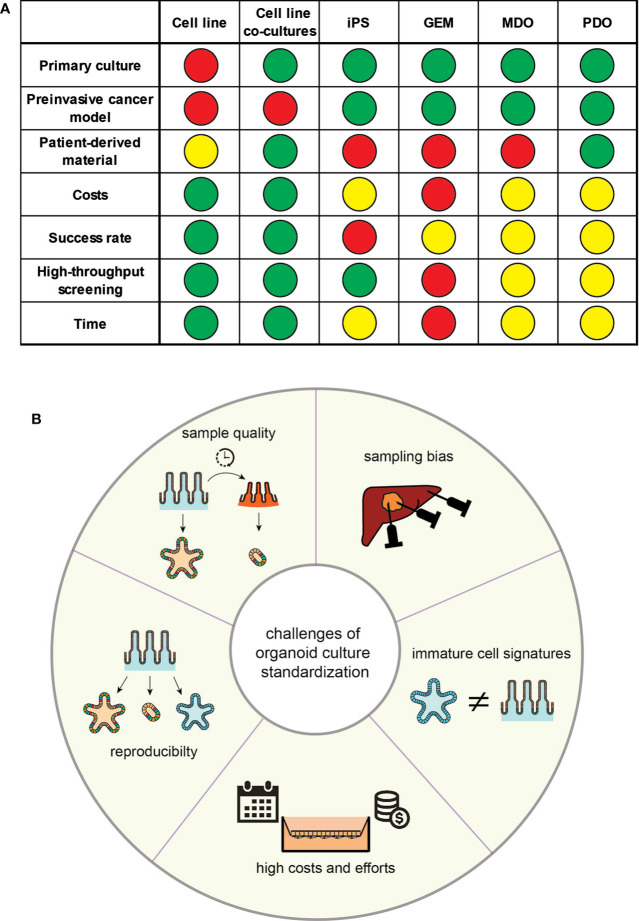
https://cdn.ncbi.nlm.nih.gov/pmc/blobs/c3d8/7779798/6ea85301be61/fimmu-11-573562-g001.jpg
https://cdn.ncbi.nlm.nih.gov/pmc/blobs/c3d8/7779798/e283af803f6c/fimmu-11-573562-g002.jpg
https://cdn.ncbi.nlm.nih.gov/pmc/blobs/c3d8/7779798/6ea85301be61/fimmu-11-573562-g001.jpg
https://cdn.ncbi.nlm.nih.gov/pmc/blobs/c3d8/7779798/e283af803f6c/fimmu-11-573562-g002.jpg

相似文献

1
Stem Cells and Organoid Technology in Precision Medicine in Inflammation: Are We There Yet?精准医学炎症中的干细胞和类器官技术:我们做到了吗?
Front Immunol. 2020 Dec 21;11:573562. doi: 10.3389/fimmu.2020.573562. eCollection 2020.
2
From Spheroids to Organoids: The Next Generation of Model Systems of Human Cardiac Regeneration in a Dish.从球体到类器官:在体外培养皿中进行人类心脏再生的下一代模型系统。
Int J Mol Sci. 2021 Dec 7;22(24):13180. doi: 10.3390/ijms222413180.
3
Engineering the Future of Regenerative Medicines in Gut Health with Stem Cell-Derived Intestinal Organoids.利用干细胞衍生的肠道类器官打造肠道健康再生医学的未来。
Stem Cell Rev Rep. 2025 May 17. doi: 10.1007/s12015-025-10893-w.
4
Developing liver organoids from induced pluripotent stem cells (iPSCs): An alternative source of organoid generation for liver cancer research.从诱导多能干细胞(iPSCs)中生成肝类器官:肝癌研究中类器官生成的另一种来源。
Cancer Lett. 2021 Jun 28;508:13-17. doi: 10.1016/j.canlet.2021.03.017. Epub 2021 Mar 23.
5
Current Challenges Associated with the Use of Human Induced Pluripotent Stem Cell-Derived Organoids in Regenerative Medicine.再生医学中使用人类诱导多能干细胞衍生类器官的当前挑战。
Int J Stem Cells. 2021 Feb 28;14(1):9-20. doi: 10.15283/ijsc20140.
6
Revolutionizing immune research with organoid-based co-culture and chip systems.利用基于类器官的共培养和芯片系统革新免疫研究。
Clin Exp Immunol. 2024 Sep 16;218(1):40-54. doi: 10.1093/cei/uxae004.
7
Organoids: Avatars for Personalized Medicine.类器官:个性化医疗的化身。
Keio J Med. 2019;68(4):95. doi: 10.2302/kjm.68-006-ABST.
8
Studying Human Neurological Disorders Using Induced Pluripotent Stem Cells: From 2D Monolayer to 3D Organoid and Blood Brain Barrier Models.使用诱导多能干细胞研究人类神经紊乱:从 2D 单层到 3D 类器官和血脑屏障模型。
Compr Physiol. 2019 Mar 14;9(2):565-611. doi: 10.1002/cphy.c180025.
9
Self-assembly of differentiated progenitor cells facilitates spheroid human skin organoid formation and planar skin regeneration.分化祖细胞的自组装促进球体人皮肤类器官的形成和平面皮肤的再生。
Theranostics. 2021 Jul 25;11(17):8430-8447. doi: 10.7150/thno.59661. eCollection 2021.
10
Human airway organoid engineering as a step toward lung regeneration and disease modeling.人类气道类器官工程:迈向肺再生和疾病建模的一步。
Biomaterials. 2017 Jan;113:118-132. doi: 10.1016/j.biomaterials.2016.10.046. Epub 2016 Oct 28.

引用本文的文献

1
Modification of Lhx2 activity for amplification of human iPSC-derived hematopoietic stem/progenitor cells.通过改变Lhx2活性来扩增人诱导多能干细胞衍生的造血干/祖细胞。
Front Cell Dev Biol. 2024 Oct 15;12:1482989. doi: 10.3389/fcell.2024.1482989. eCollection 2024.
2
Production of Neuroepithelial Organoids from Human-Induced Pluripotent Stem Cells for Mimicking Early Neural Tube Development.利用人类诱导多能干细胞生成神经上皮类器官以模拟早期神经管发育
Methods Mol Biol. 2024 Apr 23. doi: 10.1007/7651_2024_546.
3
Establishment of a Human Immunocompetent 3D Tissue Model to Enable the Long-Term Examination of Biofilm-Tissue Interactions.

本文引用的文献

1
Homeostatic mini-intestines through scaffold-guided organoid morphogenesis.通过支架引导类器官形态发生构建稳态微型肠道。
Nature. 2020 Sep;585(7826):574-578. doi: 10.1038/s41586-020-2724-8. Epub 2020 Sep 16.
2
LifeTime and improving European healthcare through cell-based interceptive medicine.通过基于细胞的干预性医学延长寿命和改善欧洲医疗保健。
Nature. 2020 Nov;587(7834):377-386. doi: 10.1038/s41586-020-2715-9. Epub 2020 Sep 7.
3
Tumor Microenvironment-Derived NRG1 Promotes Antiandrogen Resistance in Prostate Cancer.肿瘤微环境衍生的 NRG1 促进前列腺癌的抗雄激素耐药性。
建立一种具有人体免疫活性的3D组织模型以实现对生物膜与组织相互作用的长期研究。
Bioengineering (Basel). 2024 Feb 15;11(2):187. doi: 10.3390/bioengineering11020187.
4
Insights on Three Dimensional Organoid Studies for Stem Cell Therapy in Regenerative Medicine.三维类器官研究对再生医学中干细胞治疗的启示。
Stem Cell Rev Rep. 2024 Feb;20(2):509-523. doi: 10.1007/s12015-023-10655-6. Epub 2023 Dec 14.
5
Rapid Generation of Pulmonary Organoids from Induced Pluripotent Stem Cells by Co-Culturing Endodermal and Mesodermal Progenitors for Pulmonary Disease Modelling.通过共培养内胚层和中胚层祖细胞从诱导多能干细胞快速生成肺类器官用于肺病建模
Biomedicines. 2023 May 18;11(5):1476. doi: 10.3390/biomedicines11051476.
6
Opportunities and Challenges of Human IPSC Technology in Kidney Disease Research.人诱导多能干细胞技术在肾脏疾病研究中的机遇与挑战
Biomedicines. 2022 Dec 12;10(12):3232. doi: 10.3390/biomedicines10123232.
7
Recent Advances of Organ-on-a-Chip in Cancer Modeling Research.器官芯片在癌症建模研究中的最新进展。
Biosensors (Basel). 2022 Nov 18;12(11):1045. doi: 10.3390/bios12111045.
8
Disease Modeling with Kidney Organoids.利用肾类器官进行疾病建模。
Micromachines (Basel). 2022 Aug 25;13(9):1384. doi: 10.3390/mi13091384.
9
Farm and Companion Animal Organoid Models in Translational Research: A Powerful Tool to Bridge the Gap Between Mice and Humans.转化研究中的农场动物和伴侣动物类器官模型:弥合小鼠与人类之间差距的有力工具。
Front Med Technol. 2022 May 12;4:895379. doi: 10.3389/fmedt.2022.895379. eCollection 2022.
10
Classic mechanisms and experimental models for the anti-inflammatory effect of traditional Chinese medicine.经典的中药抗炎作用机制和实验模型。
Animal Model Exp Med. 2022 Apr;5(2):108-119. doi: 10.1002/ame2.12224. Epub 2022 Apr 12.
Cancer Cell. 2020 Aug 10;38(2):279-296.e9. doi: 10.1016/j.ccell.2020.06.005. Epub 2020 Jul 16.
4
Activating Transcription Factor 6 Mediates Inflammatory Signals in Intestinal Epithelial Cells Upon Endoplasmic Reticulum Stress.内质网应激时激活转录因子 6 介导肠上皮细胞中的炎症信号。
Gastroenterology. 2020 Oct;159(4):1357-1374.e10. doi: 10.1053/j.gastro.2020.06.088. Epub 2020 Jul 13.
5
Gastrointestinal tract modeling using organoids engineered with cellular and microbiota niches.使用具有细胞和微生物群落生态位的类器官进行胃肠道建模。
Exp Mol Med. 2020 Feb;52(2):227-237. doi: 10.1038/s12276-020-0386-0. Epub 2020 Feb 26.
6
Host-microbiota interactions in inflammatory bowel disease.炎症性肠病中的宿主-微生物群相互作用。
Nat Rev Immunol. 2020 Jul;20(7):411-426. doi: 10.1038/s41577-019-0268-7. Epub 2020 Jan 31.
7
Generation of mesenchyme free intestinal organoids from human induced pluripotent stem cells.从人诱导多能干细胞生成无间质的肠类器官。
Nat Commun. 2020 Jan 10;11(1):215. doi: 10.1038/s41467-019-13916-6.
8
Adrenergic Signaling in Muscularis Macrophages Limits Infection-Induced Neuronal Loss.肌间巨噬细胞中的肾上腺素信号限制感染诱导的神经元丢失。
Cell. 2020 Jan 9;180(1):64-78.e16. doi: 10.1016/j.cell.2019.12.002.
9
Genome Editing in Patient iPSCs Corrects the Most Prevalent Mutations and Reveals Intriguing Mutant mRNA Expression Profiles.对患者诱导多能干细胞进行基因组编辑可纠正最常见的突变并揭示有趣的突变mRNA表达谱。
Mol Ther Methods Clin Dev. 2019 Nov 27;17:156-173. doi: 10.1016/j.omtm.2019.11.016. eCollection 2020 Jun 12.
10
Microbiome changes: an indicator of Parkinson's disease?微生物组变化:帕金森病的一个指标?
Transl Neurodegener. 2019 Dec 24;8:38. doi: 10.1186/s40035-019-0175-7. eCollection 2019.