Department of Psychiatry and Behavioral Neurosciences, Cedars-Sinai Medical Center, Los Angeles, CA, United States of America.
David Geffen School of Medicine at UCLA, Los Angeles, CA, United States of America.
PLoS One. 2021 Jan 7;16(1):e0244453. doi: 10.1371/journal.pone.0244453. eCollection 2021.
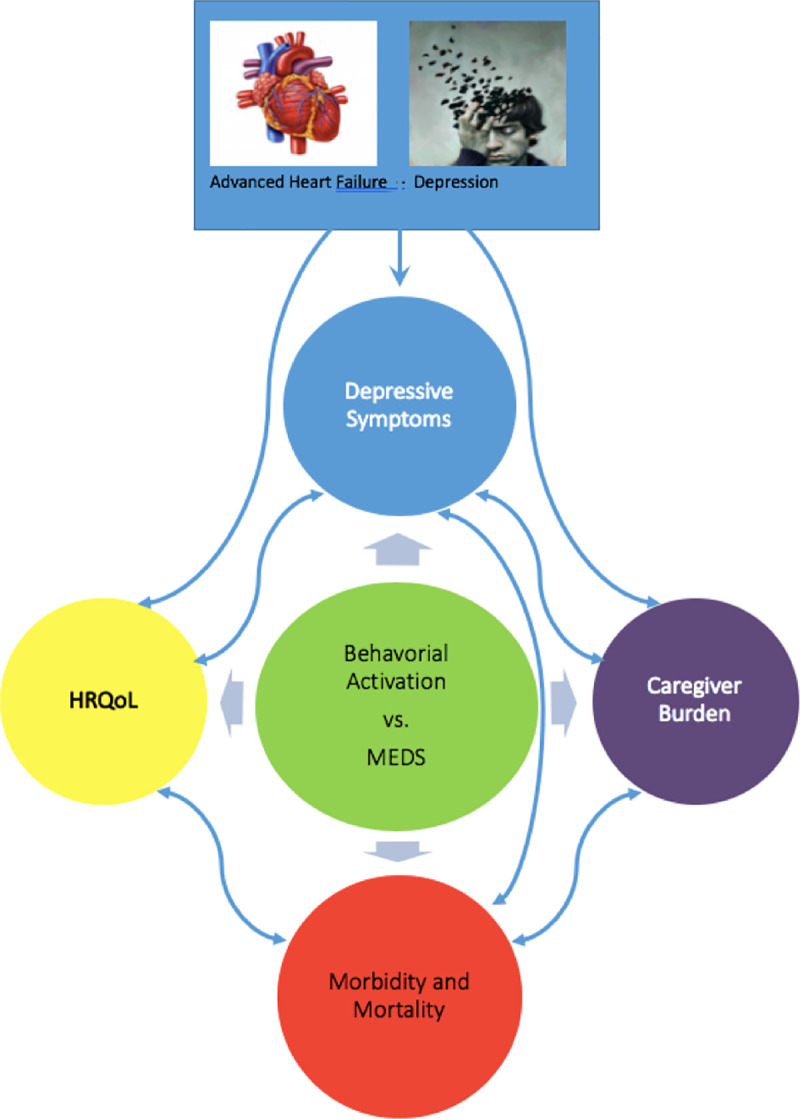
Heart Failure is a chronic syndrome affecting over 5.7 million in the US and 26 million adults worldwide with nearly 50% experiencing depressive symptoms. The objective of the study is to compare the effects of two evidence-based treatment options for adult patients with depression and advanced heart failure, on depressive symptom severity, physical and mental health related quality of life (HRQoL), heart-failure specific quality of life, caregiver burden, morbidity, and mortality at 3, 6 and 12-months.
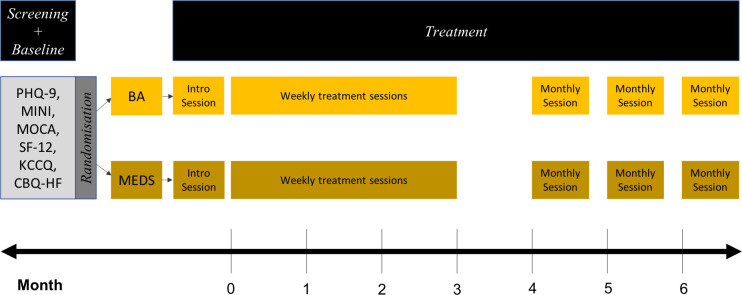
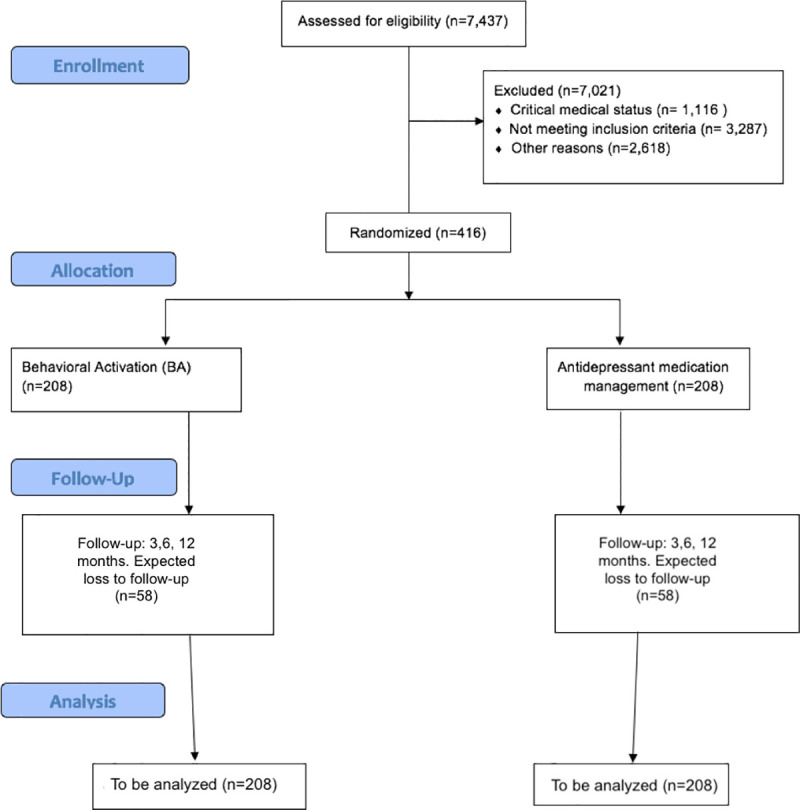
Trial design. Pragmatic, randomized, comparative effectiveness trial. Interventions. The treatment interventions are: (1) Behavioral Activation (BA), a patient-centered psychotherapy which emphasizes engagement in enjoyable and valued personalized activities as selected by the patient; or (2) Antidepressant Medication Management administered using the collaborative care model (MEDS). Participants. Adults aged 18 and over with advanced heart failure (defined as New York Heart Association (NYHA) Class II, III, and IV) and depression (defined as a score of 10 or above on the PHQ-9 and confirmed by the MINI International Neuropsychiatric Interview for the DSM-5) selected from all patients at Cedars-Sinai Medical Center who are admitted with heart failure and all patients presenting to the outpatient programs of the Smidt Heart Institute at Cedars-Sinai Medical Center. We plan to randomize 416 patients to BA or MEDS, with an estimated 28% loss to follow-up/inability to collect follow-up data. Thus, we plan to include 150 in each group for a total of 300 participants from which data after randomization will be collected and analyzed.
The current trial is the first to compare the impact of BA and MEDS on depressive symptoms, quality of life, caregiver burden, morbidity, and mortality in patients with depression and advanced heart failure. The trial will provide novel results that will be disseminated and implemented into a wide range of current practice settings.
ClinicalTrials.Gov Identifier: NCT03688100.
心力衰竭是一种影响美国超过 570 万人和全球 2600 万成年人的慢性综合征,近 50%的人患有抑郁症状。本研究的目的是比较两种循证治疗方案对患有抑郁症和晚期心力衰竭的成年患者的影响,评估两种方案对抑郁症状严重程度、身心健康相关生活质量(HRQoL)、心力衰竭特异性生活质量、照顾者负担、发病率和死亡率的影响,评估时间为 3、6 和 12 个月。
试验设计。实用、随机、对照效果试验。干预措施。治疗干预措施是:(1)行为激活(BA),一种以患者为中心的心理治疗方法,强调患者参与选择的愉快且有价值的个性化活动;或(2)使用协作护理模式(MEDS)管理抗抑郁药物。参与者。年龄在 18 岁及以上的患有晚期心力衰竭(定义为纽约心脏协会(NYHA)心功能 II、III 和 IV 级)和抑郁症(定义为 PHQ-9 评分≥10 分,并通过 MINI 国际神经精神访谈 DSM-5 确认)的成年人,从 Cedars-Sinai 医疗中心因心力衰竭住院的所有患者以及 Cedars-Sinai 医疗中心 Smidt 心脏研究所的门诊患者中选择。我们计划将 416 名患者随机分为 BA 或 MEDS 组,预计有 28%的患者失访/无法收集随访数据。因此,我们计划每组纳入 150 名患者,共纳入 300 名患者进行随机分组后的数据收集和分析。
本研究首次比较了行为激活和抗抑郁药物治疗对患有抑郁症和晚期心力衰竭患者的抑郁症状、生活质量、照顾者负担、发病率和死亡率的影响。该试验将提供新颖的结果,并将其传播和应用于广泛的当前实践环境。
ClinicalTrials.Gov 标识符:NCT03688100。