Centro de Investigación para la Salud en América Latina (CISeAL), Escuela de Ciencias Biológicas, Facultad de Ciencias Exactas y Naturales, Pontificia Universidad Católica del Ecuador, Apartado, 1701-2184, Quito, Ecuador.
Facultad de Medicina, Pontificia Universidad Católica del Ecuador, Apartado, 1701-2184, Quito, Ecuador.
BMC Public Health. 2021 Jan 7;21(1):72. doi: 10.1186/s12889-020-10061-4.
Vaccination is the most effective way to prevent infection and severe outcomes caused by influenza viruses in pregnant women and their children. In Ecuador, the coverage of seasonal influenza vaccination in pregnant women is low. The aim of this study was to assess the knowledge, attitudes, and practices (KAP) of pregnant women toward influenza vaccination in Quito-Ecuador.
A cross-sectional study enrolled 842 women who delivered at three main public gynecological-obstetric units of the Metropolitan District of Quito. A questionnaire regarding demographics, antenatal care, risk conditions and knowledge, attitudes and practices related to influenza vaccination was administered. We examined factors associated with vaccination using log-binomial regression models.
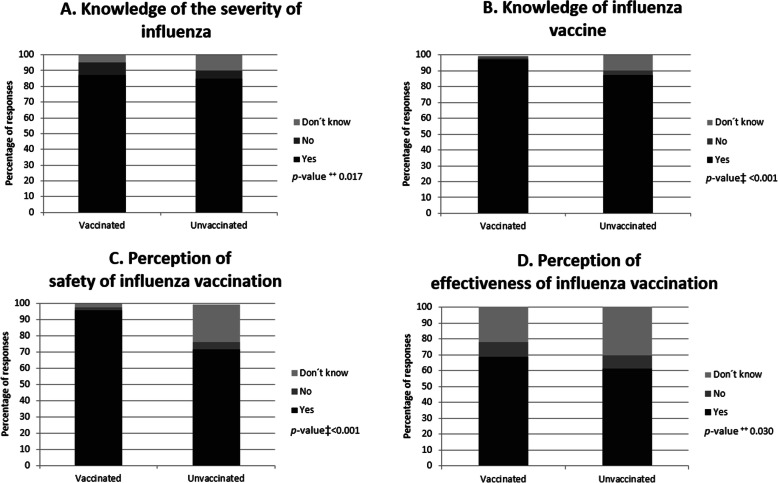
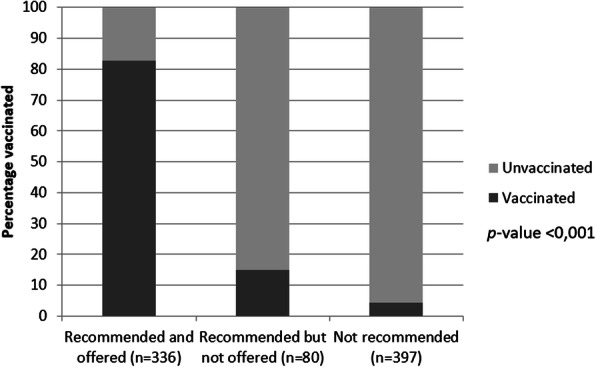
A low vaccination rate (36.6%) against influenza was observed among pregnant women. The factors associated with vaccination included the recommendations from health providers (adjusted PR: 15.84; CI 95% 9.62-26.10), belief in the safety of the influenza vaccine (adjusted PR: 1.53; CI 95% 1.03-2.37) and antenatal care (adjusted PR: 1.21; CI 95% 1.01-1.47). The most common reasons for not vaccinating included the lack of recommendation from health care providers (73.9%) and lack of access to vaccine (9.0%).
Health educational programs aimed at pregnant women and antenatal care providers have the most potential to increase influenza vaccination rates. Further studies are needed to understand the barriers of health care providers regarding influenza vaccination in Ecuador.
接种疫苗是预防孕妇及其子女感染流感病毒和发生严重后果的最有效方法。在厄瓜多尔,孕妇季节性流感疫苗接种覆盖率较低。本研究旨在评估基多-厄瓜多尔孕妇对流感疫苗接种的知识、态度和实践(KAP)。
一项横断面研究纳入了在基多大都市地区的三家主要公立妇产科单位分娩的 842 名妇女。使用一份关于人口统计学、产前护理、风险状况以及与流感疫苗接种相关的知识、态度和实践的问卷对其进行评估。我们使用对数二项回归模型检查了与接种相关的因素。
观察到孕妇接种流感疫苗的比例较低(36.6%)。与接种相关的因素包括卫生保健提供者的推荐(调整后的比值比:15.84;95%CI 9.62-26.10)、对流感疫苗安全性的信任(调整后的比值比:1.53;95%CI 9.03-2.37)和产前护理(调整后的比值比:1.21;95%CI 9.01-1.47)。不接种疫苗的最常见原因包括卫生保健提供者缺乏推荐(73.9%)和无法获得疫苗(9.0%)。
针对孕妇和产前保健提供者的健康教育计划最有可能提高流感疫苗接种率。需要进一步研究以了解厄瓜多尔卫生保健提供者在流感疫苗接种方面的障碍。