ShenZhen Beike Biotechnology Research Institute, No. 59, Gaoxin South 9th Road, Nanshan District, Shenzhen, 518057, Guangdong Province, People's Republic of China.
Intervention and Cell Therapy Center, Shenzhen Hospital of Peking University, Shenzhen, 518057, People's Republic of China.
Stem Cell Res Ther. 2021 Jan 7;12(1):14. doi: 10.1186/s13287-020-02068-w.
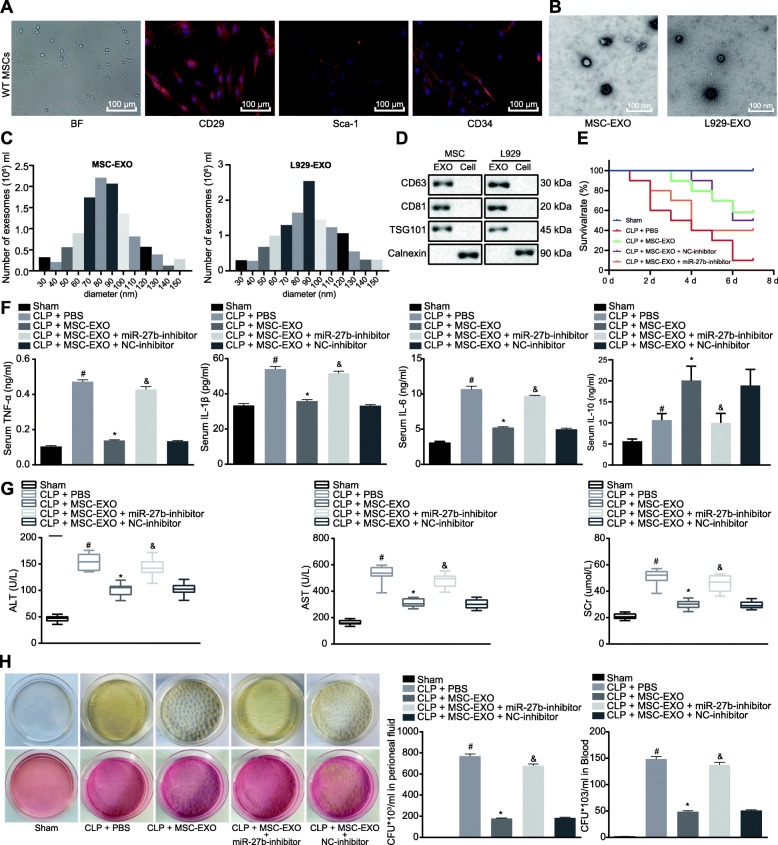
Exosomal microRNAs (miRs) derived from mesenchymal stem cells (MSCs) have been shown to play roles in the pathophysiological processes of sepsis. Moreover, miR-27b is highly enriched in MSC-derived exosomes. Herein, we aimed to investigate the potential role and downstream molecular mechanism of exosomal miR-27b in sepsis.
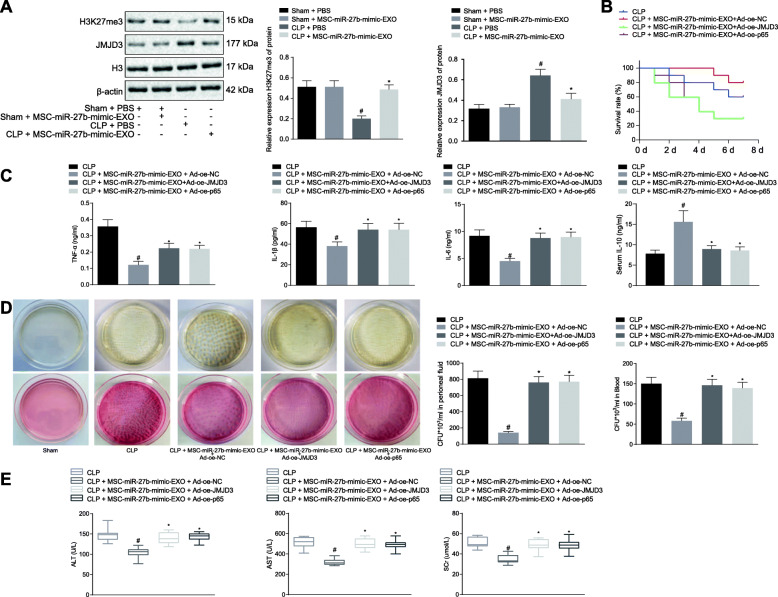
Inflammation was induced in bone marrow-derived macrophages (BMDMs) by lipopolysaccharide (LPS), and mice were made septic by cecal ligation and puncture (CLP). The expression pattern of miR-27b in MSC-derived exosomes was characterized using RT-qPCR, and its downstream gene was predicted by in silico analysis. The binding affinity between miR-27b, Jumonji D3 (JMJD3), or nuclear factor κB (NF-κB) was characterized to identify the underlying mechanism. We induced miR-27b overexpression or downregulation, along with silencing of JMJD3 or NF-κB to examine their effects on sepsis. The production of pro-inflammatory cytokines TNF-α, IL-1β, and IL-6 was detected by ELISA.
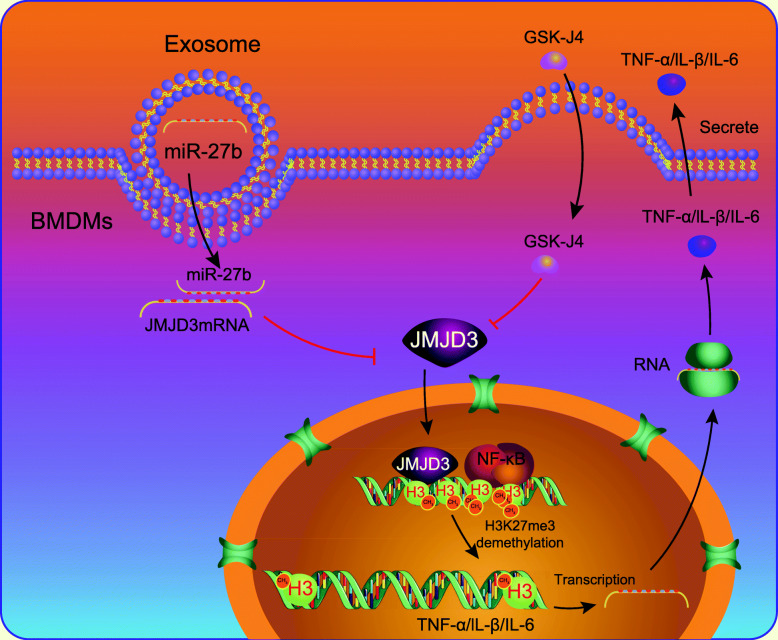
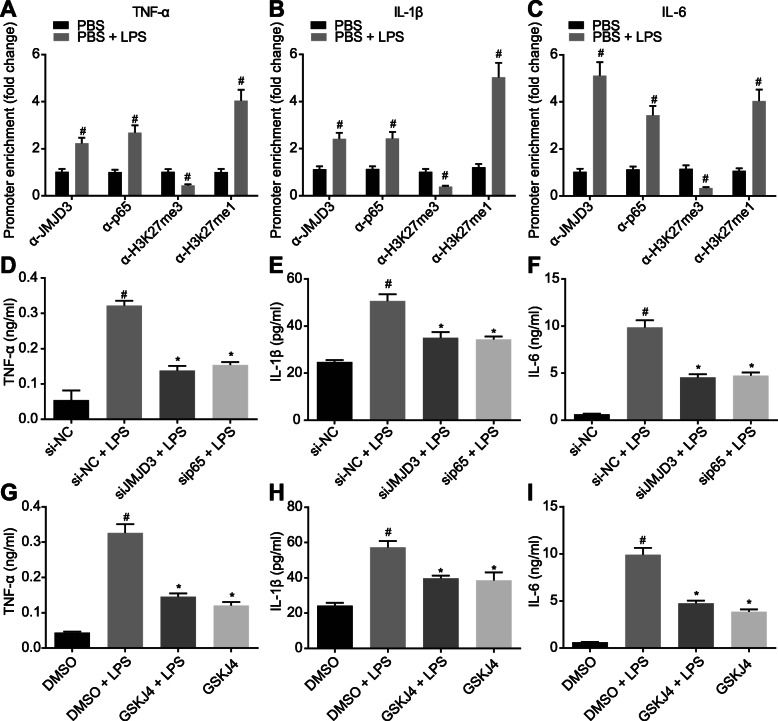
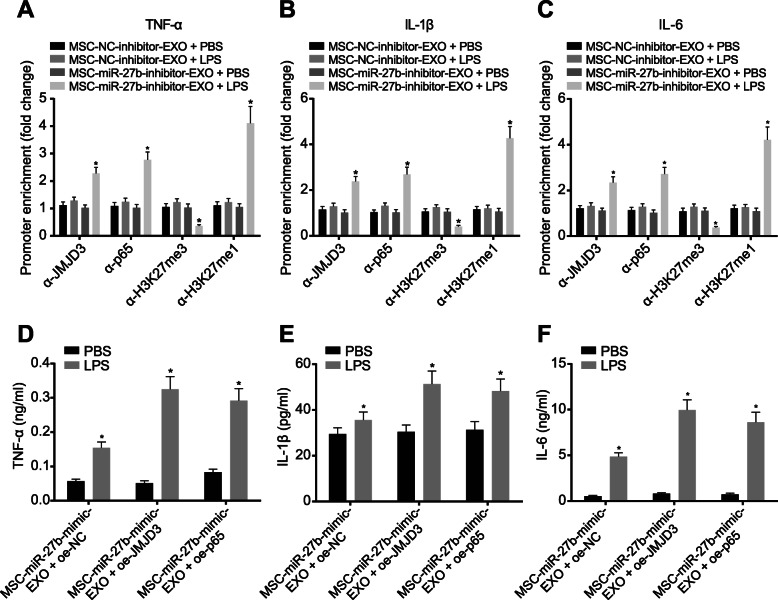
miR-27b was highly expressed in MSC-derived exosomes. Mechanistic investigations showed that miR-27b targeted JMJD3. miR-27b decreased expression of pro-inflammatory genes by inhibiting the recruitment of JMJD3 and NF-κB at gene promoter region. Through this, MSC-derived exosomal miR-27b diminished production of pro-inflammatory cytokines in LPS-treated BMDMs and septic mice, which could be rescued by upregulation of JMJD3 and NF-κB. Besides, in vitro findings were reproduced by in vivo findings.
These data demonstrated that exosomal miR-27b derived from MSCs inhibited the development of sepsis by downregulating JMJD3 and inactivating the NF-κB signaling pathway.
间充质干细胞(MSCs)来源的外泌体 microRNAs(miRs)已被证明在脓毒症的病理生理过程中发挥作用。此外,miR-27b 在 MSC 来源的外泌体中高度富集。在此,我们旨在研究外泌体 miR-27b 在脓毒症中的潜在作用及其下游分子机制。
用脂多糖(LPS)诱导骨髓来源的巨噬细胞(BMDMs)产生炎症,并通过盲肠结扎和穿孔(CLP)使小鼠发生脓毒症。用 RT-qPCR 对 MSC 来源的外泌体中的 miR-27b 的表达模式进行了特征描述,并通过计算机分析预测其下游基因。通过特征描述 miR-27b、Jumonji D3(JMJD3)或核因子κB(NF-κB)之间的结合亲和力,确定潜在的机制。我们诱导 miR-27b 过表达或下调,同时沉默 JMJD3 或 NF-κB,以观察它们对脓毒症的影响。通过 ELISA 检测促炎细胞因子 TNF-α、IL-1β 和 IL-6 的产生。
miR-27b 在 MSC 来源的外泌体中高表达。机制研究表明,miR-27b 靶向 JMJD3。miR-27b 通过抑制 JMJD3 和 NF-κB 在基因启动子区域的募集,降低促炎基因的表达。通过这种方式,MSC 来源的外泌体 miR-27b 减少了 LPS 处理的 BMDMs 和脓毒症小鼠中促炎细胞因子的产生,上调 JMJD3 和 NF-κB 可使其恢复。此外,体外发现被体内发现所重现。
这些数据表明,MSC 来源的外泌体 miR-27b 通过下调 JMJD3 和使 NF-κB 信号通路失活来抑制脓毒症的发展。