Kolliari-Turner Alexander, Oliver Brian, Lima Giscard, Mills John P, Wang Guan, Pitsiladis Yannis, Guppy Fergus M
Collaborating Centre of Sports Medicine, University of Brighton, Eastbourne, UK.
Weightlifting Reporter for www.insidethegames.biz and Weightlifting Venue Media Manager London 2012 Olympic Games and Glasgow 2014 Commonwealth Games, Brighton, UK.
Sports Med Open. 2021 Jan 7;7(1):4. doi: 10.1186/s40798-020-00293-4.
The pervasiveness of doping and findings of anti-doping corruption threaten weightlifting's position at the 2024 Olympic Games. Analysing the practices of doping in weightlifters could identify patterns in doping that assist in future detection.
We analysed publicly available data on sanctioned athletes/support personnel from the International Weightlifting Federation between 2008 and 2019 and announced retrospective Anti-Doping Rule Violations (ADRVs) from the 2008 and 2012 Olympic Games.
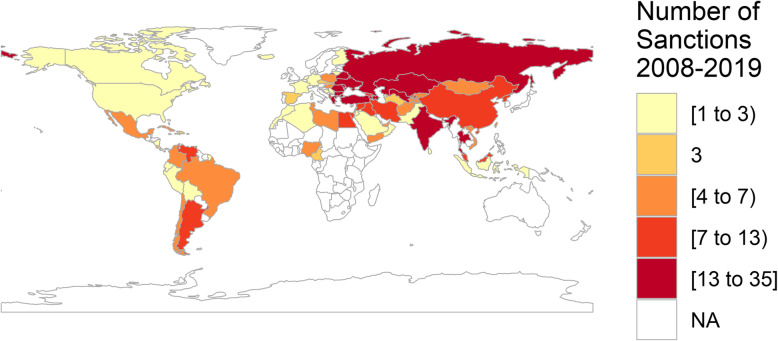
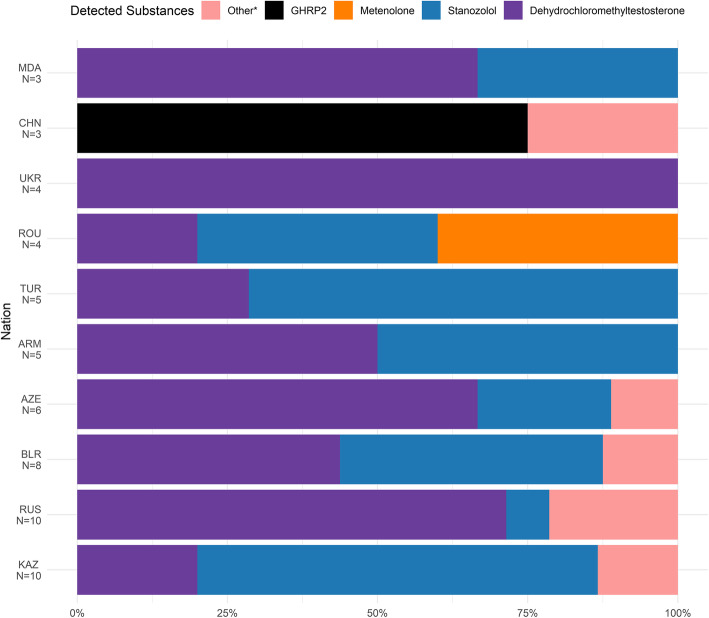
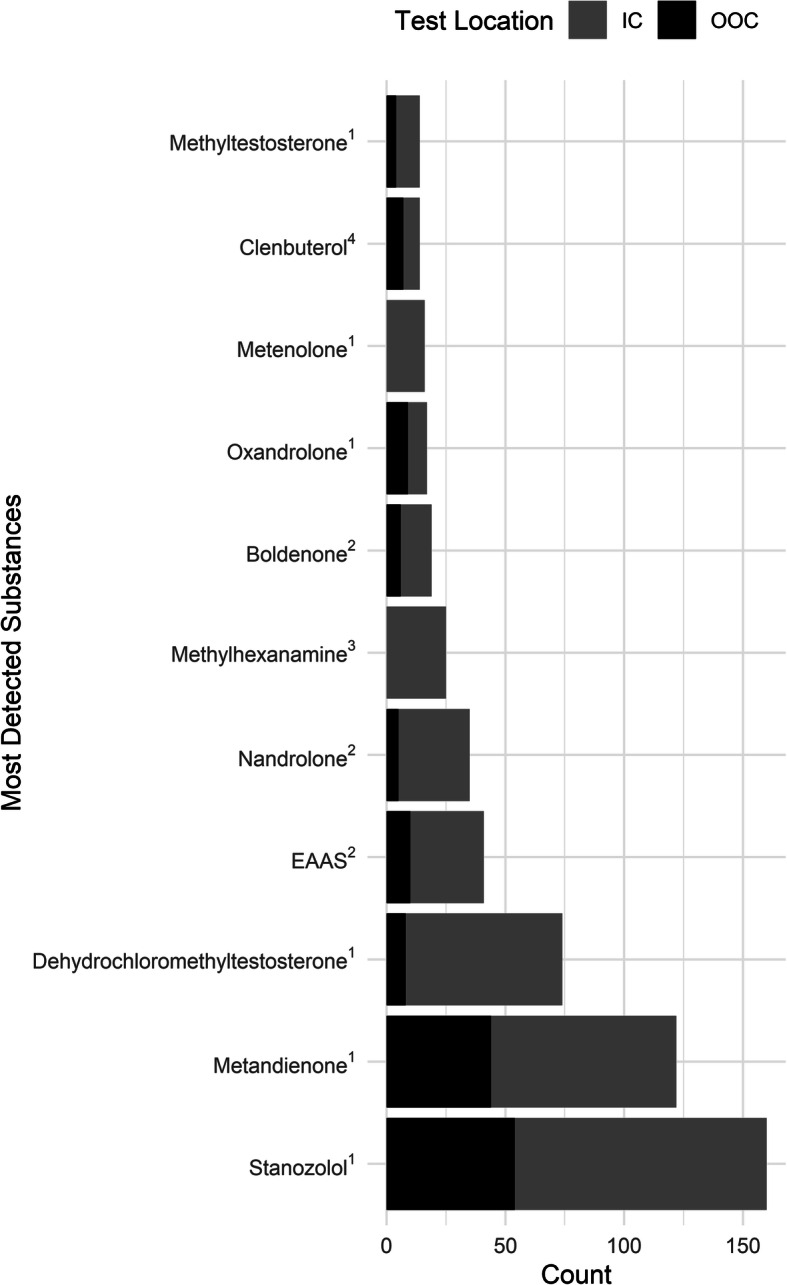
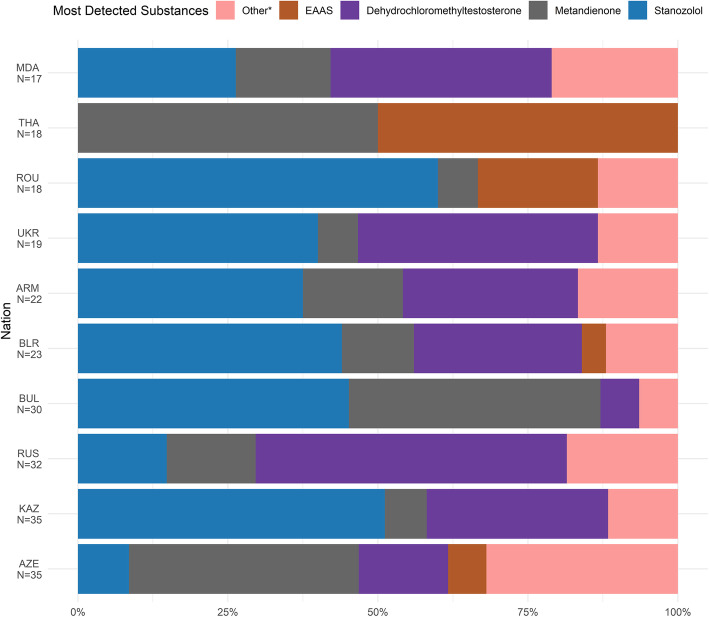
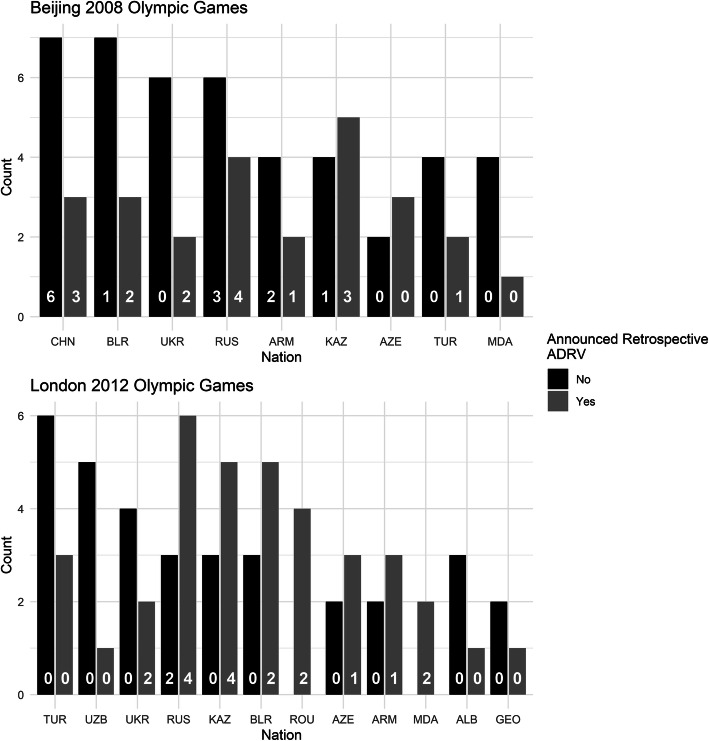
There were 565 sanctions between 2008 and 2019 of which 82% related to the detection of exogenous Anabolic Androgenic Steroid (AAS) metabolites and markers indicating endogenous AAS usage. The detection of exogenous AAS metabolites, markers of endogenous AAS usage and other substance metabolites varied by IWF Continental Federation (p ≤ 0.05) with Europe (74%, 11%, 15%) and Asia (70%, 15%, 15%) showing a higher detection of exogenous AAS compared to Pan America (37%, 30%, 33%) and Africa (50%, 17%, 33%). When looking at the 10 most detected substances, the nations with the highest number of sanctions (range 17-35) all had at least one overrepresented substance that accounted for 38-60% of all detected substances. The targeted re-analysis of samples from the 2008 and 2012 Olympic Games due to the discovery of long-term metabolites for exogenous AAS resulted in 61 weightlifters producing retrospective ADRVs. This includes 34 original medallists (9 gold, 10 silver and 15 bronze), the highest of any sport identified by Olympic Games sample re-testing. The exogenous AAS dehydrochloromethyltestosterone and stanozolol accounted for 83% of detected substances and were present in 95% of these samples.
Based on these findings of regional differences in doping practices, weightlifting would benefit from the targeted testing of certain regions and continuing investment in long-term sample storage as the sensitivity and specificity of detection continues to improve.
兴奋剂的普遍存在以及反兴奋剂腐败问题的调查结果威胁到举重项目在2024年奥运会中的地位。分析举重运动员的兴奋剂使用情况可以找出兴奋剂使用模式,有助于未来的检测工作。
我们分析了国际举重联合会在2008年至2019年间公开的受制裁运动员/支持人员的数据,以及2008年和2012年奥运会公布的追溯性反兴奋剂违规行为(ADRVs)。
2008年至2019年间共有565起制裁,其中82%与检测到外源性合成代谢雄性类固醇(AAS)代谢物以及表明内源性AAS使用的标志物有关。外源性AAS代谢物、内源性AAS使用标志物和其他物质代谢物的检测在国际举重联合会各洲际联合会之间存在差异(p≤0.05),与泛美地区(37%、30%、33%)和非洲(50%、17%、33%)相比,欧洲(74%、11%、15%)和亚洲(70%、15%、15%)外源性AAS的检测率更高。在查看检测最多的10种物质时,制裁数量最多(范围为17 - 35)的国家都至少有一种占比过高的物质,占所有检测物质的38% - 60%。由于发现了外源性AAS的长期代谢物,对2008年和2012年奥运会样本进行的针对性重新分析导致61名举重运动员产生追溯性ADRVs。这包括34名原奖牌获得者(9枚金牌、10枚银牌和15枚铜牌),是奥运会样本重新检测所确定的所有项目中最多的。外源性AAS去氢氯甲睾酮和司坦唑醇占检测到物质的83%,且在这些样本的95%中都有出现。
基于这些关于兴奋剂使用地区差异的研究结果,鉴于检测的敏感性和特异性不断提高,举重项目将受益于对某些地区的针对性检测以及对长期样本储存的持续投入。