London Regional Cancer Program, London Health Sciences Centre, London, Canada.
Department of Anatomy & Cell Biology, Western University, London, Canada.
Clin Exp Metastasis. 2021 Feb;38(1):97-108. doi: 10.1007/s10585-020-10070-y. Epub 2021 Jan 7.
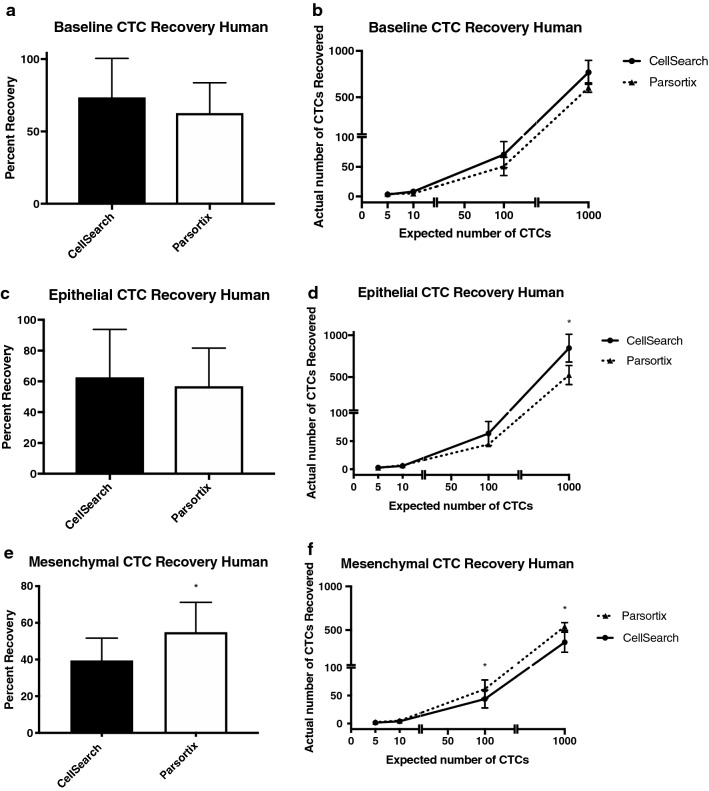
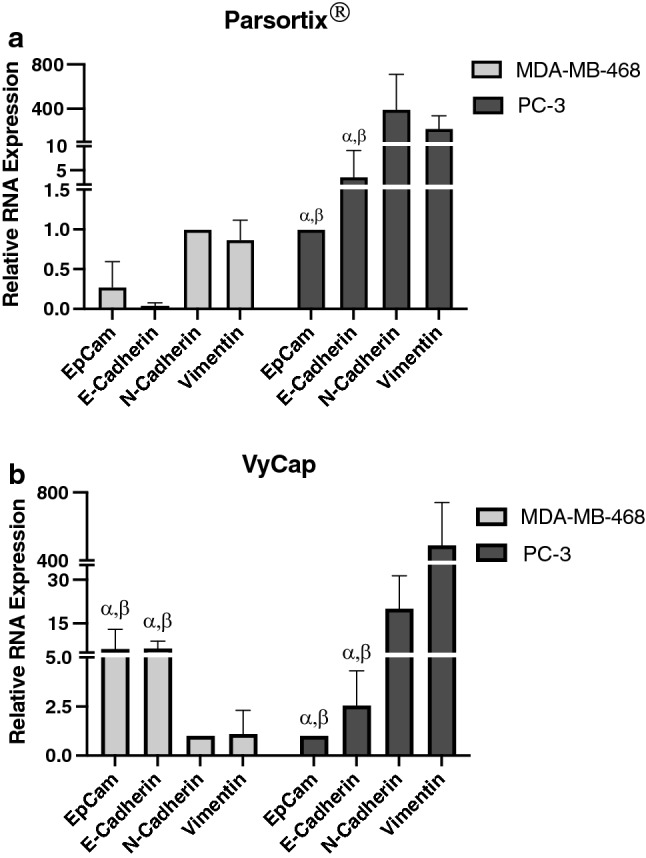
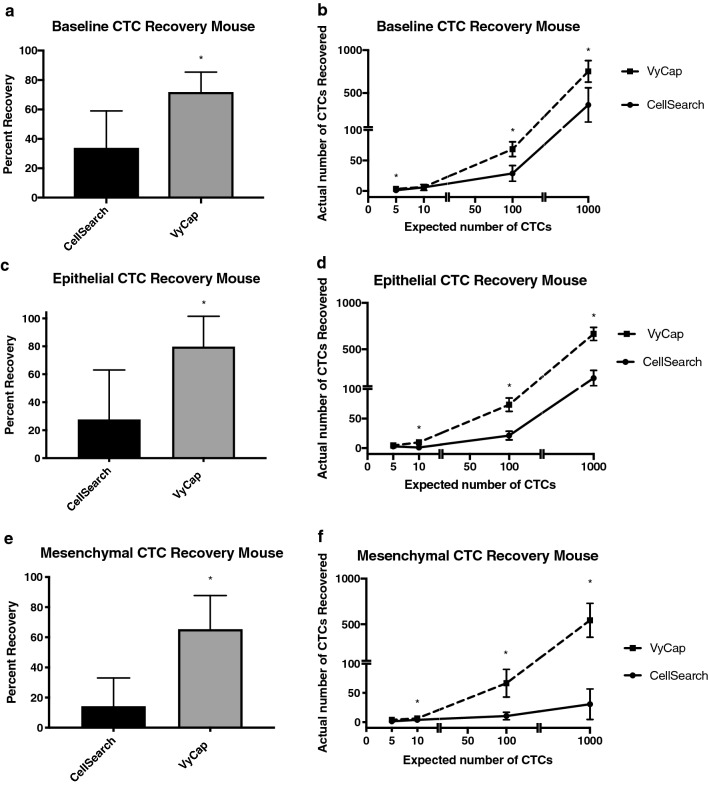
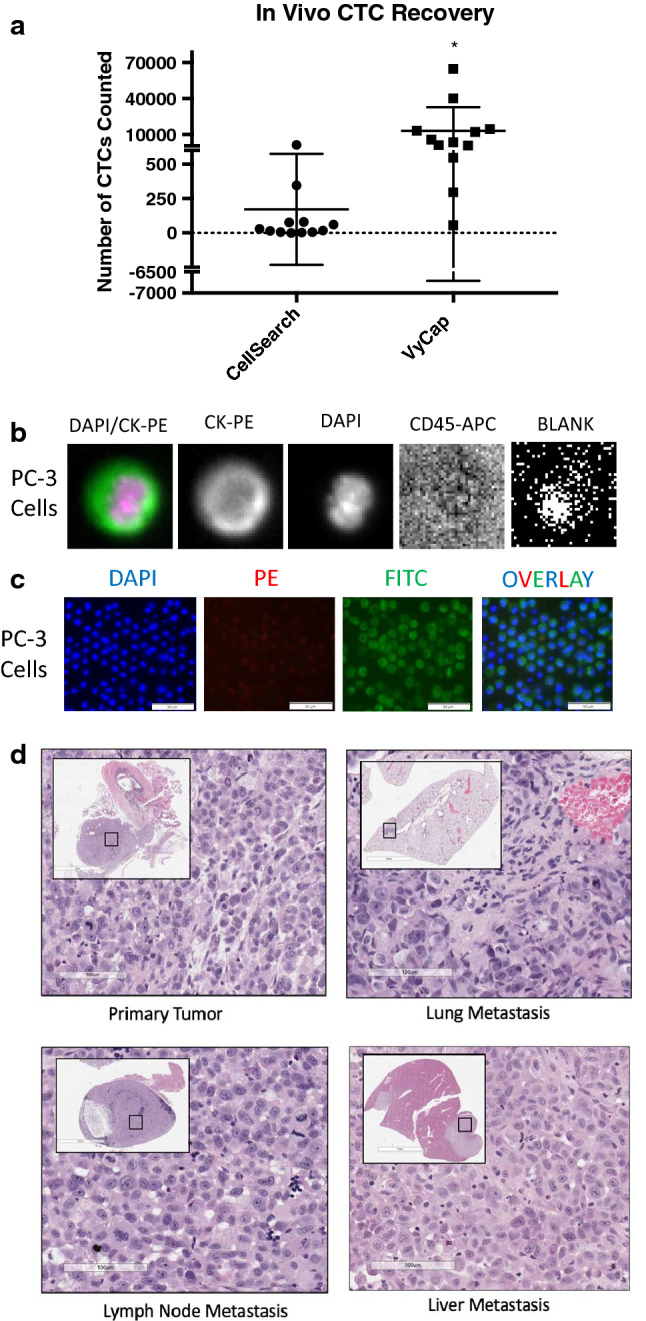
Circulating tumor cells (CTCs) present an opportunity to detect/monitor metastasis throughout disease progression. The CellSearch® is currently the only FDA-approved technology for CTC detection in patients. The main limitation of this system is its reliance on epithelial markers for CTC isolation/enumeration, which reduces its ability to detect more aggressive mesenchymal CTCs that are generated during metastasis via epithelial-to-mesenchymal transition (EMT). This Technical Note describes and validates two EMT-independent CTC analysis protocols; one for human samples using Parsortix® and one for mouse samples using VyCap. Parsortix® identifies significantly more mesenchymal human CTCs compared to the clinical CellSearch® test, and VyCap identifies significantly more CTCs compared to our mouse CellSearch® protocol regardless of EMT status. Recovery and downstream molecular characterization of CTCs is highly feasible using both Parsortix® and VyCap. The described CTC protocols can be used by investigators to study CTC generation, EMT and metastasis in both pre-clinical models and clinical samples.
循环肿瘤细胞 (CTC) 为在疾病进展过程中检测/监测转移提供了机会。目前,CellSearch® 是唯一获得 FDA 批准用于检测患者 CTC 的技术。该系统的主要局限性在于其依赖上皮标记物进行 CTC 的分离/计数,这降低了其检测更具侵袭性的间充质 CTC 的能力,这些 CTC 是通过上皮间质转化 (EMT) 在转移过程中产生的。本技术说明描述并验证了两种 EMT 独立的 CTC 分析方案;一种用于人类样本的 Parsortix®和一种用于小鼠样本的 VyCap。与临床 CellSearch® 检测相比,Parsortix® 显著识别出更多的间充质人 CTC,而 VyCap 无论 EMT 状态如何,与我们的小鼠 CellSearch® 方案相比,均可识别出更多的 CTC。使用 Parsortix® 和 VyCap 均可高度可行地回收和下游分析 CTC 的分子特征。描述的 CTC 方案可由研究人员用于研究临床前模型和临床样本中的 CTC 产生、EMT 和转移。