Department of Food, Aroma and Cosmetic Chemistry, Faculty of Bioindustry, Tokyo University of Agriculture, Hokkaido, Japan.
Department of Agricultural Innovation for Sustainability, Faculty of Agriculture, Tokyo University of Agriculture, Kanagawa, Japan.
Microbiologyopen. 2021 Jan;10(1):e1157. doi: 10.1002/mbo3.1157. Epub 2021 Jan 7.
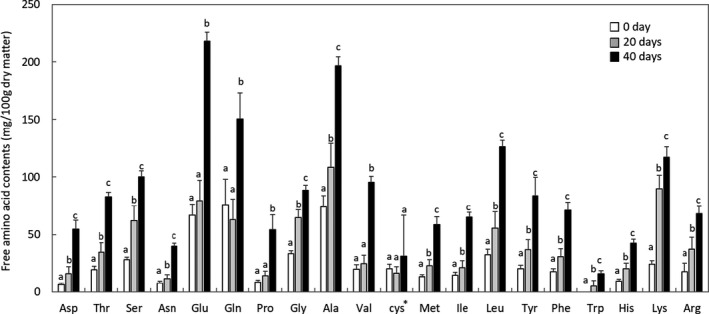
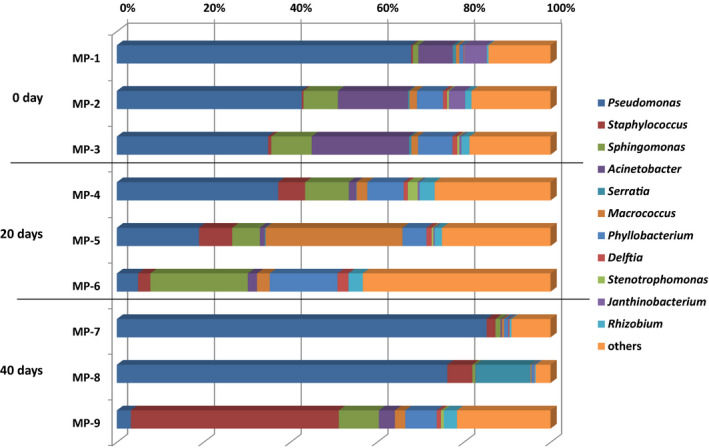
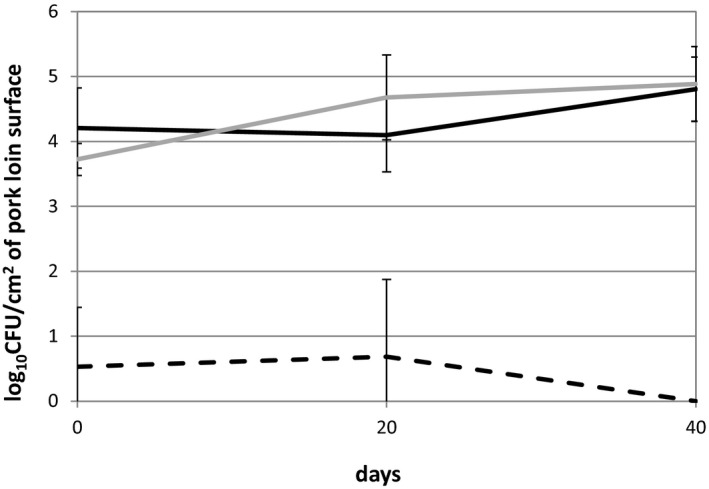
Dry aging (DA) allows for the storage of meat without packaging at 0 to 3°C for several weeks. It enhances the production of pleasant flavors, tenderness, and juiciness in meat. Due to the long storage period and roles of indigenous microbiota in the maturation of several meat products, the microbiota of DA meat is of interest in terms of microbial contributions and food hygiene but has not yet been characterized in detail. This study identified the microbiota of pork loins during DA using culturing and culture-independent meta-16S rRNA gene sequencing and elucidated its characteristics. The amounts of free amino acids and profiles of aroma-active compounds were also monitored by high-performance liquid chromatography and gas chromatography, respectively. The meta-16S rRNA gene sequencing revealed that Pseudomonas spp. generally dominated the microbiota throughout DA; however, the culturing analysis showed marked changes in the species composition during DA. Acinetobacter spp. were the second most dominant bacteria before DA in the culture-independent analysis but became a minor population during DA. The cell numbers of yeasts showed an increased tendency during DA, and Debaryomyces hansenii was the only microorganism isolated from all meat samples throughout DA. Well-known foodborne pathogens were not observed in two microbiota analyses. The amounts of free amino acids were increased by DA, and the number of aroma-active compounds and their flavor dilution values markedly changed during DA. Most microbial isolates showed positive reactions with proteolytic and lipolytic activities, suggesting their contribution to tenderness and aroma production in DA meats.
干式熟成(DA)允许在 0 至 3°C 下无包装储存肉品数周。它能提高肉的风味、嫩度和多汁性。由于储存期长,以及本地微生物群在几种肉类产品成熟中的作用,DA 肉中的微生物群在微生物贡献和食品卫生方面很有研究意义,但尚未得到详细描述。本研究通过培养和非培养的 meta-16S rRNA 基因测序来鉴定猪里脊肉在 DA 过程中的微生物群,并阐明其特征。还通过高效液相色谱和气相色谱分别监测游离氨基酸的含量和香气活性化合物的图谱。meta-16S rRNA 基因测序显示,假单胞菌属在整个 DA 过程中通常主导微生物群;然而,培养分析显示 DA 过程中物种组成发生了明显变化。在非培养分析中,不动杆菌属在 DA 前是第二大优势细菌,但在 DA 过程中成为次要种群。酵母的细胞数量在 DA 过程中呈现出增加的趋势,汉逊德巴利酵母是整个 DA 过程中从所有肉样中分离出的唯一微生物。在两种微生物群分析中均未观察到已知的食源性致病菌。游离氨基酸的含量随着 DA 而增加,在 DA 过程中,香气活性化合物的数量及其风味稀释值发生了明显变化。大多数微生物分离株对蛋白水解和脂肪水解活性呈阳性反应,表明它们对 DA 肉的嫩度和香气产生有贡献。