Center for Integrative Brain Research, Seattle Children's Research Institute, Seattle, WA, USA.
Neuroscience Graduate Program, University of Washington, Seattle, WA, USA.
Nat Commun. 2021 Jan 8;12(1):182. doi: 10.1038/s41467-020-20526-0.
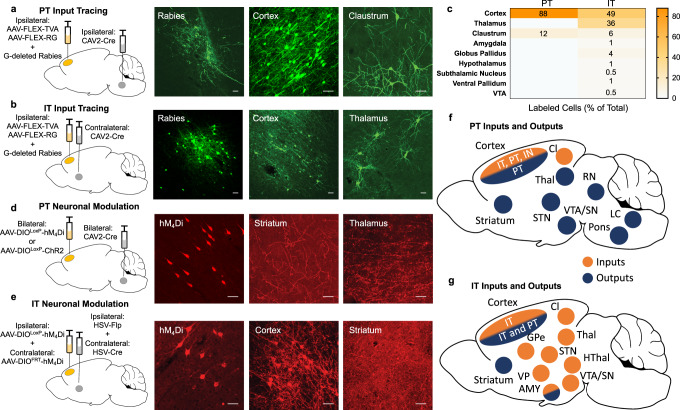
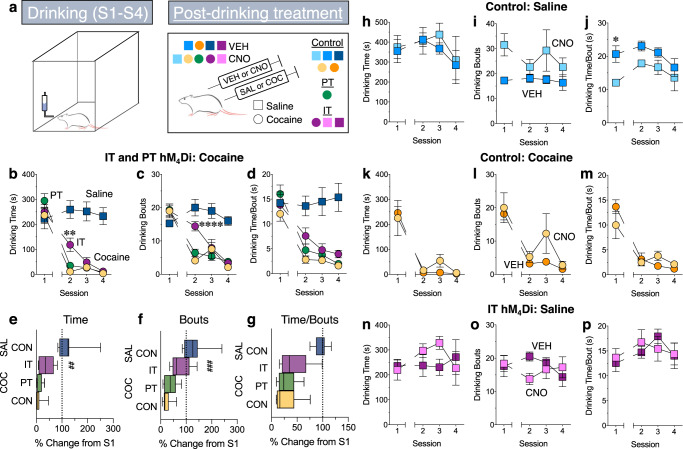
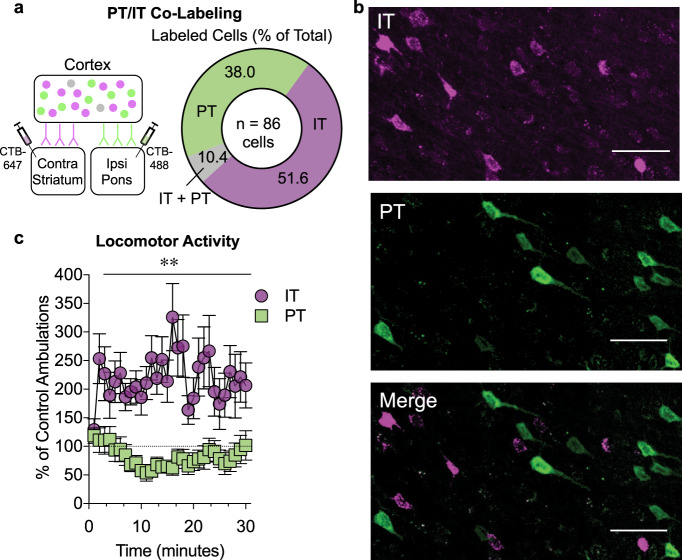
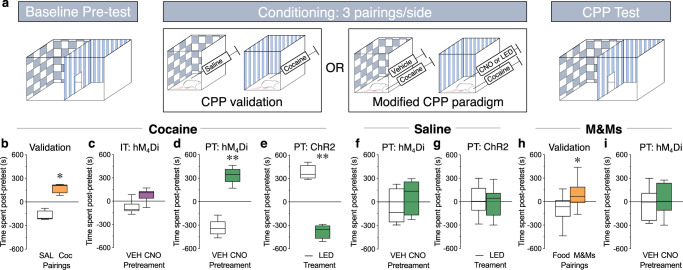
Processing within the anterior cingulate cortex (ACC) is crucial for the patterning of appropriate behavior, and ACC dysfunction following chronic drug use is thought to play a major role in drug addiction. However, cortical pyramidal projection neurons can be subdivided into two major types (intratelencephalic (IT) and pyramidal tract (PT)), with distinct inputs and projection targets, molecular and receptor profiles, morphologies and electrophysiological properties. Yet, how each of these cell populations modulate behavior related to addiction is unknown. We demonstrate that PT neurons regulate the positive features of a drug experience whereas IT neurons regulate the negative features. These findings support a revised theory of cortical function in addiction, with distinct cells and circuits mediating reward and aversion.
扣带皮层(ACC)内的信息处理对于调节恰当的行为模式至关重要,而慢性药物使用后 ACC 功能障碍被认为在药物成瘾中起主要作用。然而,大脑皮层的锥体神经元可以进一步细分为两大主要类型(内脑投射神经元(intratelencephalic (IT))和锥体束神经元(pyramidal tract (PT))),具有不同的输入和投射靶点、分子和受体特征、形态和电生理特性。然而,这些细胞群体中的每一种是如何调节与成瘾相关的行为尚不清楚。我们的研究表明,PT 神经元调节药物体验的积极特征,而 IT 神经元则调节药物体验的消极特征。这些发现支持了一种关于成瘾中海马皮层功能的修正理论,即不同的细胞和回路调节奖赏和厌恶。