University of Chicago, Committee on Medical Physics, Department of Radiology, Chicago, Illinois, United States.
University of Chicago, Section of Rheumatology and Gwen Knapp Center for Lupus and Immunology Resear, United States.
J Biomed Opt. 2021 Jan;26(2). doi: 10.1117/1.JBO.26.2.022910.
Lupus nephritis (LuN) is a chronic inflammatory kidney disease. The cellular mechanisms by which LuN progresses to kidney failure are poorly characterized. Automated instance segmentation of immune cells in immunofluorescence images of LuN can probe these cellular interactions.
Our specific goal is to quantify how sample fixation and staining panel design impact automated instance segmentation and characterization of immune cells.
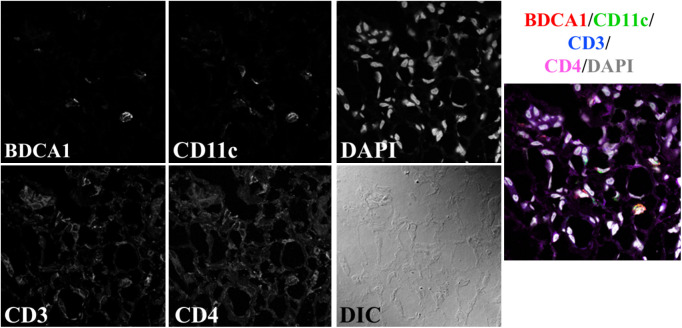
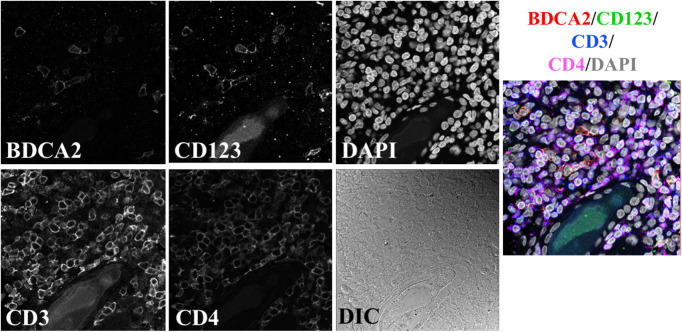
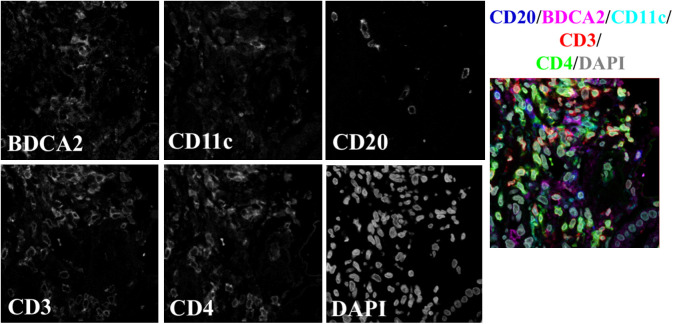
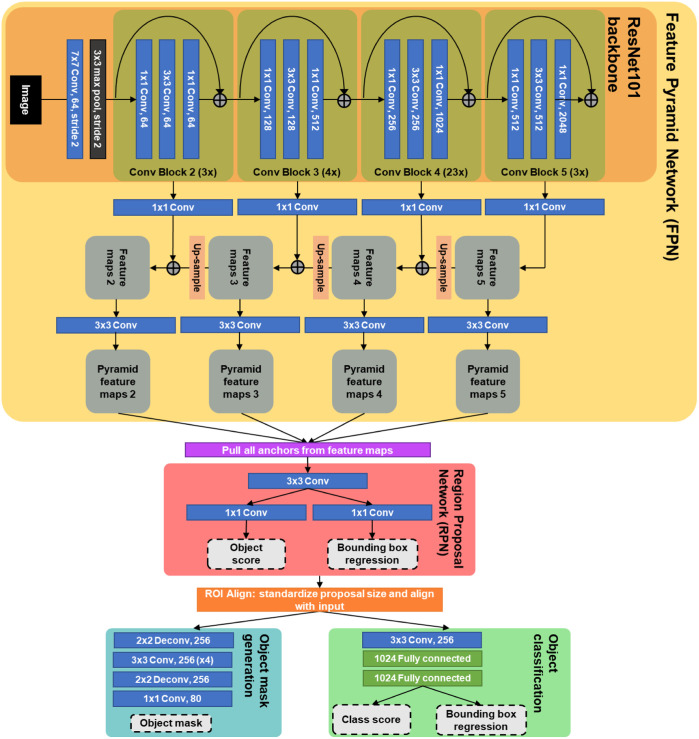
Convolutional neural networks (CNNs) were trained to segment immune cells in fluorescence confocal images of LuN biopsies. Three datasets were used to probe the effects of fixation methods on cell features and the effects of one-marker versus two-marker per cell staining panels on CNN performance.
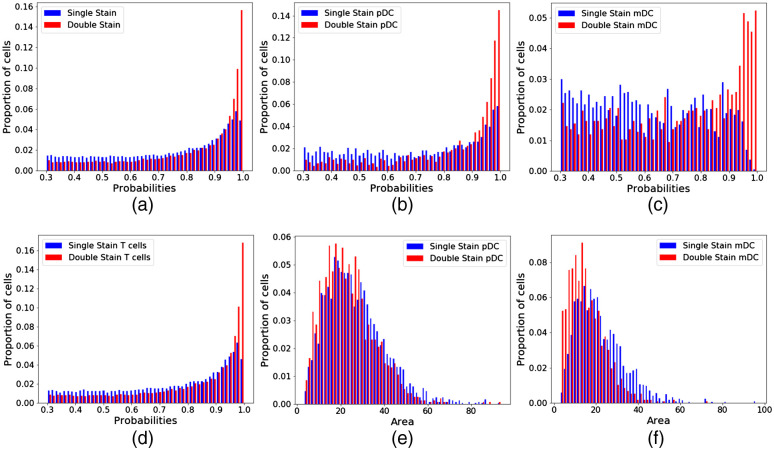
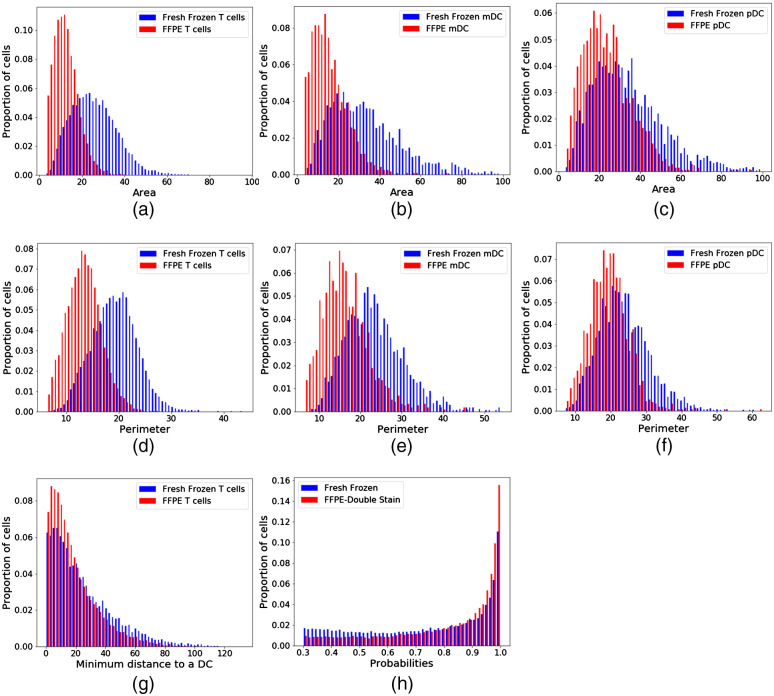
Networks trained for multi-class instance segmentation on fresh-frozen and formalin-fixed, paraffin-embedded (FFPE) samples stained with a two-marker panel had sensitivities of 0.87 and 0.91 and specificities of 0.82 and 0.88, respectively. Training on samples with a one-marker panel reduced sensitivity (0.72). Cell size and intercellular distances were significantly smaller in FFPE samples compared to fresh frozen (Kolmogorov-Smirnov, p ≪ 0.0001).
Fixation method significantly reduces cell size and intercellular distances in LuN biopsies. The use of two markers to identify cell subsets showed improved CNN sensitivity relative to using a single marker.
狼疮肾炎 (LuN) 是一种慢性炎症性肾病。LuN 进展为肾衰竭的细胞机制尚未得到充分描述。LuN 的免疫荧光图像中免疫细胞的自动实例分割可以探测这些细胞相互作用。
我们的具体目标是量化样本固定和染色面板设计如何影响免疫细胞的自动实例分割和特征描述。
卷积神经网络 (CNN) 被训练来分割狼疮肾炎活检的荧光共聚焦图像中的免疫细胞。使用三个数据集来探测固定方法对细胞特征的影响,以及每个细胞一个标记与两个标记的染色面板对 CNN 性能的影响。
在新鲜冷冻和福尔马林固定、石蜡包埋 (FFPE) 样本上使用双标记面板进行多类实例分割的网络训练,其敏感性分别为 0.87 和 0.91,特异性分别为 0.82 和 0.88。在具有单标记面板的样本上进行训练会降低敏感性(0.72)。与新鲜冷冻相比,FFPE 样本中的细胞大小和细胞间距离明显更小(Kolmogorov-Smirnov,p ≪ 0.0001)。
固定方法显著降低了 LuN 活检中的细胞大小和细胞间距离。与使用单个标记相比,使用两个标记来识别细胞亚群可提高 CNN 的敏感性。