School of Nursing and Midwifery, Queen's University, 8 Fitzwilliam Street, Belfast, Northern Ireland, BT9 6AW, UK.
The Northern Ireland Cancer Centre, Belfast City Hospital, Belfast, Northern Ireland.
BMC Cancer. 2021 Jan 9;21(1):43. doi: 10.1186/s12885-020-07733-0.
Surgical resection remains the only curative treatment for pancreatic cancer and is associated with significant post-operative morbidity and mortality. Patients eligible for surgery, increasingly receive neo-adjuvant therapy before surgery or adjuvant therapy afterward, inherently exposing them to toxicity. As such, optimizing physical function through exercise during treatment remains imperative to optimize quality of life either before surgery or during rehabilitation. However, current exercise efficacy and prescription in pancreatic cancer is unknown. Therefore, this study aims to summarise the published literature on exercise studies conducted in patients with pancreatic cancer undergoing treatment with a focus on determining the current prescription and progression patterns being used in this population.
A systematic review of four databases identified studies evaluating the effects of exercise on aerobic fitness, muscle strength, physical function, body composition, fatigue and quality of life in participants with pancreatic cancer undergoing treatment, published up to 24 July 2020. Two reviewers independently reviewed and appraised the methodological quality of each study.
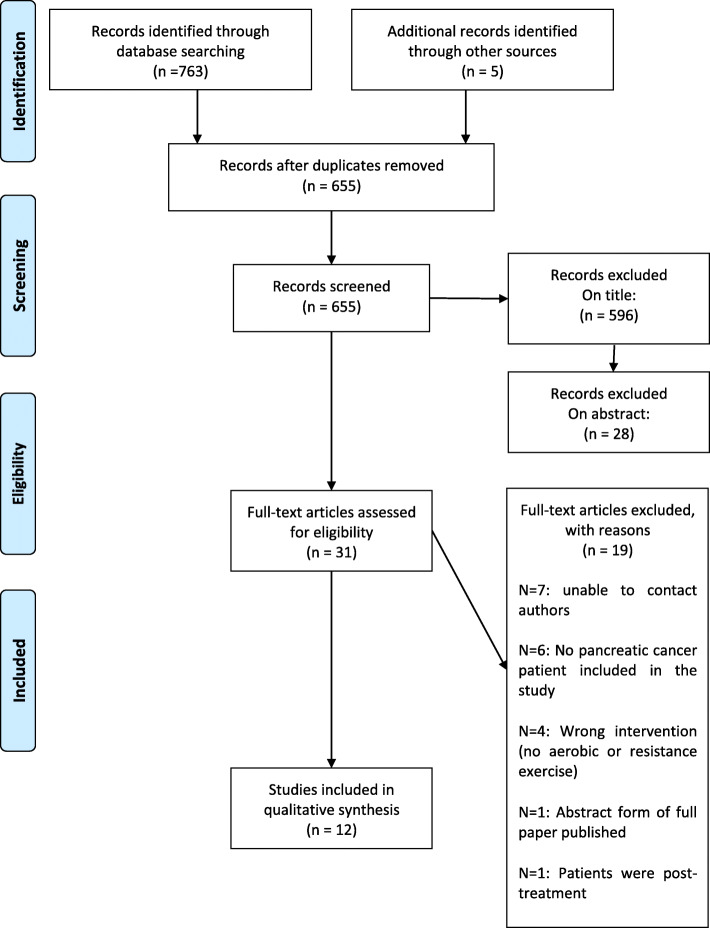
Twelve studies with a total of 300 participants were included. Heterogeneity of the literature prevented meta-analysis. Exercise was associated with improvements in outcomes; however, study quality was variable with the majority of studies receiving a weak rating.
High quality evidence regarding the efficacy and prescription of exercise in pancreatic cancer is lacking. Well-designed trials, which have received feedback and input from key stakeholders prior to implementation, are required to examine the impact of exercise in pancreatic cancer on key cancer related health outcomes.
手术切除仍然是治疗胰腺癌的唯一方法,但术后发病率和死亡率都很高。越来越多适合手术的患者在术前接受新辅助治疗或术后接受辅助治疗,这使他们容易受到毒性的影响。因此,在治疗过程中通过运动优化身体功能,对于优化手术前或康复期间的生活质量仍然至关重要。然而,目前胰腺癌的运动疗效和处方剂量尚不清楚。因此,本研究旨在总结发表的关于接受治疗的胰腺癌患者进行运动研究的文献,重点是确定目前在该人群中使用的处方剂量和进展模式。
对四个数据库进行系统评价,以确定在接受治疗的胰腺癌患者中评估运动对有氧健身、肌肉力量、身体功能、身体成分、疲劳和生活质量影响的研究,检索时间截至 2020 年 7 月 24 日。两位评审员独立审查和评估了每一项研究的方法学质量。
共纳入 12 项研究,总计 300 名参与者。文献的异质性使得无法进行荟萃分析。运动与改善结果有关,但研究质量各不相同,大多数研究的评分较低。
关于胰腺癌运动疗效和处方剂量的高质量证据仍然缺乏。需要设计良好的试验,在实施前从利益相关者那里获得反馈和意见,以检查运动对胰腺癌患者关键癌症相关健康结果的影响。