Jeong Shin Ok, Lee Joon Seong, Lee Tae Hee, Hong Su Jin, Cho Young Kyu, Park Junseok, Jeon Seong Ran, Kim Hyun Gun, Kim Jin-Oh
Institute for Digestive Research, Digestive Disease Center Soonchunhyang University College of Medicine, Seoul, Korea.
Digestive Disease Center and Research Institute, Department of Internal Medicine, Soonchunhyang University College of Medicine, Bucheon, Gyeonggi-do, Korea.
J Neurogastroenterol Motil. 2021 Apr 30;27(2):231-239. doi: 10.5056/jnm20114.
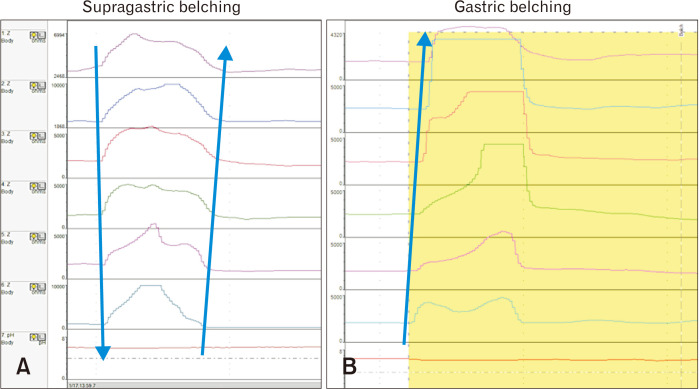
BACKGROUND/AIMS: Belching disorder (BD) is clinically distinct from gastroesophageal reflux disease (GERD) with belching. Supragastric belching (SGB) is closely associated with reflux episodes. This study investigates belch characteristics in association with reflux, compared between patients with BD and those who had GERD with belching.
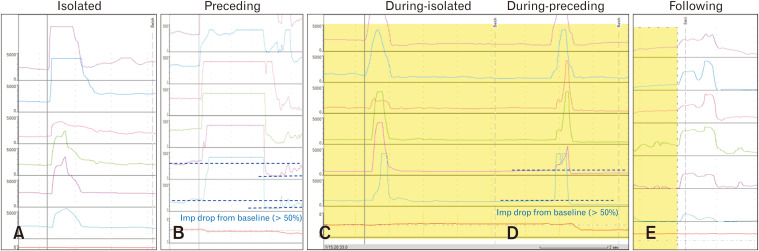
Impedance pH monitoring data from 10 patients with BD and 10 patients with GERD who exhibited belching were retrospectively analyzed. Belches were considered "isolated" or "reflux-related" and acidic/non-acidic. Belch characteristics were compared between patients with BD and those with GERD.
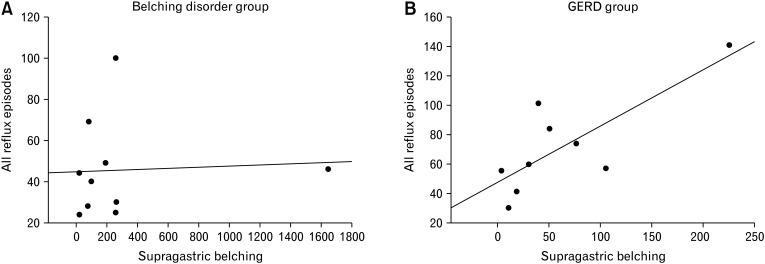
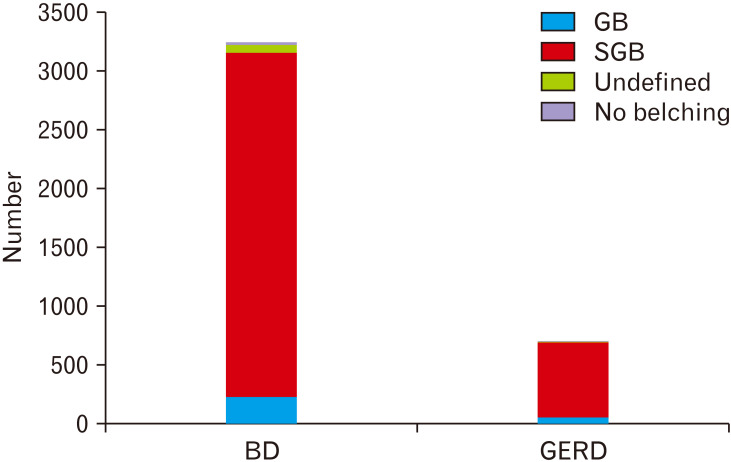
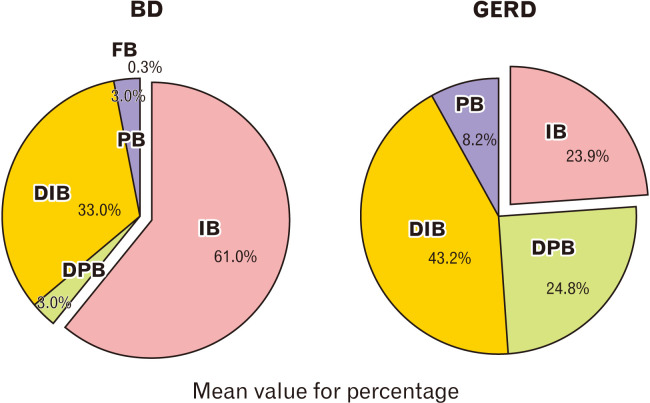
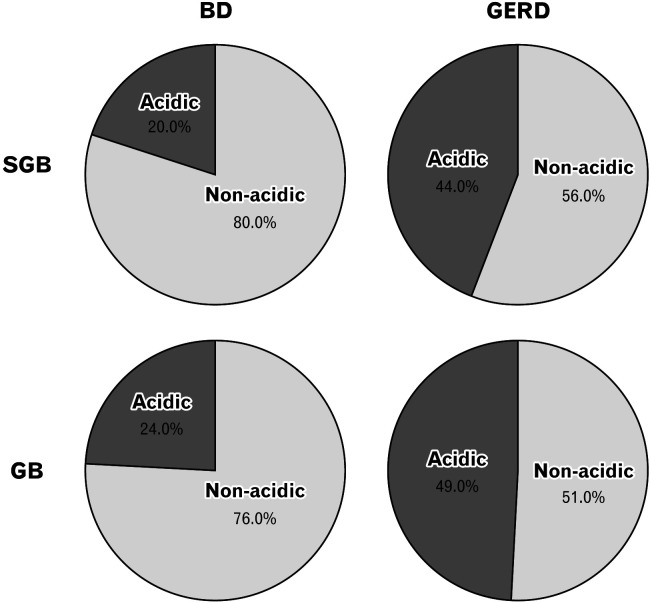
Symptomatic belches were more frequent in patients with BD than in patients with GERD (median, 160.5 vs 56.0, < 0.05). SGB was the most common type in both groups; common subtypes comprised "isolated" in patients with BD and "isolated during the reflux period" in patients with GERD. Reflux-related SGB was more common in patients with GERD than in BD (78.3% vs 45.2%, < 0.005). Both "preceding belching" including the reflux period and acidic SGB were more common in patients with GERD than in BD (31.8% vs 8.6% and 38.1% vs 8.9%, both < 0.05). Supragastric belch number positively correlated with all reflux episodes in patients with GERD (adjusted = 0.572, = 0.007).
BD is characterized by more belching, compared to GERD. SGB is more frequently associated with reflux in GERD than in BD; acidity may be related to GERD. In BD, SGB is typically non-acidic and unrelated to reflux. Distinct SGB characteristics may reflect different pathogenic mechanisms of reflux and associated symptoms.
背景/目的:嗳气障碍(BD)在临床上与伴有嗳气的胃食管反流病(GERD)不同。胃上嗳气(SGB)与反流发作密切相关。本研究比较了BD患者和伴有嗳气的GERD患者与反流相关的嗳气特征。
回顾性分析了10例BD患者和10例伴有嗳气的GERD患者的阻抗pH监测数据。嗳气被分为“孤立性”或“反流相关性”以及酸性/非酸性。比较了BD患者和GERD患者的嗳气特征。
BD患者的症状性嗳气比GERD患者更频繁(中位数,160.5对56.0,<0.05)。SGB是两组中最常见的类型;常见亚型在BD患者中为“孤立性”,在GERD患者中为“反流期孤立性”。GERD患者中反流相关的SGB比BD患者更常见(78.3%对45.2%,<0.005)。包括反流期的“嗳气前驱”和酸性SGB在GERD患者中均比BD患者更常见(31.8%对8.6%以及38.1%对8.9%,均<0.05)。GERD患者中胃上嗳气次数与所有反流发作呈正相关(校正后=0.572,=0.007)。
与GERD相比,BD的特征是嗳气更多。与BD相比,GERD中SGB与反流的相关性更高;酸度可能与GERD有关。在BD中,SGB通常是非酸性的且与反流无关。不同的SGB特征可能反映了反流及相关症状的不同致病机制。