Amarsanaa Khulan, Kim Hye-Ji, Ko Eun-A, Jo Jaemin, Jung Sung-Cherl
Department of Physiology, School of Medicine, Jeju National University, Jeju 63243, Korea.
Department of Internal Medicine, School of Medicine, Jeju National University, Jeju 63243, Korea.
Exp Neurobiol. 2021 Feb 28;30(1):73-86. doi: 10.5607/en20051.
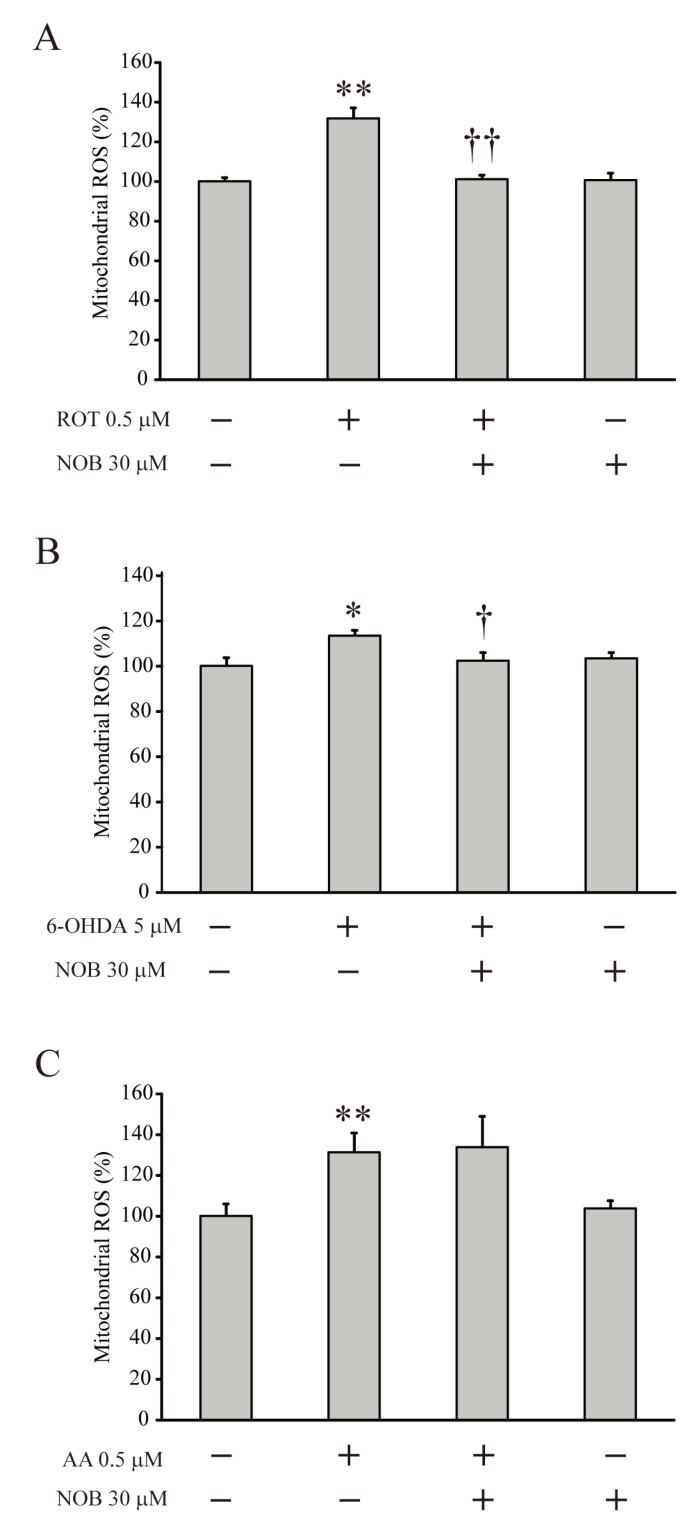
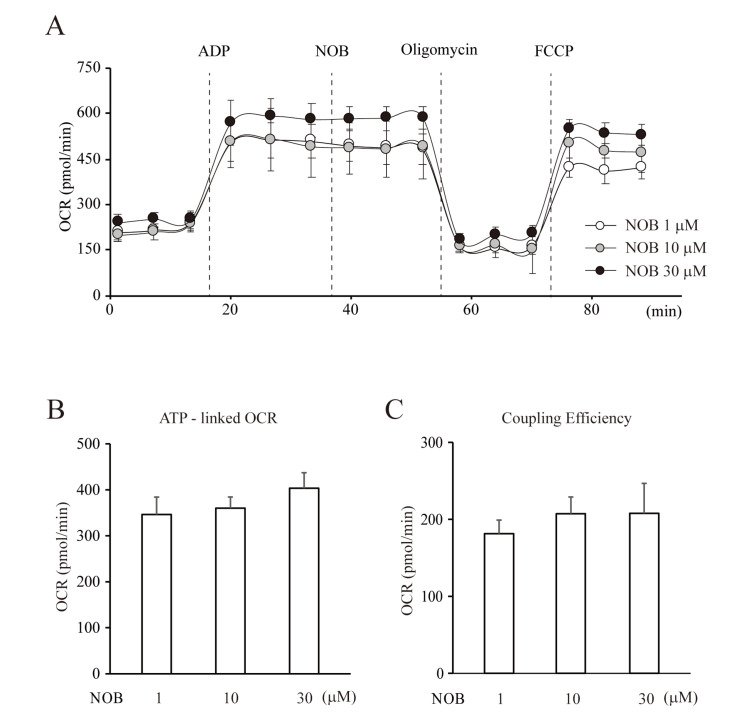
Nobiletin, a polymethoxylated flavonoid found in citrus, has been studied because of its modulatory functions in cellular signaling cascades, and effects to prevent mitochondrial calcium overload and neuronal cell death. Particularly, we previously reported that nobiletin induced changes in the mitochondrial membrane potential through K channel regulation, suggesting that nobiletin might exert neuroprotective effects via regulating mitochondrial functions associated with the electron transport chain (ETC) system. This study investigated whether nobiletin regulated mitochondrial dysfunction mediated by ETC system downregulation by inhibiting complex I (CI) and complex III (CIII) in pure mitochondria and the cortical neurons of rats. The results showed that nobiletin significantly reduced mitochondrial reactive oxygen species (ROS) production, inhibited apoptotic signaling, enhanced ATP production and then restored neuronal viability under conditions of CI inhibition, but not CIII inhibition. These effects were attributed to the downregulation of translocation of apoptosis-induced factor (AIF), and the upregulation of CI activity and the expression of antioxidant enzymes such as Nrf2 and HO-1. Together with our previous study, these results indicate that the neuroprotective effects of nobiletin under mitochondrial dysfunction may be associated with its function to activate antioxidant signaling cascades. Our findings suggest the possibility that nobiletin has therapeutic potential in treating oxidative neurological and neurodegenerative diseases mediated by mitochondrial dysfunction.
诺必亭是一种存在于柑橘类水果中的多甲氧基黄酮,因其在细胞信号级联反应中的调节功能以及预防线粒体钙超载和神经元细胞死亡的作用而受到研究。特别是,我们之前报道过诺必亭通过钾通道调节诱导线粒体膜电位变化,这表明诺必亭可能通过调节与电子传递链(ETC)系统相关的线粒体功能发挥神经保护作用。本研究调查了诺必亭是否通过抑制大鼠纯线粒体和皮质神经元中的复合物I(CI)和复合物III(CIII)来调节由ETC系统下调介导的线粒体功能障碍。结果表明,在CI抑制而非CIII抑制的条件下,诺必亭显著降低线粒体活性氧(ROS)的产生,抑制凋亡信号传导,增强ATP生成,进而恢复神经元活力。这些作用归因于凋亡诱导因子(AIF)易位的下调以及CI活性和抗氧化酶如Nrf2和HO-1表达的上调。与我们之前的研究一起,这些结果表明诺必亭在线粒体功能障碍下的神经保护作用可能与其激活抗氧化信号级联反应的功能有关。我们的研究结果提示诺必亭在治疗由线粒体功能障碍介导的氧化性神经疾病和神经退行性疾病方面具有治疗潜力。