Meng-Zhen Sun, Ju Li, Lan-Chun Zhang, Cai-Feng Ding, Shu-da Yang, Hao-Fei Yu, Wei-Yan Hu
School of Pharmaceutical Science & Yunnan Key Laboratory of Pharmacology for Natural Products, Kunming Medical University, Kunming 650500, PR China.
School of Chinese Materia Medica &Yunnan Key Laboratory of Southern Medicine Utilization, Yunnan University of Chinese Medicine, Kunming 650500, PR China.
Heliyon. 2022 Nov 7;8(11):e11440. doi: 10.1016/j.heliyon.2022.e11440. eCollection 2022 Nov.
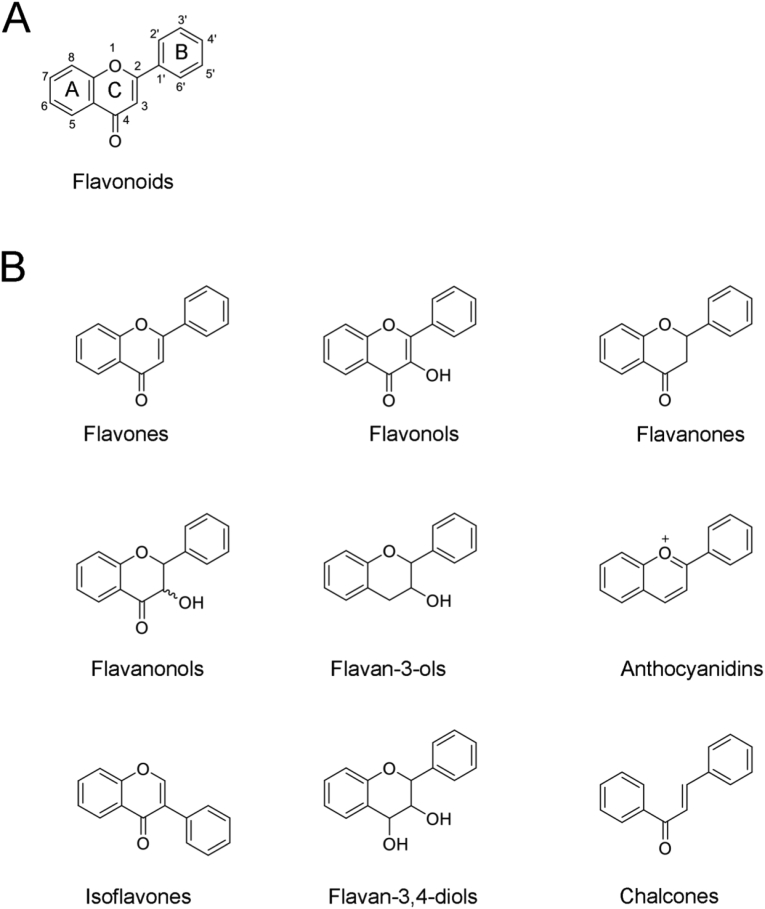
Millions of people suffer from Alzheimer's disease (AD) and Parkinson's disease (PD) worldwide. Due to their complex pathology, no effective pharmacological treatment has been found to date, despite extensive research. Developing new, effective therapeutic agents to cure these disease remains a major challenge. Although the cause of AD and PD remains illusive, numerous studies indicates that oxidative stress and neuro-inflammation lead to neurodegeneration in the central nervous system and play vital role in AD and PD morbidity and progression. Flavonoids, which are found widely in nature, exhibit anti-oxidative, anti-inflammatory, anti-mutative, anti-microbial, and neuroprotective properties, so have potential to treat these two kinds of diseases.
In this review, we focus on the anti-oxidative and neuroprotective action of flavonoids in attenuating Alzheimer's and Parkinson's disease, and how they might be harnessed in the development of new pharmacological agents to treat these two diseases.
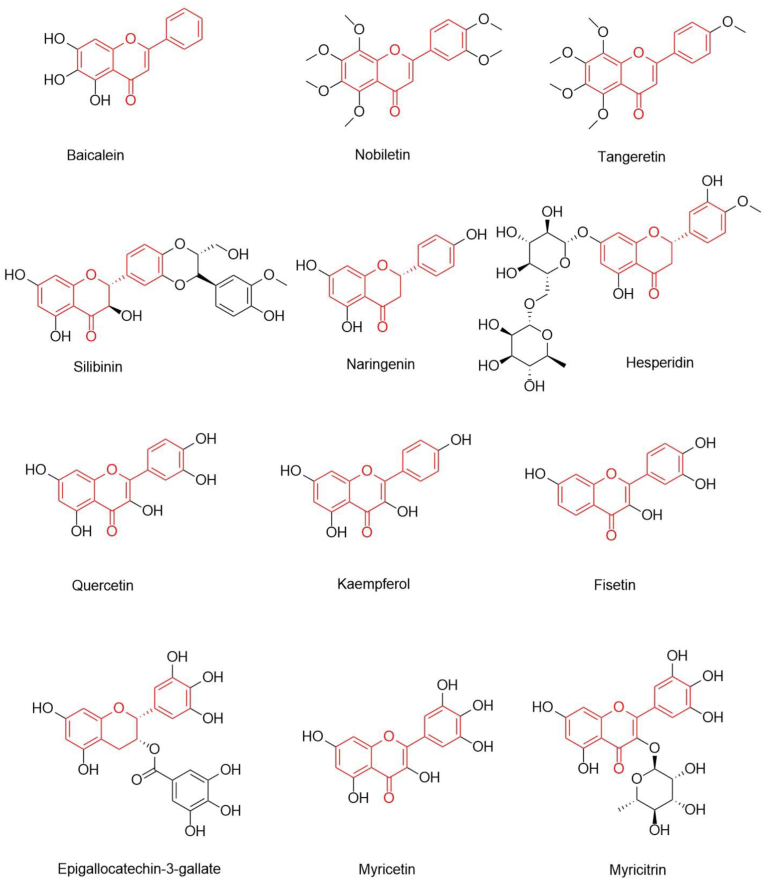
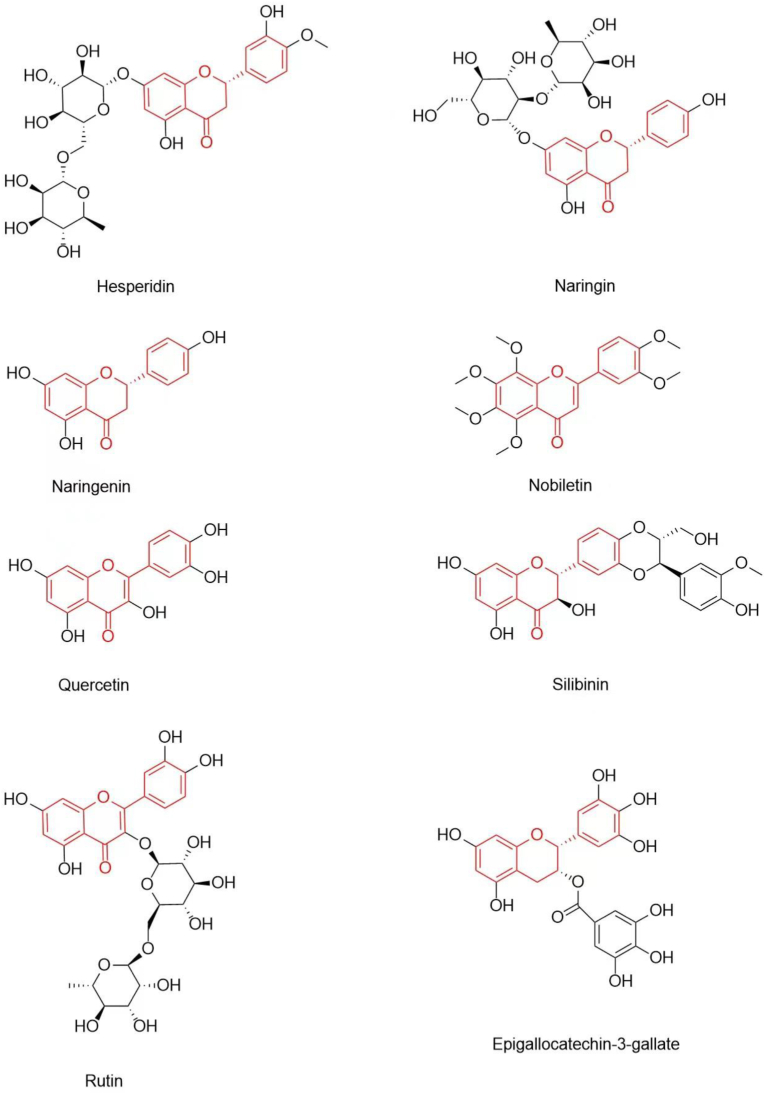
Some flavonoid compounds, like hesperidin, naringin, naringenin, tangeretin, nobiletin, silibinin, Epigallocatechin-3-gallate, displayed to be effective in both AD and PD.
Considerable studies have demonstrated the anti-AD and anti-PD effects of flavonoids through various in vitro and in vivo models. However, more rigorous studies are needed to be done for flavonoids to develop into effective drugs and apply them to clinical practice.
全球数以百万计的人患有阿尔茨海默病(AD)和帕金森病(PD)。由于其复杂的病理学特征,尽管进行了广泛研究,但迄今为止尚未找到有效的药物治疗方法。开发新的有效治疗药物来治愈这些疾病仍然是一项重大挑战。尽管AD和PD的病因尚不明确,但大量研究表明,氧化应激和神经炎症会导致中枢神经系统神经退行性变,并在AD和PD的发病及进展中起重要作用。黄酮类化合物在自然界中广泛存在,具有抗氧化、抗炎、抗突变、抗菌和神经保护特性,因此有治疗这两种疾病的潜力。
在本综述中,我们重点关注黄酮类化合物在减轻阿尔茨海默病和帕金森病方面的抗氧化和神经保护作用,以及它们如何应用于开发治疗这两种疾病的新药。
一些黄酮类化合物,如橙皮苷、柚皮苷、柚皮素、橘红素、川陈皮素、水飞蓟宾、表没食子儿茶素没食子酸酯,在AD和PD中均显示出有效性。
大量研究已通过各种体外和体内模型证明了黄酮类化合物的抗AD和抗PD作用。然而,黄酮类化合物要开发成有效药物并应用于临床实践,还需要进行更严格的研究。