Department of Molecular Genetics and Infection Biology, University of Greifswald, Greifswald, Germany.
Front Immunol. 2020 Dec 14;11:614801. doi: 10.3389/fimmu.2020.614801. eCollection 2020.
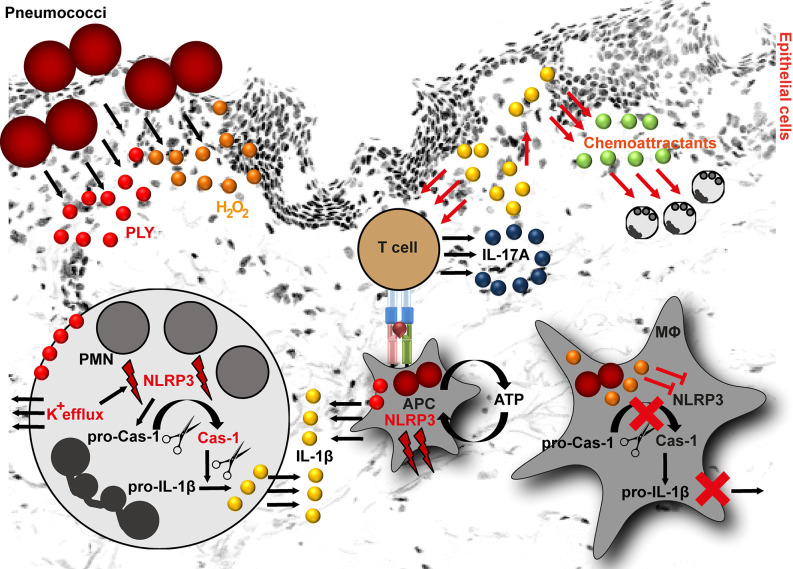
Inflammasomes are innate immune sensors that regulate caspase-1 mediated inflammation in response to environmental, host- and pathogen-derived factors. The NLRP3 inflammasome is highly versatile as it is activated by a diverse range of stimuli. However, excessive or chronic inflammasome activation and subsequent interleukin-1β (IL-1β) release are implicated in the pathogenesis of various autoimmune diseases such as rheumatoid arthritis, inflammatory bowel disease, and diabetes. Accordingly, inflammasome inhibitor therapy has a therapeutic benefit in these diseases. In contrast, NLRP3 inflammasome is an important defense mechanism against microbial infections. IL-1β antagonizes bacterial invasion and dissemination. Unfortunately, patients receiving IL-1β or inflammasome inhibitors are reported to be at a disproportionate risk to experience invasive bacterial infections including pneumococcal infections. Pneumococci are typical colonizers of immunocompromised individuals and a leading cause of community-acquired pneumonia worldwide. Here, we summarize the current limited knowledge of inflammasome activation in pneumococcal infections of the respiratory tract and how inflammasome inhibition may benefit these infections in immunocompromised patients.
炎症小体是先天免疫传感器,可响应环境、宿主和病原体来源的因素,调节半胱氨酸蛋白酶-1 介导的炎症反应。NLRP3 炎症小体非常多样化,因为它可以被多种不同的刺激激活。然而,过度或慢性炎症小体激活以及随后的白细胞介素-1β(IL-1β)释放与多种自身免疫性疾病的发病机制有关,如类风湿关节炎、炎症性肠病和糖尿病。因此,炎症小体抑制剂治疗在这些疾病中具有治疗益处。相反,NLRP3 炎症小体是对抗微生物感染的重要防御机制。白细胞介素-1β 拮抗细菌入侵和传播。不幸的是,据报道,接受白细胞介素-1β 或炎症小体抑制剂治疗的患者面临不成比例的侵袭性细菌感染风险,包括肺炎球菌感染。肺炎球菌是免疫功能低下个体的典型定植菌,也是全球社区获得性肺炎的主要原因。在这里,我们总结了目前关于呼吸道肺炎球菌感染中炎症小体激活的有限知识,以及炎症小体抑制如何使免疫功能低下患者的这些感染受益。