Liu Yonghong, Zhang Zhiyong, Li Wenjing, Tian Songbo
Department of Oral Medicine, The Second Hospital of Hebei Medical University, Shijiazhuang, China.
Front Cell Dev Biol. 2020 Dec 23;8:593653. doi: 10.3389/fcell.2020.593653. eCollection 2020.
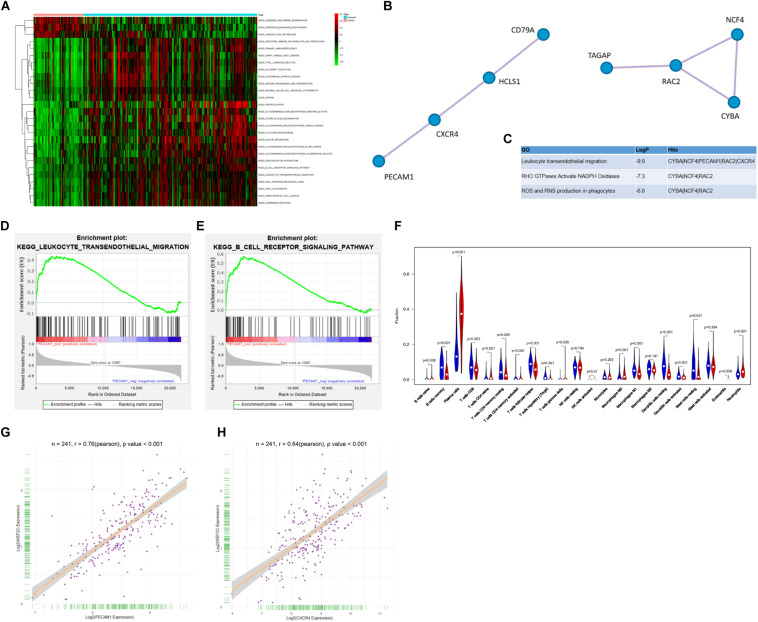
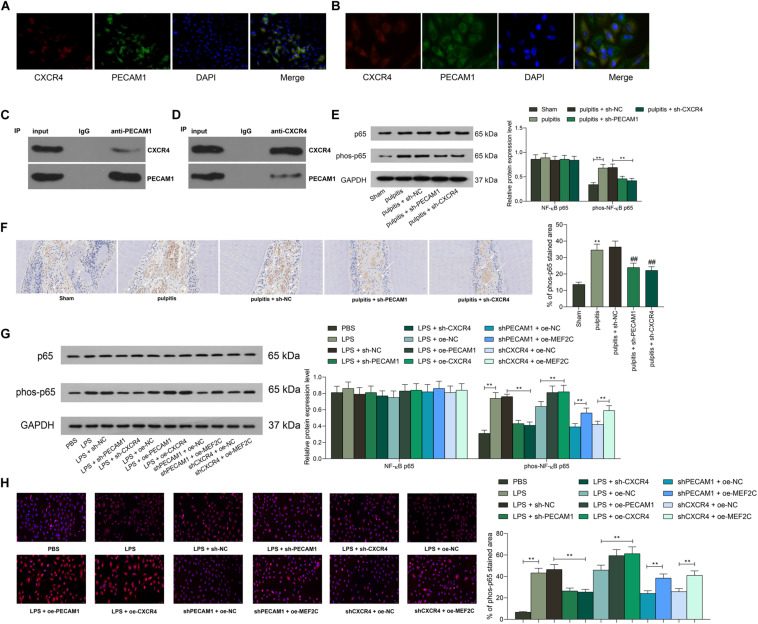
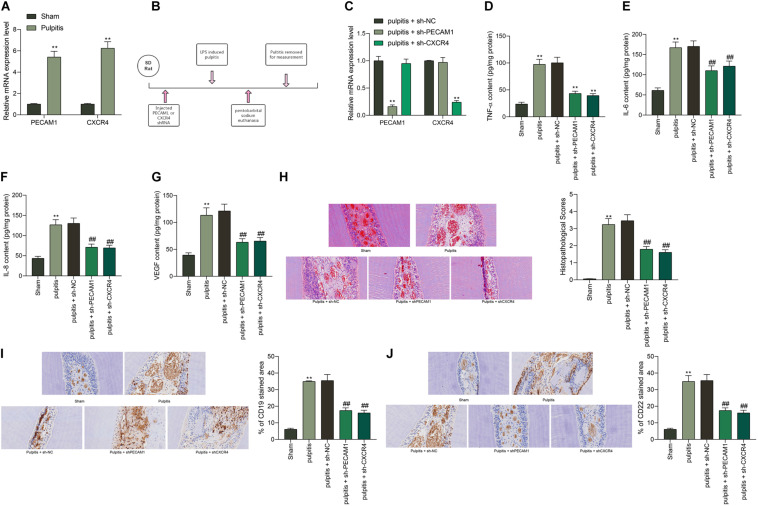
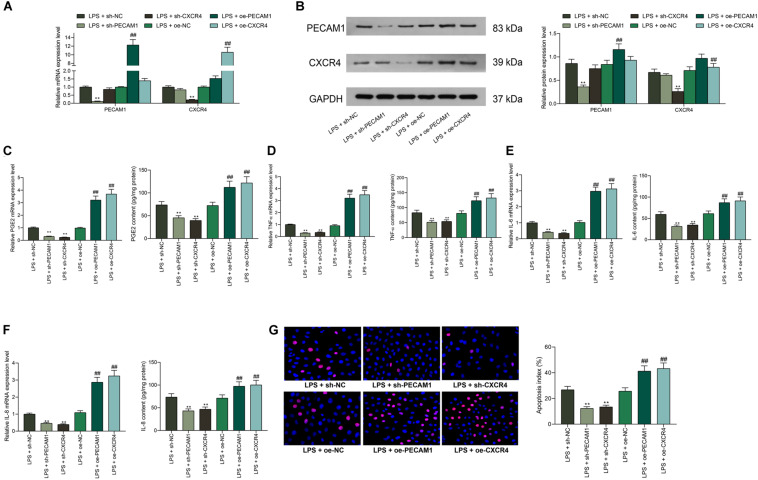
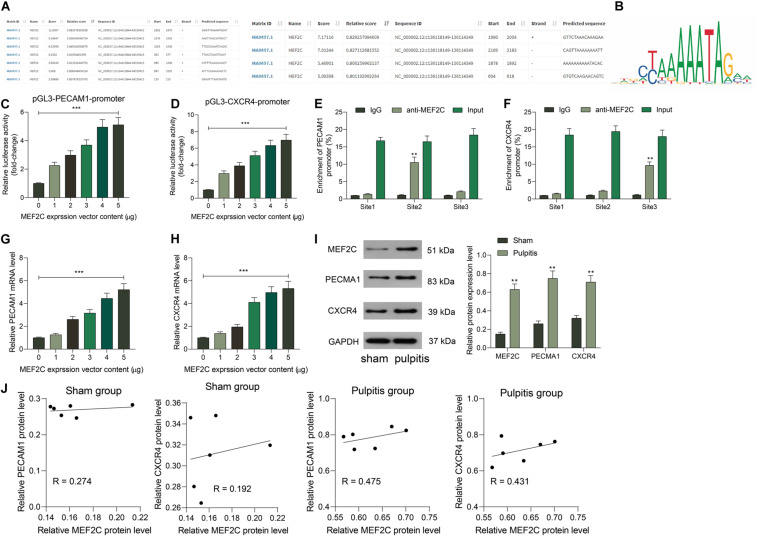
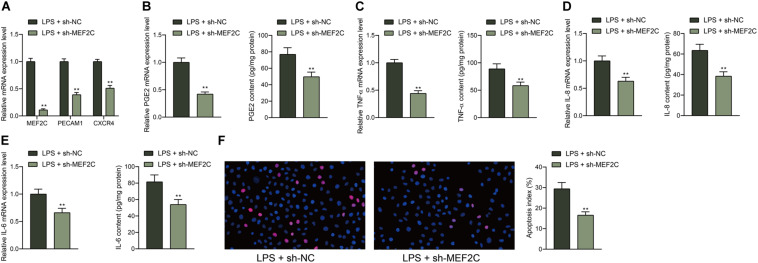
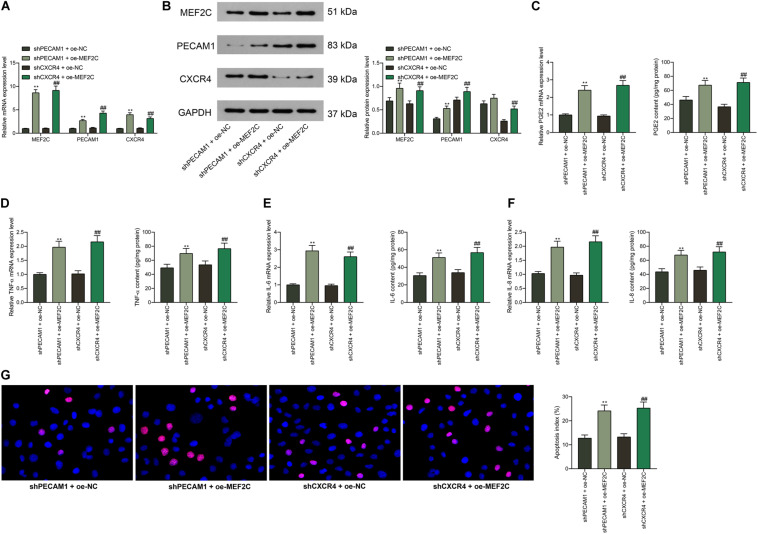
Pulpitis is a frequent bacterially driven inflammation featured with the local accumulation of inflammatory products in human dental pulps. A GEO dataset GSE16134 comprising data of inflamed dental pulp tissues was used for bioinformatics analyses. A protein-protein interaction (PPI) analysis suggested that chemokine receptor 4 (CXCR4) owned a high correlation with platelet endothelial cell adhesion molecule-1 (PECAM1). A rat model with pulpitis was established, and lipopolysaccharide (LPS)-induced human dental pulp fibroblasts (HDPFs) were used for experiments. Then, high expression of PECAM1 and CXCR4 was validated in the inflamed dental pulp tissues in rats and in LPS-induced HDPFs. Either downregulation of PECAM1 or CXCR4 suppressed inflammatory cell infiltration in inflamed tissues as well as the inflammation and apoptosis of HDPFs. A transcription factor myocyte-enhancer factor 2 (MEF2C) was predicted and validated as a positive regulator of either PECAM1 or CXCR4, which activated the NF-κB signaling pathway and promoted pulpitis progression. To sum up, this study suggested that MEF2C transcriptionally activates PECAM1 and CXCR4 to activate the B-cell and NF-κB signaling pathways, leading to inflammatory cell infiltration and pulpitis progression.
牙髓炎是一种常见的由细菌驱动的炎症,其特征是人体牙髓中炎症产物的局部积累。使用包含炎症牙髓组织数据的GEO数据集GSE16134进行生物信息学分析。蛋白质-蛋白质相互作用(PPI)分析表明,趋化因子受体4(CXCR4)与血小板内皮细胞黏附分子-1(PECAM1)高度相关。建立了牙髓炎大鼠模型,并使用脂多糖(LPS)诱导的人牙髓成纤维细胞(HDPFs)进行实验。然后,在大鼠炎症牙髓组织和LPS诱导的HDPFs中验证了PECAM1和CXCR4的高表达。下调PECAM1或CXCR4均可抑制炎症组织中的炎症细胞浸润以及HDPFs的炎症和凋亡。预测并验证转录因子肌细胞增强因子2(MEF2C)是PECAM1或CXCR4的正向调节因子,其激活NF-κB信号通路并促进牙髓炎进展。综上所述,本研究表明MEF2C通过转录激活PECAM1和CXCR4来激活B细胞和NF-κB信号通路,导致炎症细胞浸润和牙髓炎进展。