Hashem Hasan, Abufaraj Mohammad, Tbakhi Abdelghani, Sultan Iyad
Division of Pediatric Hematology Oncology, Department of Pediatrics, King Hussein Cancer Center (KHCC), Amman, Jordan.
Division of Urology, Department of Special Surgery, Jordan University Hospital, Amman, Jordan.
Front Med (Lausanne). 2020 Dec 23;7:598038. doi: 10.3389/fmed.2020.598038. eCollection 2020.
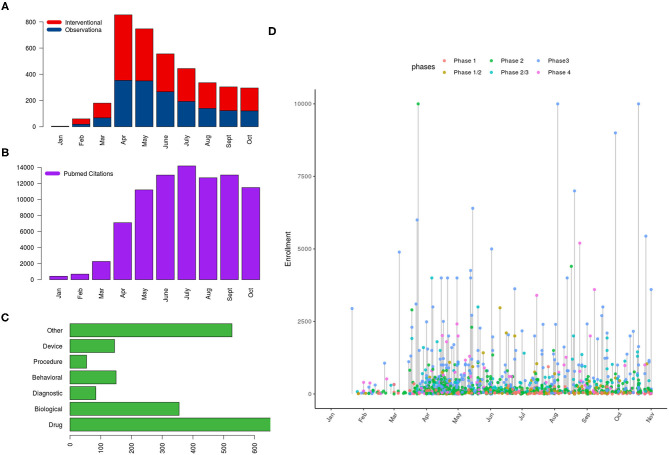
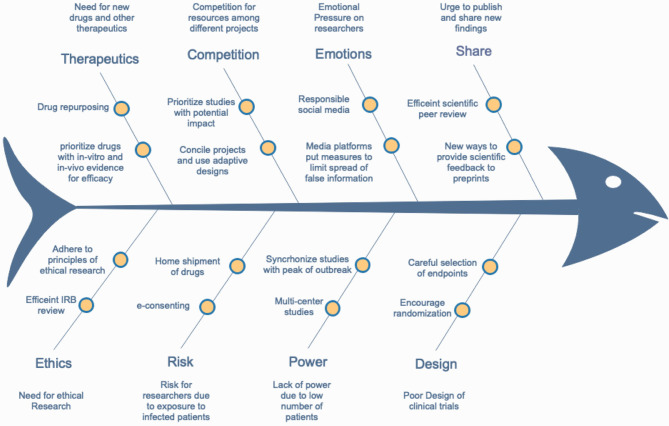
The response to the COVID-19 pandemic from the research and science community has been vigorous, with information being released faster than that of any other event in human history. Articles related to the virus were being rapidly published by January 2020. A small fraction of these publications comprised reports of prospective clinical trials (0.25%), and many of these trials have imparted conflicting conclusions, leading to confusion among the public and the scientific community. Additionally, the pandemic has raised many serious scientific and ethical concerns related to clinical research. In this review, we divided the conduct of clinical research trials into three steps and critically reviewed each step, along with the challenges and obstacles arising amid the ongoing crisis. The clinical research steps we reviewed include (1) clinical trial design factors such as social and scientific value, feasibility, single vs. multicenter trials, randomization, control groups, endpoints, off-label and compassionate use of medications, data analysis, and verifying the integrity of data; (2) ethical issues such as committee approvals, efficiency, virtual visits and remote monitoring, informed consent, shipping investigational products, and external monitoring and audits; and (3) publication and sharing of preprints, press releases, social media, and misinformation. The COVID-19 pandemic is adversely affecting existing clinical trials for other ailments and diseases, including cancer, with most trials being delayed or deferred. Although urgency is needed to communicate effective treatment and prevention strategies for COVID-19, research efforts should maintain the same high-quality core ethical principles that governed human subject research before the pandemic. Despite the catastrophic devastation caused by the pandemic, the adoption of more flexible, cost-effective methods of conducting clinical trials (without compromising ethical conduct, safety, or data integrity, while maintaining research efficiency) represents a potential silver lining. Streamlining clinical research will help to congruently address other important health issues, despite the ongoing COVID-19 crisis.
科研界对新冠疫情的反应十分积极,信息发布速度比人类历史上任何其他事件都要快。到2020年1月,与该病毒相关的文章迅速发表。这些出版物中有一小部分是前瞻性临床试验报告(0.25%),其中许多试验得出了相互矛盾的结论,导致公众和科学界感到困惑。此外,疫情引发了许多与临床研究相关的严重科学和伦理问题。在本综述中,我们将临床研究试验的开展分为三个步骤,并对每个步骤进行了批判性审视,同时审视了当前危机中出现的挑战和障碍。我们审视的临床研究步骤包括:(1)临床试验设计因素,如社会和科学价值、可行性、单中心与多中心试验、随机化、对照组、终点、药物的超说明书使用和同情用药、数据分析以及验证数据的完整性;(2)伦理问题,如委员会批准、效率、虚拟访视和远程监测、知情同意、运送研究产品以及外部监测和审计;(3)预印本的发表和共享、新闻稿、社交媒体以及错误信息。新冠疫情正在对包括癌症在内的其他疾病的现有临床试验产生不利影响,大多数试验被推迟或延期。尽管需要迫切传达针对新冠病毒的有效治疗和预防策略,但研究工作应维持在疫情之前指导人体研究的同样高质量的核心伦理原则。尽管疫情造成了灾难性破坏,但采用更灵活、成本效益更高的临床试验方法(在不损害伦理行为、安全性或数据完整性的同时保持研究效率)可能是一线希望。尽管新冠疫情仍在持续,但简化临床研究将有助于协调解决其他重要的健康问题。