Cao Mingde, Zhang Junhui, Xu Hualiang, Lin Zhujian, Chang Hong, Wang Yuchen, Huang Xusheng, Chen Xiang, Wang Hua, Song Yancheng
Department of Orthopedics, The First Affiliated Hospital of Guangdong Pharmaceutical University, Guangzhou, China.
Department of Orthopaedics and Traumatology, Faculty of Medicine, The Chinese University of Hong Kong, Shatin, Hong Kong.
Front Mol Biosci. 2020 Dec 23;7:608368. doi: 10.3389/fmolb.2020.608368. eCollection 2020.
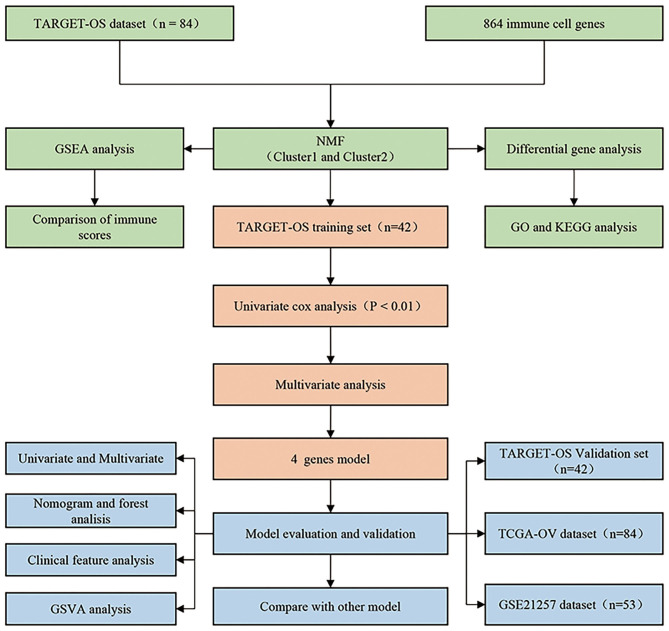
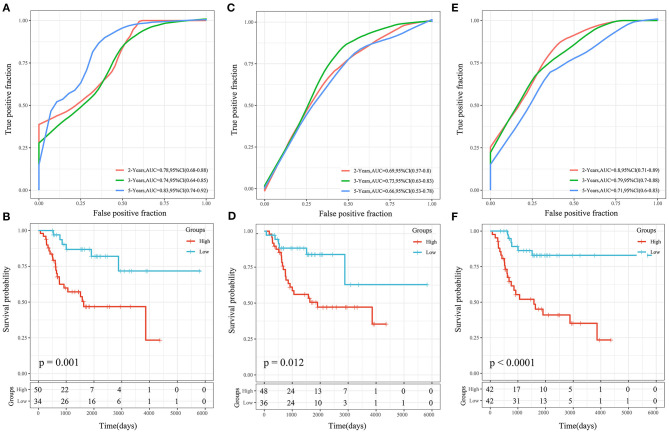
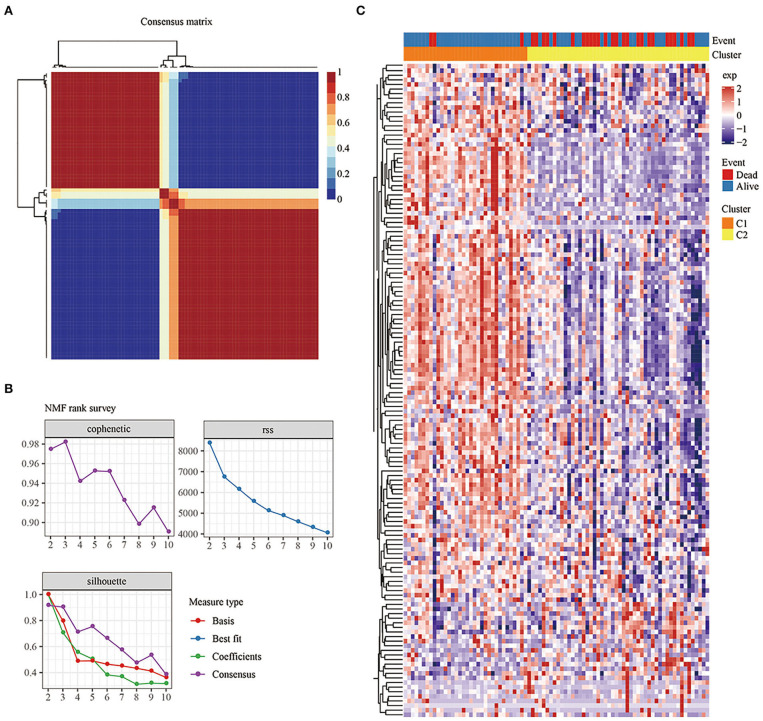
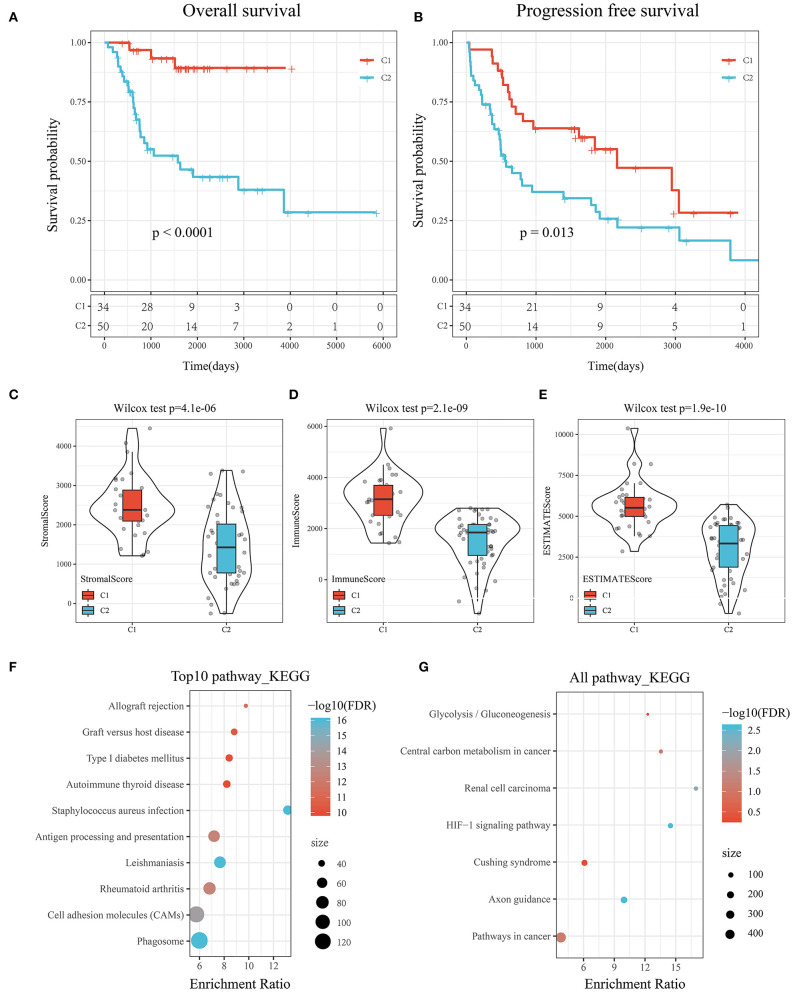
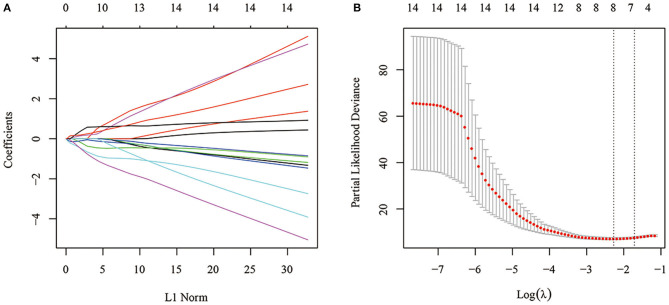
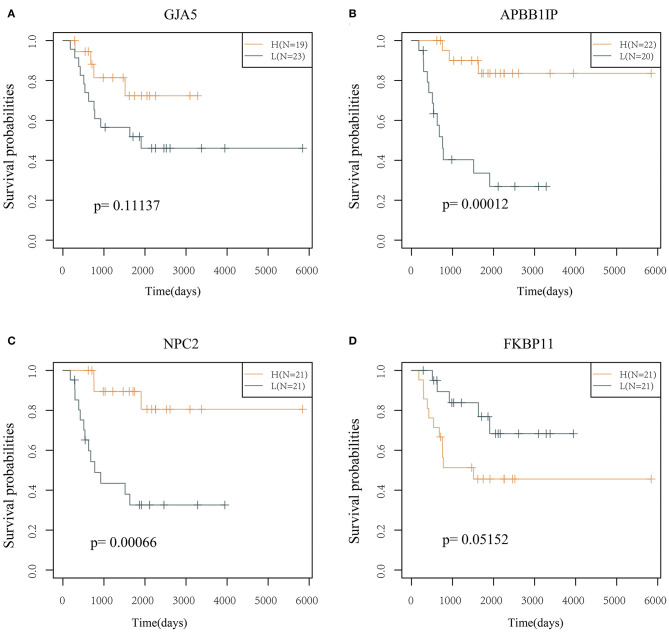
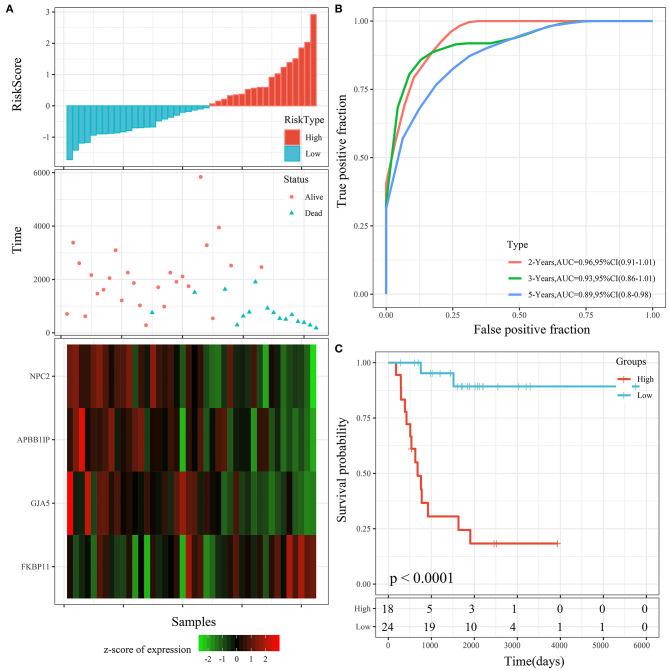
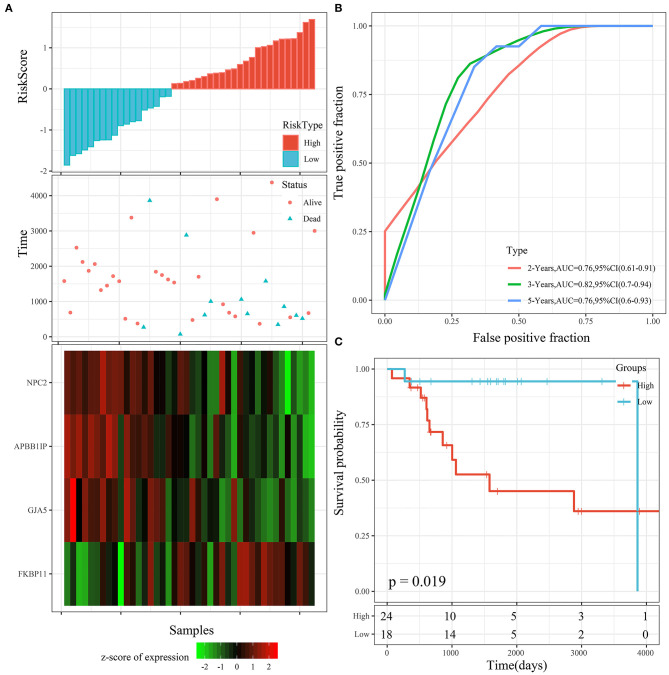
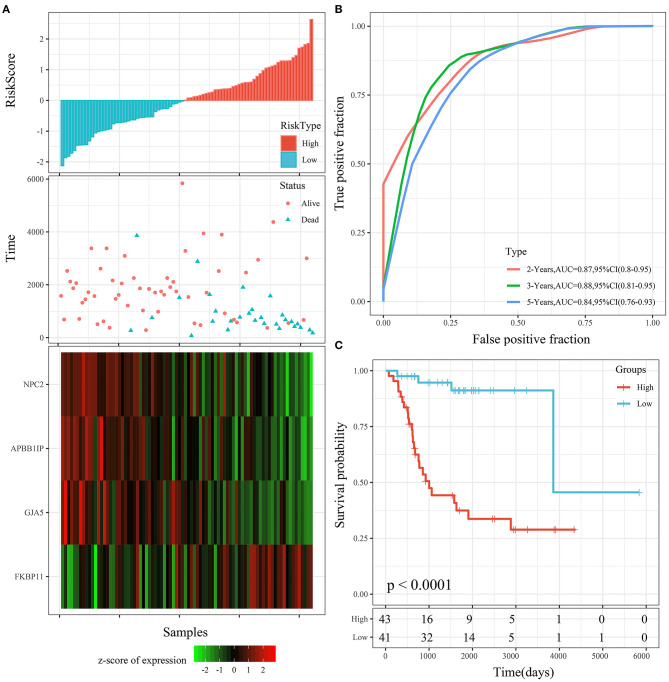
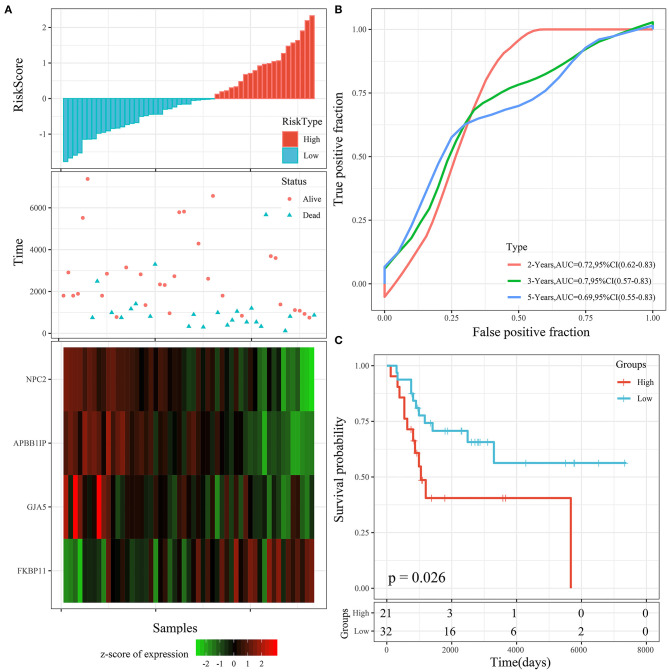
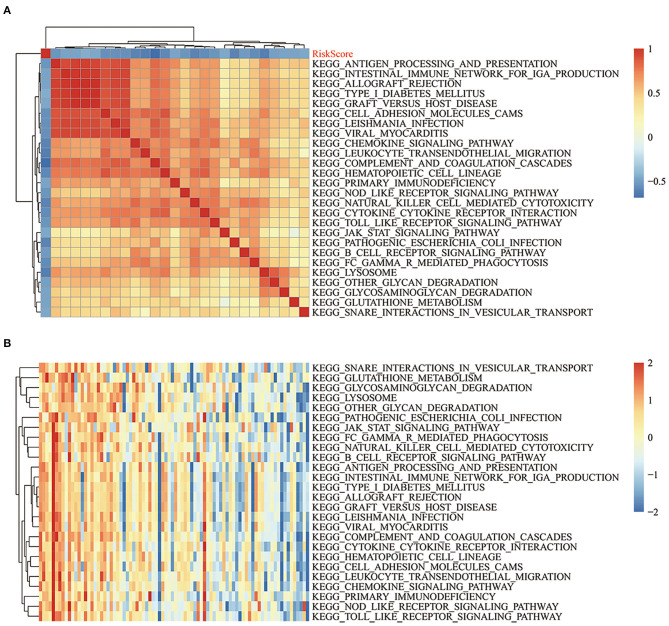
Osteosarcoma (OS) is a malignant disease that develops rapidly and is associated with poor prognosis. Immunotherapy may provide new insights into clinical treatment strategies for OS. The purpose of this study was to identify immune-related genes that could predict OS prognosis. The gene expression profiles and clinical data of 84 OS patients were obtained from the Therapeutically Applicable Research to Generate Effective Treatments (TARGET) database. According to non-negative matrix factorization, two molecular subtypes of immune-related genes, C1 and C2, were acquired, and 597 differentially expressed genes between C1 and C2 were identified. Univariate Cox analysis was performed to get 14 genes associated with survival, and 4 genes (, and ) obtained through least absolute shrinkage and selection operator (LASSO)-Cox regression were used to construct a 4-gene signature as a prognostic risk model. The results showed that high expression was correlated with high risk (a risk factor), and that high , or expression was associated with low risk (protective factors). The testing cohort and entire TARGET cohort were used for internal verification, and the independent GSE21257 cohort was used for external validation. The study suggested that the model we constructed was reliable and performed well in predicting OS risk. The functional enrichment of the signature was studied through gene set enrichment analysis, and it was found that the risk score was related to the immune pathway. In summary, our comprehensive study found that the 4-gene signature could be used to predict OS prognosis, and new biomarkers of great significance for understanding the therapeutic targets of OS were identified.
骨肉瘤(OS)是一种发展迅速且预后较差的恶性疾病。免疫疗法可能为骨肉瘤的临床治疗策略提供新的见解。本研究的目的是识别可预测骨肉瘤预后的免疫相关基因。从生成有效治疗方法的治疗应用研究(TARGET)数据库中获取了84例骨肉瘤患者的基因表达谱和临床数据。根据非负矩阵分解,获得了免疫相关基因的两种分子亚型C1和C2,并鉴定出C1和C2之间597个差异表达基因。进行单变量Cox分析以获得14个与生存相关的基因,并使用通过最小绝对收缩和选择算子(LASSO)-Cox回归获得的4个基因(、和)构建一个4基因特征作为预后风险模型。结果表明,高表达与高风险相关(风险因素),而高、或表达与低风险相关(保护因素)。测试队列和整个TARGET队列用于内部验证,独立的GSE21257队列用于外部验证。该研究表明,我们构建的模型可靠,在预测骨肉瘤风险方面表现良好。通过基因集富集分析研究了该特征的功能富集情况,发现风险评分与免疫途径相关。总之,我们的综合研究发现,4基因特征可用于预测骨肉瘤预后,并鉴定出对理解骨肉瘤治疗靶点具有重要意义的新生物标志物。