Department of Biobehavioral Nursing and Health Informatics, University of Washington, Seattle, WA, United States.
Department of Pediatrics, Sanford Health, Bemidji, MN, United States.
JMIR Mhealth Uhealth. 2021 Jan 11;9(1):e21563. doi: 10.2196/21563.
Interventions aimed at modifying behavior for promoting health and disease management are traditionally resource intensive and difficult to scale. Mobile health apps are being used for these purposes; however, their effects on health outcomes have been mixed.
This study aims to summarize the evidence of rigorously evaluated health-related apps on health outcomes and explore the effects of features present in studies that reported a statistically significant difference in health outcomes.
A literature search was conducted in 7 databases (MEDLINE, Scopus, PsycINFO, CINAHL, Global Index Medicus, Cochrane Central Register of Controlled Trials, and Cochrane Database of Systematic Reviews). A total of 5 reviewers independently screened and extracted the study characteristics. We used a random-effects model to calculate the pooled effect size estimates for meta-analysis. Sensitivity analysis was conducted based on follow-up time, stand-alone app interventions, level of personalization, and pilot studies. Logistic regression was used to examine the structure of app features.
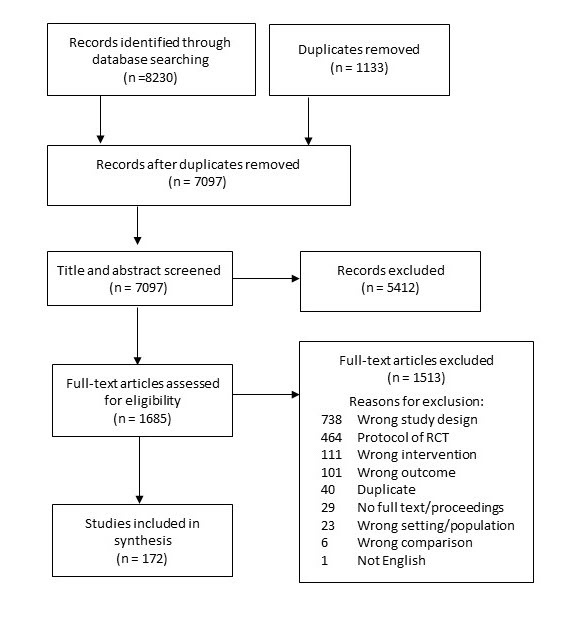
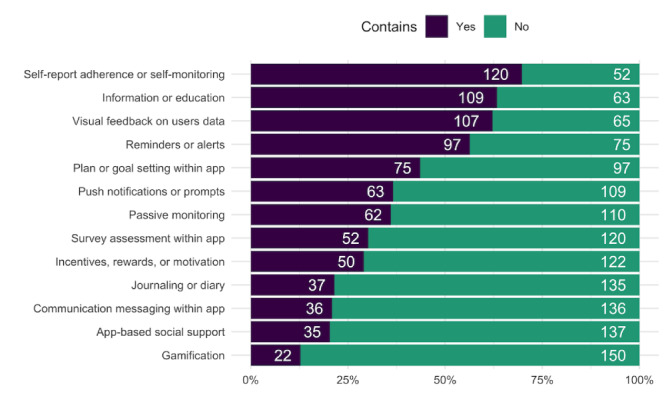
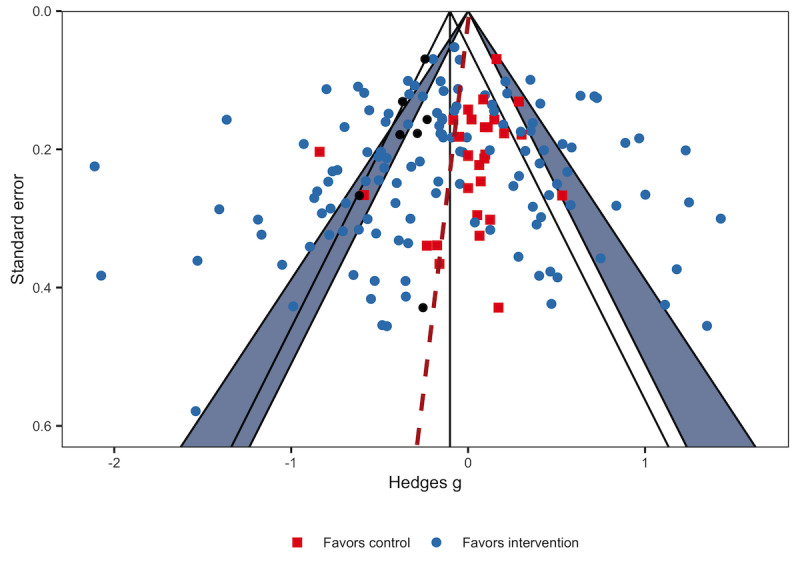
From the database searches, 8230 records were initially identified. Of these, 172 met the inclusion criteria. Studies were predominantly conducted in high-income countries (164/172, 94.3%). The majority had follow-up periods of 6 months or less (143/172, 83.1%). Over half of the interventions were delivered by a stand-alone app (106/172, 61.6%). Static/one-size-fits-all (97/172, 56.4%) was the most common level of personalization. Intervention frequency was daily or more frequent for the majority of the studies (123/172, 71.5%). A total of 156 studies involving 21,422 participants reported continuous health outcome data. The use of an app to modify behavior (either as a stand-alone or as part of a larger intervention) confers a slight/weak advantage over standard care in health interventions (standardized mean difference=0.38 [95% CI 0.31-0.45]; I2=80%), although heterogeneity was high.
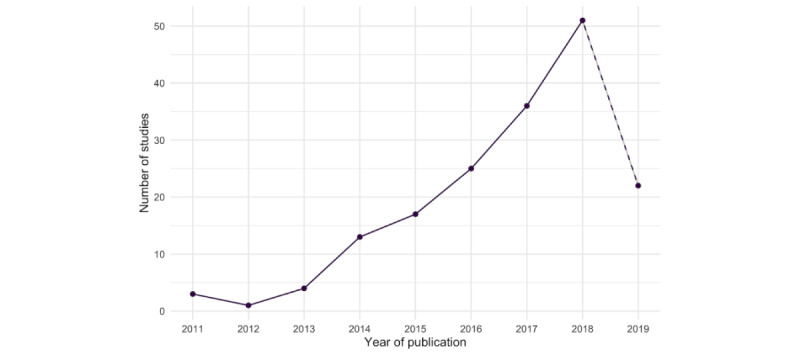
The evidence in the literature demonstrates a steady increase in the rigorous evaluation of apps aimed at modifying behavior to promote health and manage disease. Although the literature is growing, the evidence that apps can improve health outcomes is weak. This finding may reflect the need for improved methodological and evaluative approaches to the development and assessment of health care improvement apps.
PROSPERO International Prospective Register of Systematic Reviews CRD42018106868; https://www.crd.york.ac.uk/prospero/display_record.php?RecordID=106868.
旨在通过改变行为来促进健康和疾病管理的干预措施传统上需要大量资源,且难以推广。移动健康应用程序正被用于这些目的;然而,它们对健康结果的影响好坏参半。
本研究旨在总结经过严格评估的健康相关应用程序对健康结果的证据,并探讨在报告健康结果存在统计学差异的研究中出现的特征的影响。
在 7 个数据库(MEDLINE、Scopus、PsycINFO、CINAHL、全球索引医学、Cochrane 对照试验中心注册和 Cochrane 系统评价数据库)中进行了文献检索。共有 5 名评审员独立筛选并提取了研究特征。我们使用随机效应模型计算荟萃分析的汇总效应大小估计值。根据随访时间、独立应用程序干预、个性化程度和试点研究进行敏感性分析。逻辑回归用于检查应用程序特征的结构。
从数据库搜索中,最初确定了 8230 条记录。其中,172 项符合纳入标准。研究主要在高收入国家进行(164/172,94.3%)。大多数研究的随访时间为 6 个月或更短(143/172,83.1%)。超过一半的干预措施是通过独立应用程序(106/172,61.6%)提供的。静态/一刀切(97/172,56.4%)是最常见的个性化水平。大多数研究(123/172,71.5%)的干预频率为每天或更频繁。共有 156 项研究涉及 21422 名参与者,报告了连续的健康结果数据。使用应用程序(无论是作为独立应用程序还是作为更大干预措施的一部分)对健康干预措施进行行为修正(无论是作为独立应用程序还是作为更大干预措施的一部分)比标准护理略有/微弱优势(标准化均数差=0.38[95%CI 0.31-0.45];I2=80%),尽管存在高度异质性。
文献中的证据表明,旨在通过改变行为来促进健康和管理疾病的应用程序的严格评估数量稳步增加。尽管文献在不断增加,但应用程序改善健康结果的证据仍然很薄弱。这一发现可能反映了需要改进开发和评估医疗保健改进应用程序的方法和评估方法。
PROSPERO 国际前瞻性系统评价注册中心 CRD42018106868;https://www.crd.york.ac.uk/prospero/display_record.php?RecordID=106868。