Khodaee Lavin, Azizinezhad Reza, Etminan Ali Reza, Khosroshahi Mahmoud
Department of Biotechnology and Plant Breeding, Islamic Azad University Science and Research Branch, Tehran, Iran.
Department of Plant Breeding and Biotechnology, Kermanshah Branch, Islamic Azad University, Kermanshah, Iran.
J Genet Eng Biotechnol. 2021 Jan 11;19(1):5. doi: 10.1186/s43141-020-00107-w.
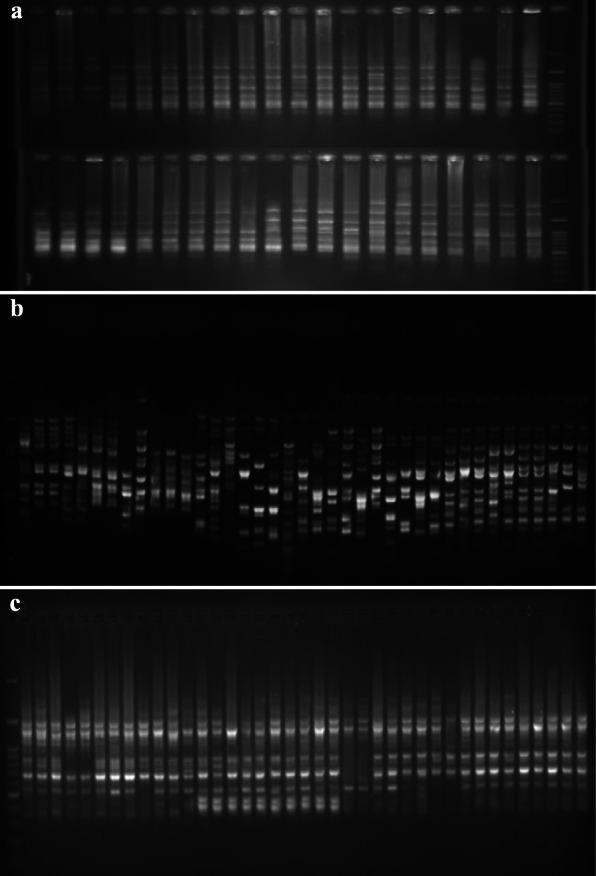
Crop wild relatives (CWRs) are commonly used as a suitable genetic reservoir for plant breeding. They can be used for enhancing the tolerance of plant varieties to biotic and abiotic stresses. Studying the genetic diversity of related wheat species in Iran could be useful to improve different traits of bread wheat, since the country is one of the major centers of genetic diversity and distribution of Aegilops species. Therefore, the aim of the present study was to determine the relationship among 48 Aegilops triuncialis accessions using three DNA marker systems, including start codon targeted (SCoT), CAAT box-derived polymorphism (CBDP), and inter-simple sequence repeat (ISSR) markers.
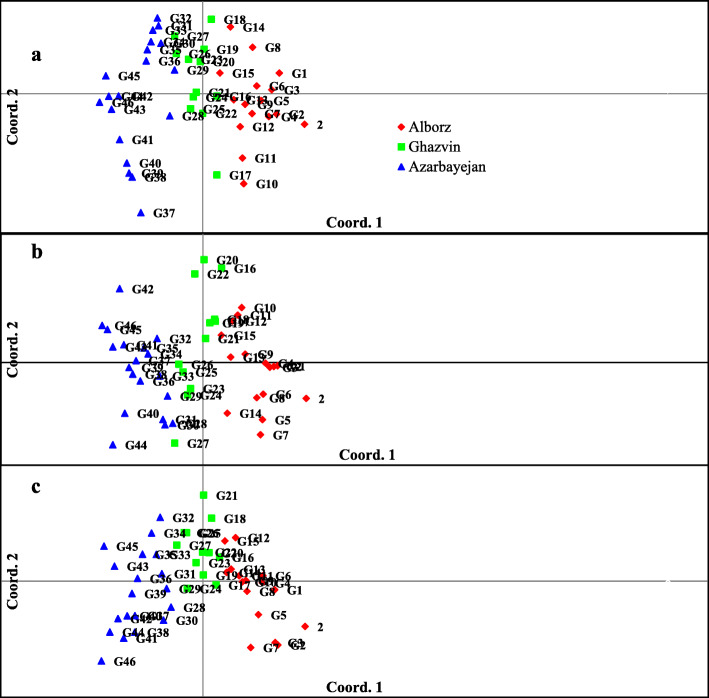
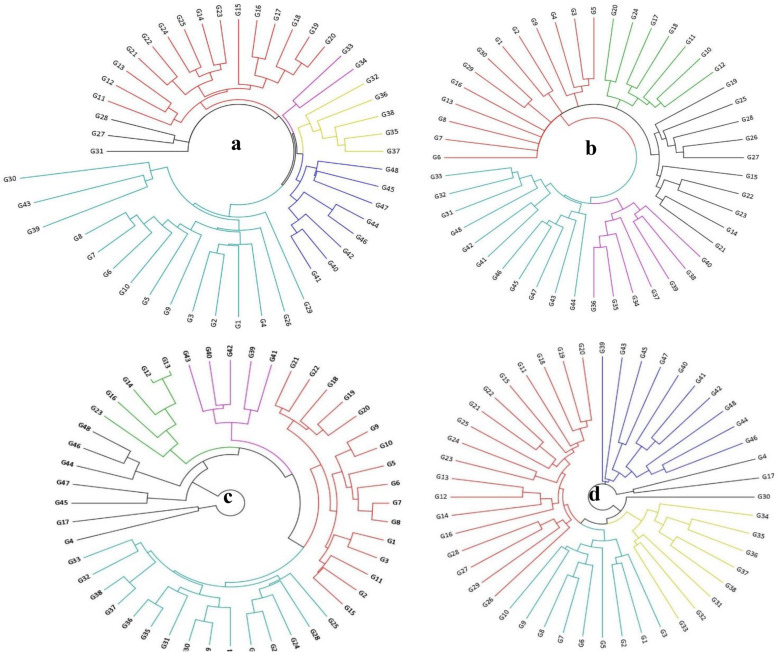
A total of 359 amplified DNA fragments were generated using 13 CBDP, 14 SCoT, and 16 ISSR primers that produced 96, 147, and 152 bands, respectively. The discriminating power of the three markers was assessed using polymorphism information content (PIC), marker index (MI), and resolving power (Rp). The mean values of PIC for ISSR, SCoT, and CBDP markers were 0.3, 0.26, and 0.34, respectively, indicating the efficiency of the three markers in detecting polymorphism among the studied accessions. ISSR markers had the highest values of MI, Rp, and polymorphism percentage as compared to SCoT and CBDP markers. Based on the Shannon index and heterozygosity values, genetic diversity in the Alborz population was more than in other populations. The accessions were classified into six, five, and five groups based on ISSR, SCoT, and CBDP using the UPGMA method. According to the results of cluster and PCoA analyses, the variation patterns corresponded with the geographical distribution of the Ae. triuncialis accessions.
The three markers provided a comprehensive pattern of the genetic diversity among the Iranian Ae. triuncialis accessions. This information could allow for a future insight into wheat breeding programs.
作物野生近缘种(CWRs)通常被用作植物育种的合适基因库。它们可用于提高植物品种对生物和非生物胁迫的耐受性。伊朗是节节麦属物种遗传多样性和分布的主要中心之一,研究伊朗相关小麦物种的遗传多样性可能有助于改善面包小麦的不同性状。因此,本研究的目的是使用三种DNA标记系统,包括起始密码子靶向(SCoT)、CAAT框衍生多态性(CBDP)和简单序列重复区间(ISSR)标记,来确定48份节节麦材料之间的关系。
使用13条CBDP引物、14条SCoT引物和16条ISSR引物共产生了359个扩增DNA片段,分别产生了96条、147条和152条带。使用多态性信息含量(PIC)、标记指数(MI)和分辨力(Rp)评估了这三种标记的鉴别能力。ISSR、SCoT和CBDP标记的PIC平均值分别为0.3、0.26和0.34,表明这三种标记在检测所研究材料间多态性方面的效率。与SCoT和CBDP标记相比;ISSR标记的MI、Rp和多态性百分比值最高。基于香农指数和杂合度值,阿尔伯兹种群的遗传多样性高于其他种群。使用UPGMA方法,基于ISSR、SCoT和CBDP将这些材料分为六组、五组和五组。根据聚类和主坐标分析结果,变异模式与节节麦材料的地理分布相对应。
这三种标记提供了伊朗节节麦材料间遗传多样性的全面模式。这些信息可为未来的小麦育种计划提供参考。