Quintavalla Fausto, Basini Giuseppina, Bussolati Simona, Carrozzo Gennaro Giuseppe, Inglese Antonio, Ramoni Roberto
Dipartimento di Scienze Medico-Veterinarie, Università degli Studi di Parma, Via del Taglio 10, 43126 Parma, Italy.
Clinica Veterinaria Zoolife, Via Cavalleggeri Udine, 38017 Mezzolombardo (TN), Italy.
Animals (Basel). 2021 Jan 8;11(1):119. doi: 10.3390/ani11010119.
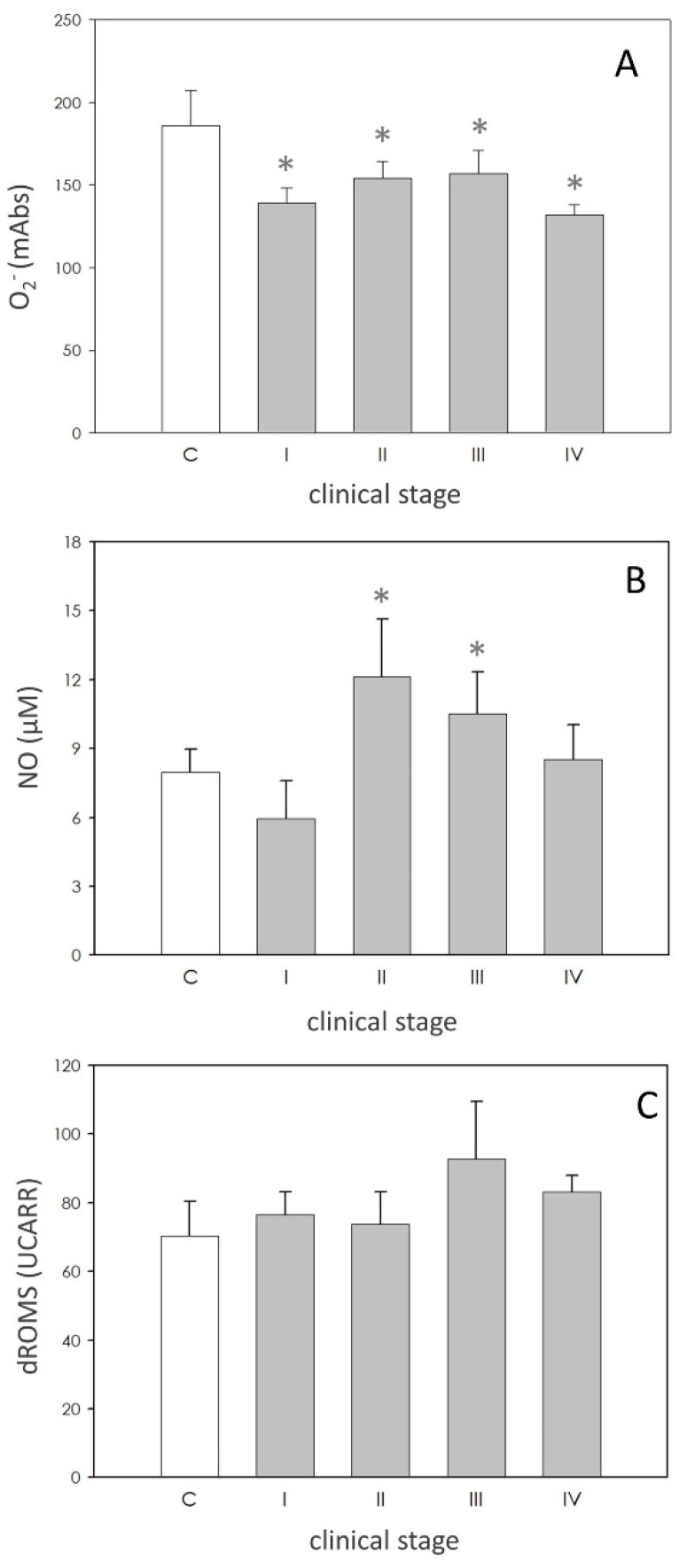
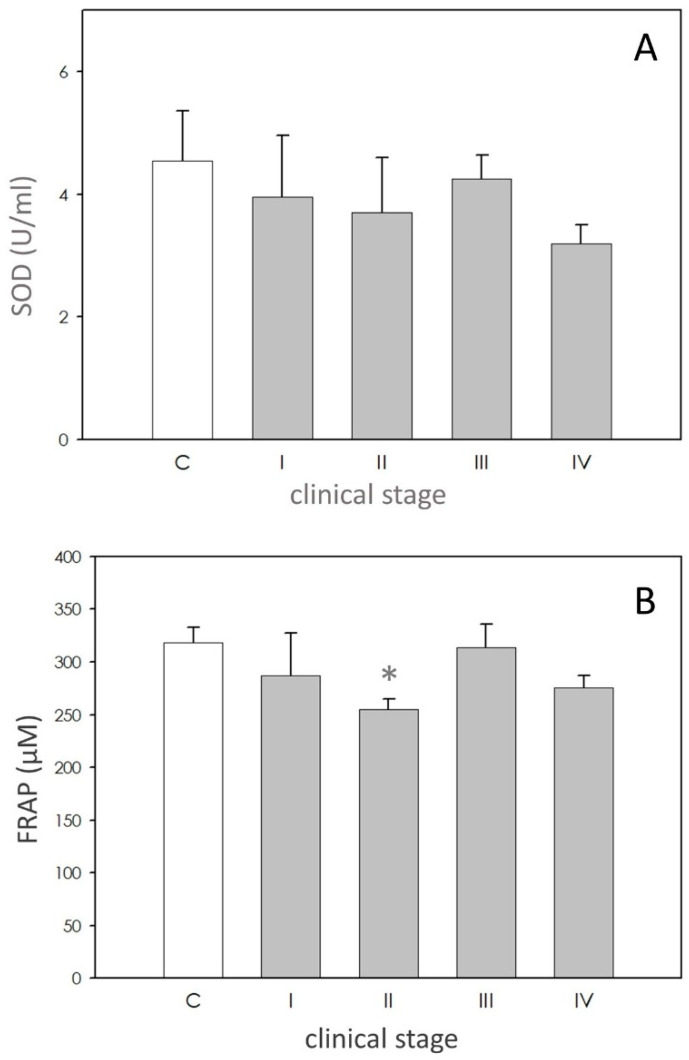
The World Health Organization defined leishmaniasis as one of the priority attention diseases. Aiming to clarify some aspects of its pathogenetic mechanisms, our study focused on the assessment of redox status in dogs, the main reservoir for . Forty-five dogs from an endemic area in southern Italy were divided into four different groups (from mild disease with negative to low positive antibody levels to very severe disease with medium to high positive antibody levels) according to the LeishVet group guidelines. Their plasma and/or sera were tested for reactive oxygen species (ROS), namely the superoxide anion (O), reactive nitrogen species (RNS), such as nitric oxide (NO) and hydroperoxides (ROOH), as well as activity of the detoxifying enzyme superoxide dismutase (SOD), and total nonenzymatic antioxidant capacity, as determined by the ferric reducing-antioxidant power (FRAP) assay. O generation was significantly ( < 0.05) reduced in leishmaniasis-affected dogs independently of the clinical stage, while NO production was stimulated ( < 0.05) only in II and III stage patients. No difference could be found for the levels of hydroperoxides and SOD activity between healthy and pathological subjects. FRAP values were lower in affected dogs but only in stage II. Taken together, although we demonstrated that several redox status parameters are altered in the plasma of dog affected by leishmaniasis, the oxidative stress changes that are observed in this disease, are possibly mainly due to cellular blood components i.e., neutrophils responsible for the elimination of the parasite. Further studies are required to assess the clinical values of the collected data.
世界卫生组织将利什曼病定义为重点关注疾病之一。为了阐明其发病机制的某些方面,我们的研究聚焦于评估犬类(主要储存宿主)的氧化还原状态。根据利什曼病兽医诊断指南,将来自意大利南部疫区的45只犬分为四个不同组(从抗体水平阴性至低阳性的轻度疾病到抗体水平中至高阳性的非常严重疾病)。检测了它们的血浆和/或血清中的活性氧(ROS),即超氧阴离子(O)、活性氮(RNS),如一氧化氮(NO)和氢过氧化物(ROOH),以及解毒酶超氧化物歧化酶(SOD)的活性和总非酶抗氧化能力,后者通过铁还原抗氧化能力(FRAP)测定法来确定。受利什曼病影响的犬类中超氧阴离子的产生显著减少(<0.05),与临床阶段无关,而一氧化氮的产生仅在II期和III期患者中受到刺激(<0.05)。健康和患病个体之间氢过氧化物水平和超氧化物歧化酶活性没有差异。受影响犬类的FRAP值较低,但仅在II期。综上所述,尽管我们证明了受利什曼病影响的犬类血浆中的几个氧化还原状态参数发生了改变,但在这种疾病中观察到的氧化应激变化可能主要归因于血液中的细胞成分,即负责清除寄生虫的中性粒细胞。需要进一步研究来评估所收集数据的临床价值。