Mondelo-Macía Patricia, García-González Jorge, León-Mateos Luis, Castillo-García Adrián, López-López Rafael, Muinelo-Romay Laura, Díaz-Peña Roberto
Liquid Biopsy Analysis Unit, Oncomet, Health Research Institute of Santiago (IDIS), 15706 Santiago de Compostela, Spain.
Department of Medical Oncology, Complexo Hospitalario Universitario de Santiago de Compostela (SERGAS), 15706 Santiago de Compostela, Spain.
Biomedicines. 2021 Jan 7;9(1):48. doi: 10.3390/biomedicines9010048.
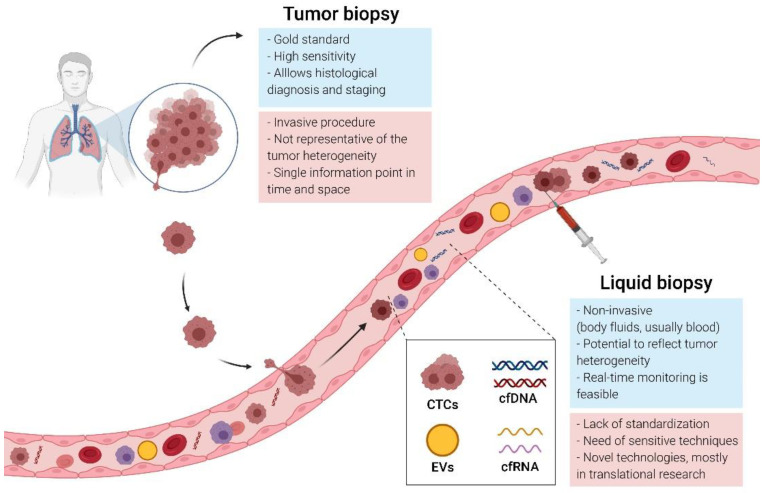
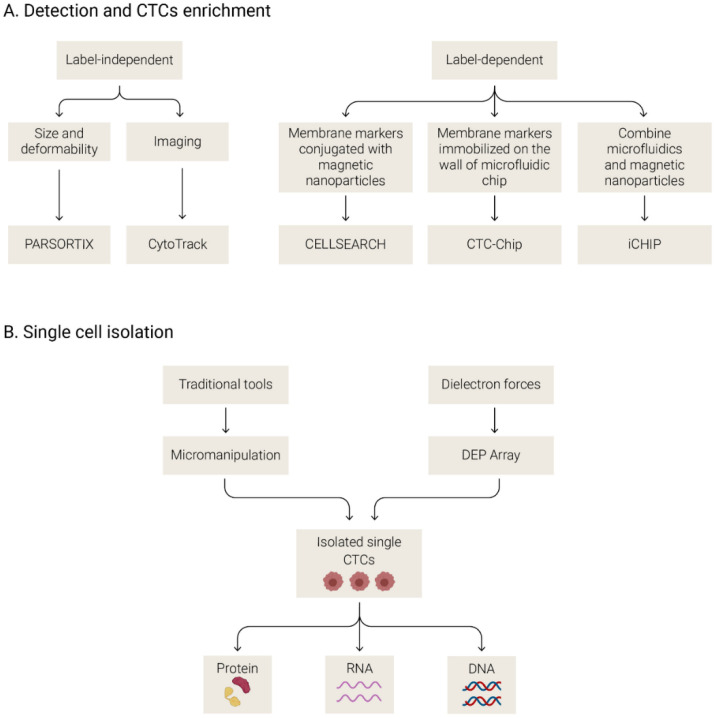
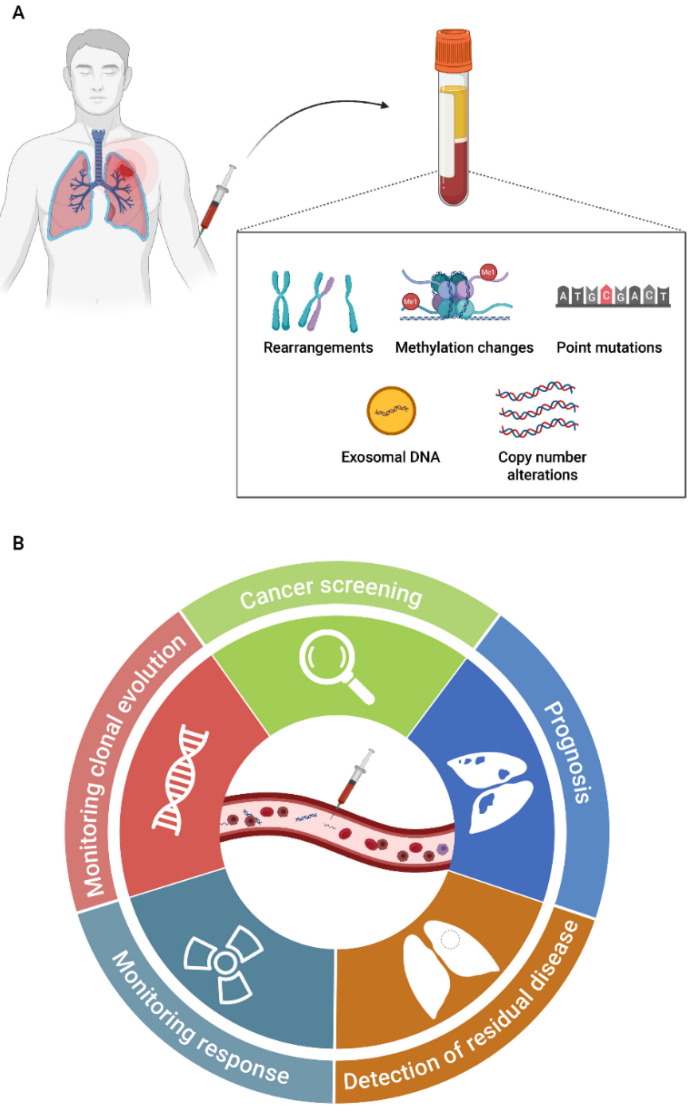
Approximately 19% of all cancer-related deaths are due to lung cancer, which is the leading cause of mortality worldwide. Small cell lung cancer (SCLC) affects approximately 15% of patients diagnosed with lung cancer. SCLC is characterized by aggressiveness; the majority of SCLC patients present with metastatic disease, and less than 5% of patients are alive at 5 years. The gold standard of SCLC treatment is platinum and etoposide-based chemotherapy; however, its effects are short. In recent years, treatment for SCLC has changed; new drugs have been approved, and new biomarkers are needed for treatment selection. Liquid biopsy is a non-invasive, rapid, repeated and alternative tool to the traditional tumor biopsy that could allow the most personalized medicine into the management of SCLC patients. Circulating tumor cells (CTCs) and cell-free DNA (cfDNA) are the most commonly used liquid biopsy biomarkers. Some studies have reported the prognostic factors of CTCs and cfDNA in SCLC patients, independent of the stage. In this review, we summarize the recent SCLC studies of CTCs, cfDNA and other liquid biopsy biomarkers, and we discuss the future utility of liquid biopsy in the clinical management of SCLC.
所有癌症相关死亡中约19%归因于肺癌,肺癌是全球主要的死亡原因。小细胞肺癌(SCLC)约占所有肺癌确诊患者的15%。小细胞肺癌具有侵袭性;大多数小细胞肺癌患者就诊时已出现转移性疾病,5年生存率不到5%。小细胞肺癌治疗的金标准是以铂类和依托泊苷为基础的化疗;然而,其疗效维持时间短。近年来,小细胞肺癌的治疗发生了变化;已有新药获批,且需要新的生物标志物来指导治疗选择。液体活检是一种非侵入性、快速、可重复的传统肿瘤活检替代方法,可使SCLC患者的治疗实现最大程度的个体化。循环肿瘤细胞(CTC)和游离DNA(cfDNA)是最常用的液体活检生物标志物。一些研究报道了小细胞肺癌患者中CTC和cfDNA的预后因素,且与分期无关。在本综述中,我们总结了近期关于CTC、cfDNA及其他液体活检生物标志物的小细胞肺癌研究,并探讨了液体活检在小细胞肺癌临床管理中的未来应用价值。