Immunology Programme, Department of Microbiology and Immunology, Life Sciences Institute, Yong Loo Lin School of Medicine, National University of Singapore, Singapore 117456, Singapore.
Cells. 2021 Jan 7;10(1):92. doi: 10.3390/cells10010092.
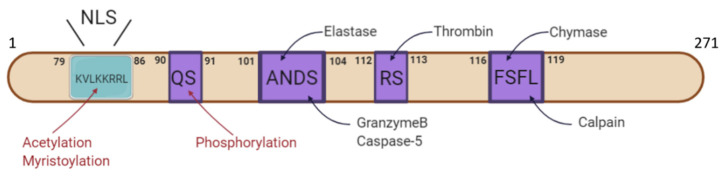
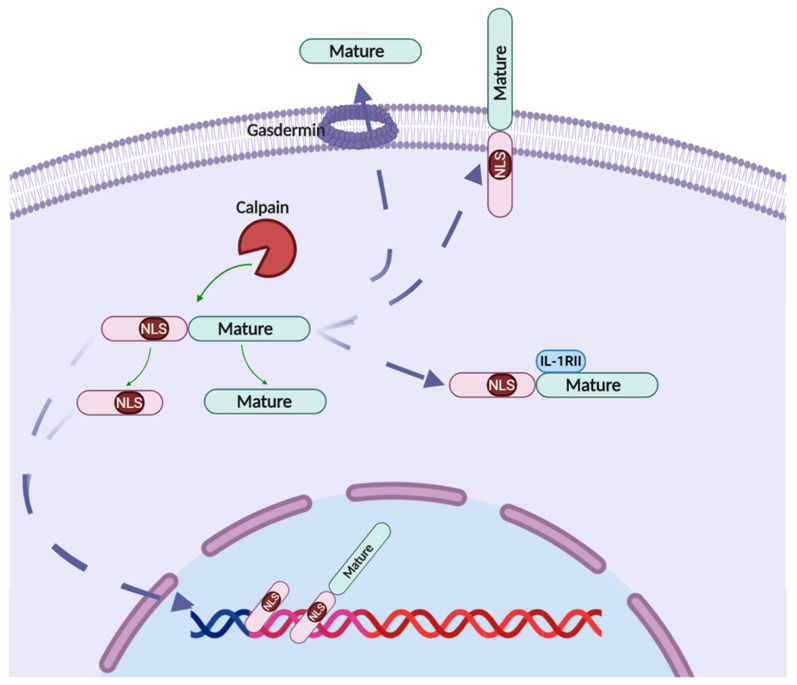
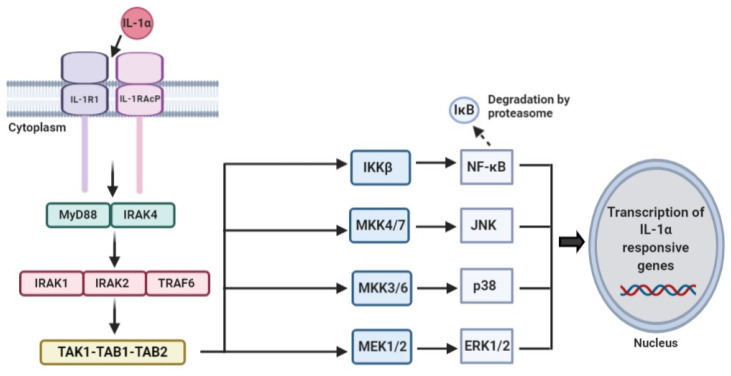
Interleukin-1α (IL-1α) is a major alarmin cytokine which triggers and boosts the inflammatory responses. Since its discovery in the 1940s, the structure and bioactivity of IL-1α has been extensively studied and emerged as a vital regulator in inflammation and hematopoiesis. IL-1α is translated as a pro-form with minor bioactivity. The pro-IL-1α can be cleaved by several proteases to generate the N terminal and C terminal form of IL-1α. The C terminal form of IL-1α (mature form) has several folds higher bioactivity compared with its pro-form. IL-1α is a unique cytokine which could localize in the cytosol, membrane, nucleus, as well as being secreted out of the cell. However, the processing mechanism and physiological significance of these differentially localized IL-1α are still largely unknown. Accumulating evidence suggests IL-1α is involved in cancer pathogenesis. The role of IL-1α in cancer development is controversial as it exerts both pro- and anti-tumor roles in different cancer types. Here, we review the recent development in the processing and signaling of IL-1α and summarize the functions of IL-1α in cancer development.
白细胞介素-1α(IL-1α)是一种主要的警报素细胞因子,可引发并增强炎症反应。自 20 世纪 40 年代发现以来,IL-1α 的结构和生物活性已得到广泛研究,并成为炎症和造血的重要调节剂。IL-1α 作为一种具有轻微生物活性的前体形式进行翻译。前体 IL-1α 可被几种蛋白酶切割,生成 IL-1α 的 N 端和 C 端形式。与前体相比,IL-1α 的 C 端形式(成熟形式)具有高出几倍的生物活性。IL-1α 是一种独特的细胞因子,可定位于细胞质、膜、核,也可分泌到细胞外。然而,这些不同定位的 IL-1α 的加工机制和生理意义在很大程度上仍然未知。越来越多的证据表明 IL-1α 参与了癌症的发病机制。IL-1α 在癌症发展中的作用存在争议,因为它在不同类型的癌症中发挥着促癌和抑癌的作用。在这里,我们综述了 IL-1α 的加工和信号转导的最新进展,并总结了 IL-1α 在癌症发展中的作用。