Palacios-Mateo Cristina, van der Meer Yvonne, Seide Gunnar
Aachen Maastricht Institute for Biobased Materials (AMIBM), Faculty of Science and Engineering, Maastricht University, Urmonderbaan 22, 6167 RD Geleen, The Netherlands.
Environ Sci Eur. 2021;33(1):2. doi: 10.1186/s12302-020-00447-x. Epub 2021 Jan 6.
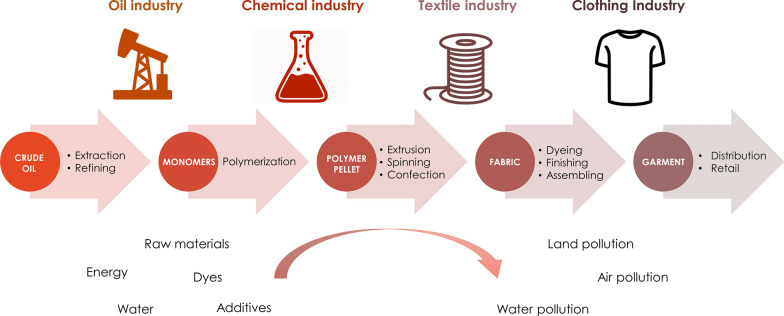
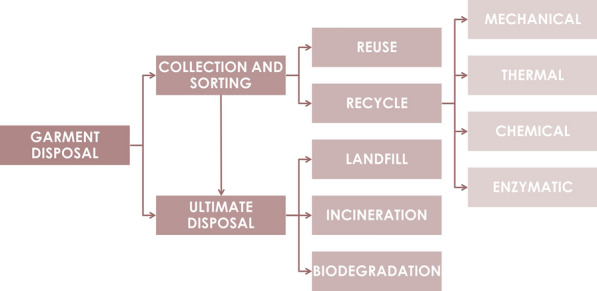
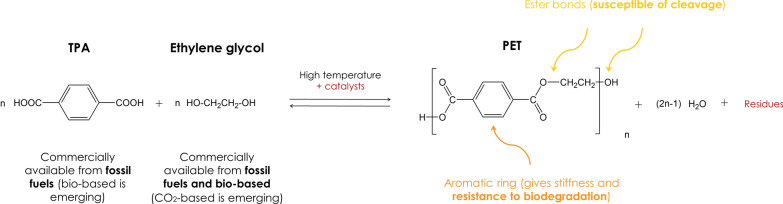
Clothing is one of the primary human needs, and the demand is met by the global production of thousands of tons of textile fibers, fabrics and garments every day. Polyester clothing manufactured from oil-based polyethylene terephthalate (PET) is the market leader. Conventional PET creates pollution along its entire value chain-during the production, use and end-of-life phases-and also contributes to the unsustainable depletion of resources. The consumption of PET garments thus compromises the quality of land, water and air, destroys ecosystems, and endangers human health. In this article, we discuss the different stages of the value chain for polyester clothing from the perspective of sustainability, describing current environmental challenges such as pollution from textile factory wastewater, and microfibers released from clothing during the laundry cycle. We also consider potential solutions such as enhanced reuse and recycling. Finally, we propose a series of recommendations that should be applied to polyester clothing at all stages along the value chain, offering the potential for meaningful and effective change to improve the environmental sustainability of polyester textiles on a global scale.
服装是人类的基本需求之一,全球每天生产数千吨纺织纤维、织物和服装来满足这一需求。由石油基聚对苯二甲酸乙二酯(PET)制成的聚酯服装是市场主导产品。传统的PET在其整个价值链中都会产生污染——在生产、使用和生命周期结束阶段——并且还导致资源的不可持续消耗。因此,聚酯服装的消费会损害土地、水和空气的质量,破坏生态系统,并危及人类健康。在本文中,我们从可持续性的角度讨论聚酯服装价值链的不同阶段,描述当前的环境挑战,如纺织厂废水污染以及洗衣过程中服装释放的微纤维。我们还考虑了潜在的解决方案,如加强再利用和回收利用。最后,我们提出了一系列应在价值链各阶段应用于聚酯服装的建议,为在全球范围内有意义且有效地改善聚酯纺织品的环境可持续性提供了变革的可能性。