Gulden Christian, Blasini Romina, Nassirian Azadeh, Stein Alexandra, Altun Fatma Betül, Kirchner Melanie, Prokosch Hans-Ulrich, Boeker Martin
Chair of Medical Informatics, Department of Medical Informatics, Biometrics and Epidemiology, Friedrich-Alexander University Erlangen-Nürnberg, Erlangen, Germany.
Institute of Medical Informatics, Justus-Liebig-University Gießen, Gießen, Germany.
JMIR Med Inform. 2021 Jan 12;9(1):e20470. doi: 10.2196/20470.
Clinical trial registries increase transparency in medical research by making information and results of planned, ongoing, and completed studies publicly available. However, the registration of clinical trials remains a time-consuming manual task complicated by the fact that the same studies often need to be registered in different registries with different data entry requirements and interfaces.
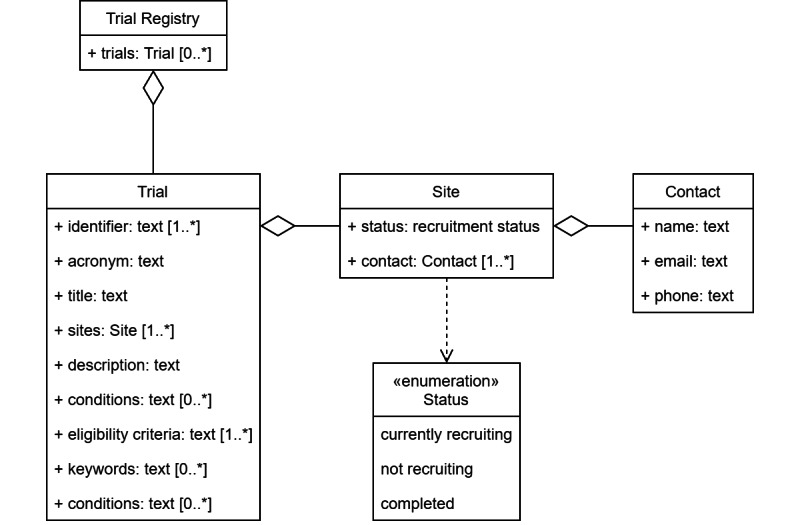
This study investigates how Health Level 7 (HL7) Fast Healthcare Interoperability Resources (FHIR) may be used as a standardized format for exchanging and storing clinical trial records.
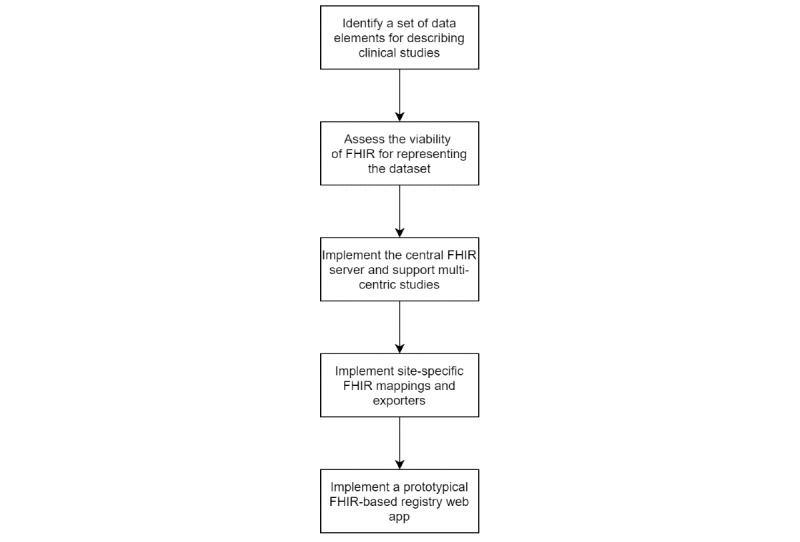
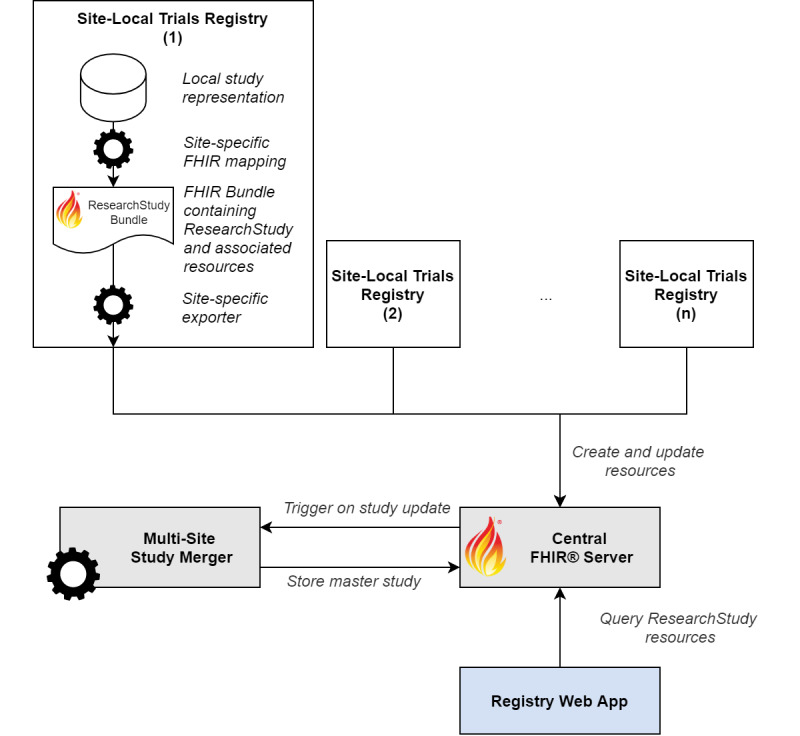
We designed and prototypically implemented an open-source central trial registry containing records from university hospitals, which are automatically exported and updated by local study management systems.
We provided an architecture and implementation of a multisite clinical trials registry based on HL7 FHIR as a data storage and exchange format.
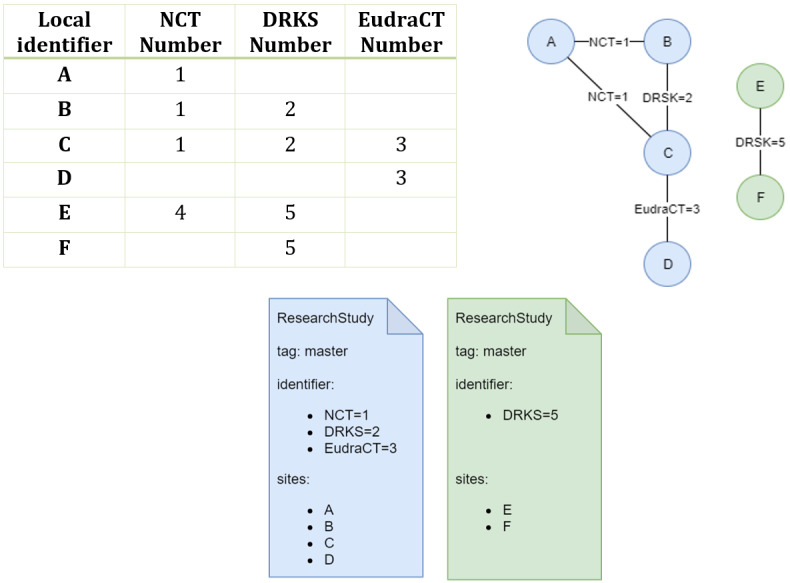
The results show that FHIR resources establish a harmonized view of study information from heterogeneous sources by enabling automated data exchange between trial centers and central study registries.
临床试验注册机构通过公开计划中、进行中和已完成研究的信息及结果,提高了医学研究的透明度。然而,临床试验注册仍是一项耗时的手工任务,因为同一研究往往需要在不同的注册机构进行注册,而这些机构的数据录入要求和界面各不相同,这使得任务变得复杂。
本研究探讨如何将卫生信息标准化第七层(HL7)快速医疗保健互操作性资源(FHIR)用作交换和存储临床试验记录的标准化格式。
我们设计并原型实现了一个开源中央试验注册机构,其中包含来自大学医院的记录,这些记录由本地研究管理系统自动导出和更新。
我们提供了一种基于HL7 FHIR作为数据存储和交换格式的多中心临床试验注册机构的架构和实现。
结果表明,FHIR资源通过实现试验中心与中央研究注册机构之间的自动数据交换,建立了来自异构源的研究信息的统一视图。