Department of Pathology, Amsterdam UMC, VUmc, Amsterdam, The Netherlands.
Division of Adult Psychiatry, Department of Psychiatry, University Hospitals of Geneva, Avenue de la Roseraie, 64, 1206, Geneva, Switzerland.
Eur J Nucl Med Mol Imaging. 2021 Dec;49(1):146-163. doi: 10.1007/s00259-020-05166-2. Epub 2021 Jan 12.
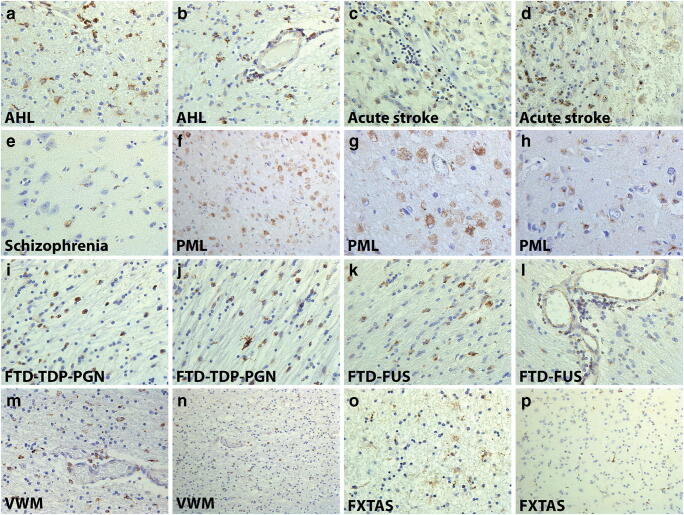
The 18 kDa translocator protein (TSPO) is a highly conserved protein located in the outer mitochondrial membrane. TSPO binding, as measured with positron emission tomography (PET), is considered an in vivo marker of neuroinflammation. Indeed, TSPO expression is altered in neurodegenerative, neuroinflammatory, and neuropsychiatric diseases. In PET studies, the TSPO signal is often viewed as a marker of microglial cell activity. However, there is little evidence in support of a microglia-specific TSPO expression. This review describes the cellular sources and functions of TSPO in animal models of disease and human studies, in health, and in central nervous system diseases. A discussion of methods of analysis and of quantification of TSPO is also presented. Overall, it appears that the alterations of TSPO binding, their cellular underpinnings, and the functional significance of such alterations depend on many factors, notably the pathology or the animal model under study, the disease stage, and the involved brain regions. Thus, further studies are needed to fully determine how changes in TSPO binding occur at the cellular level with the ultimate goal of revealing potential therapeutic pathways.
18kDa 转位蛋白(TSPO)是一种位于线粒体外膜的高度保守蛋白。正电子发射断层扫描(PET)测量的 TSPO 结合被认为是神经炎症的体内标志物。事实上,TSPO 的表达在神经退行性、神经炎症和神经精神疾病中发生改变。在 PET 研究中,TSPO 信号通常被视为小胶质细胞活性的标志物。然而,支持 TSPO 表达具有小胶质细胞特异性的证据很少。本综述描述了 TSPO 在疾病动物模型和人类健康及中枢神经系统疾病中的细胞来源和功能。还讨论了 TSPO 的分析和定量方法。总体而言,似乎 TSPO 结合的改变、其细胞基础以及这种改变的功能意义取决于许多因素,尤其是所研究的病理学或动物模型、疾病阶段和涉及的脑区。因此,需要进一步的研究来充分确定 TSPO 结合在细胞水平上的变化如何发生,最终目的是揭示潜在的治疗途径。