Department of Pharmacology and Toxicology, School of Nutrition and Translational Research in Metabolism (NUTRIM), Maastricht University Medical Center+, Maastricht, The Netherlands.
Department of Internal Medicine, School for Cardiovascular Diseases (CARIM), Maastricht University Medical Center+, Maastricht, The Netherlands.
PLoS One. 2021 Jan 12;16(1):e0245155. doi: 10.1371/journal.pone.0245155. eCollection 2021.
Impaired utero-placental perfusion is a well-known feature of early preeclampsia and is associated with placental hypoxia and oxidative stress. Although aberrations at the level of the mitochondrion have been implicated in PE pathophysiology, whether or not hypoxia-induced mitochondrial abnormalities contribute to placental oxidative stress is unknown.
We explored whether abnormalities in mitochondrial metabolism contribute to hypoxia-induced placental oxidative stress by using both healthy term placentae as well as a trophoblast cell line (BeWo cells) exposed to hypoxia. Furthermore, we explored the therapeutic potential of the antioxidants MitoQ and quercetin in preventing hypoxia-induced placental oxidative stress.
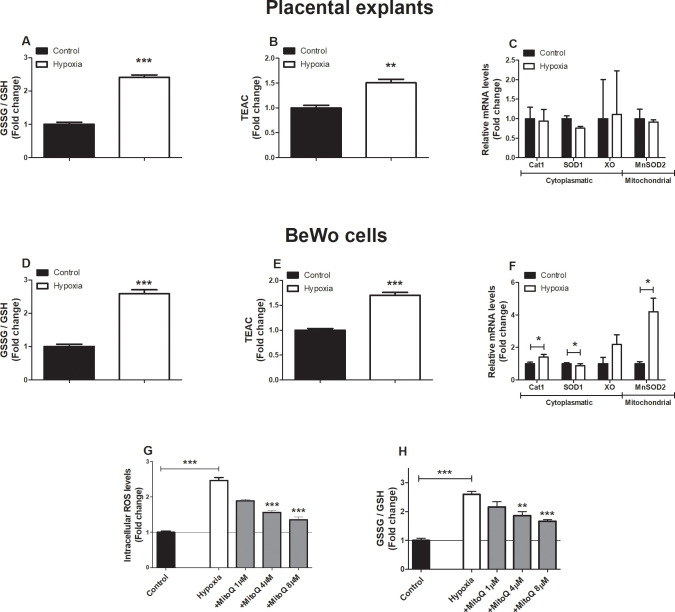
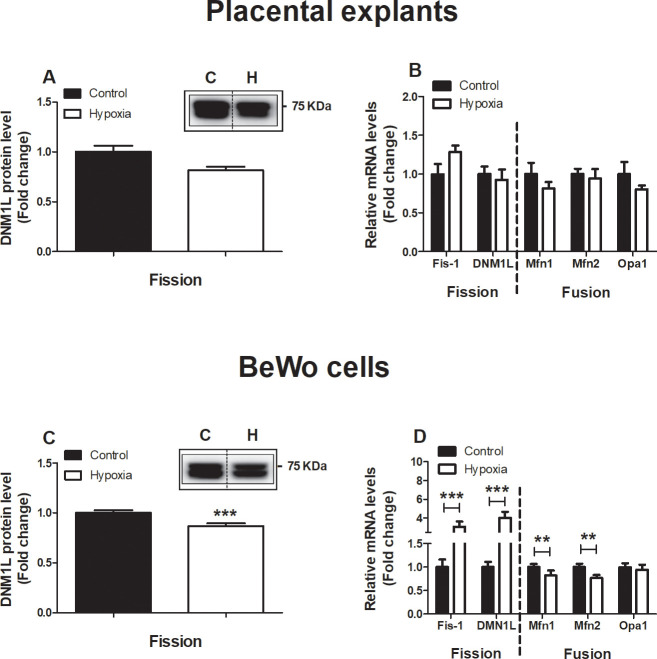
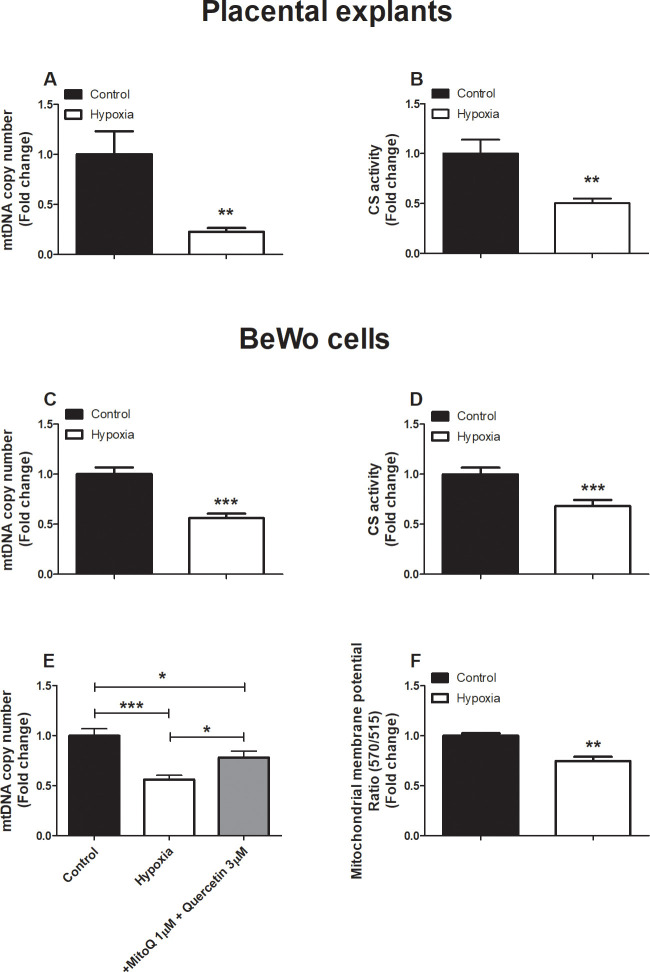
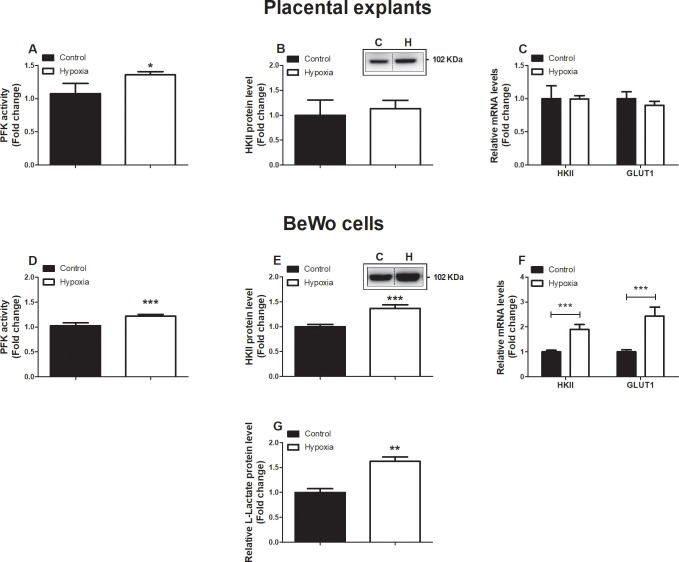
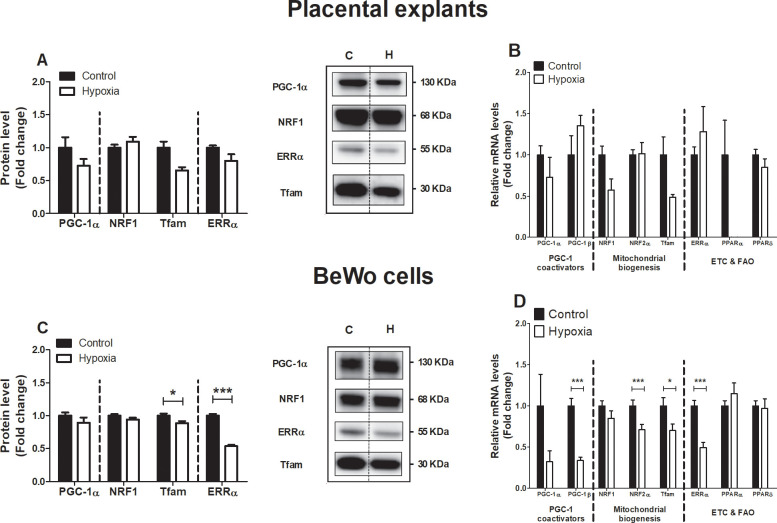
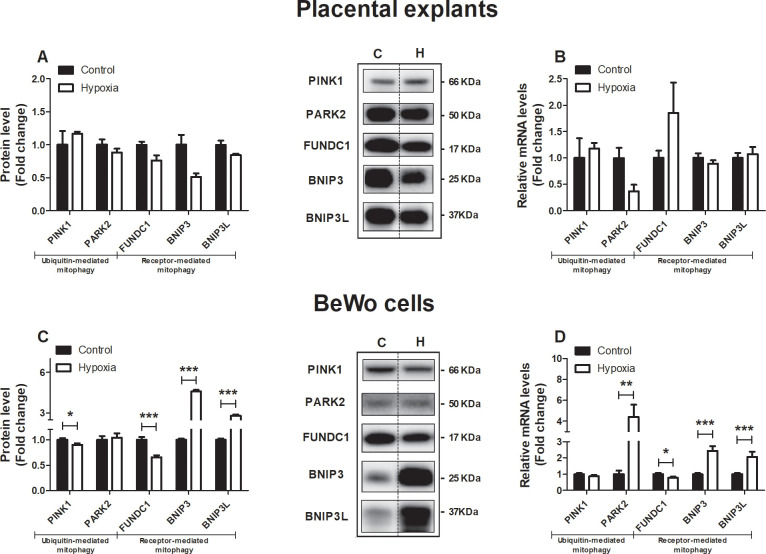
Both in placental explants as well as BeWo cells, hypoxia resulted in reductions in mitochondrial content, decreased abundance of key molecules involved in the electron transport chain and increased expression and activity of glycolytic enzymes. Furthermore, expression levels of key regulators of mitochondrial biogenesis were decreased while the abundance of constituents of the mitophagy, autophagy and mitochondrial fission machinery was increased in response to hypoxia. In addition, placental hypoxia was associated with increased oxidative stress, inflammation, and apoptosis. Moreover, experiments with MitoQ revealed that hypoxia-induced reactive oxygen species originated from the mitochondria in the trophoblasts.
This study is the first to demonstrate that placental hypoxia is associated with mitochondrial-generated reactive oxygen species and significant alterations in the molecular pathways controlling mitochondrial content and function. Furthermore, our data indicate that targeting mitochondrial oxidative stress may have therapeutic benefit in the management of pathologies related to placental hypoxia.
子宫胎盘灌注受损是子痫前期的一个显著特征,与胎盘缺氧和氧化应激有关。尽管线粒体水平的异常与 PE 的病理生理学有关,但缺氧诱导的线粒体异常是否导致胎盘氧化应激尚不清楚。
我们通过使用健康足月胎盘和暴露于缺氧的滋养细胞系(BeWo 细胞)来探讨线粒体代谢异常是否导致缺氧诱导的胎盘氧化应激。此外,我们还探讨了抗氧化剂 MitoQ 和槲皮素在预防缺氧诱导的胎盘氧化应激中的治疗潜力。
在胎盘外植体和 BeWo 细胞中,缺氧导致线粒体含量减少,参与电子传递链的关键分子丰度降低,糖酵解酶的表达和活性增加。此外,缺氧反应导致线粒体生物发生的关键调节因子的表达水平降低,而参与线粒体自噬、自噬和线粒体分裂机制的组成部分的丰度增加。此外,胎盘缺氧与氧化应激、炎症和细胞凋亡增加有关。此外,使用 MitoQ 的实验表明,缺氧诱导的活性氧源于滋养细胞中的线粒体。
这项研究首次表明,胎盘缺氧与线粒体产生的活性氧以及控制线粒体含量和功能的分子途径的显著改变有关。此外,我们的数据表明,靶向线粒体氧化应激可能对管理与胎盘缺氧相关的病理具有治疗益处。