Ihlenburg Ramona B J, Lehnen Anne-Catherine, Koetz Joachim, Taubert Andreas
Institute of Chemistry, University of Potsdam, Karl-Liebknecht-Str. 24-25, Building 26, D-14476 Potsdam, Germany.
Polymers (Basel). 2021 Jan 8;13(2):208. doi: 10.3390/polym13020208.
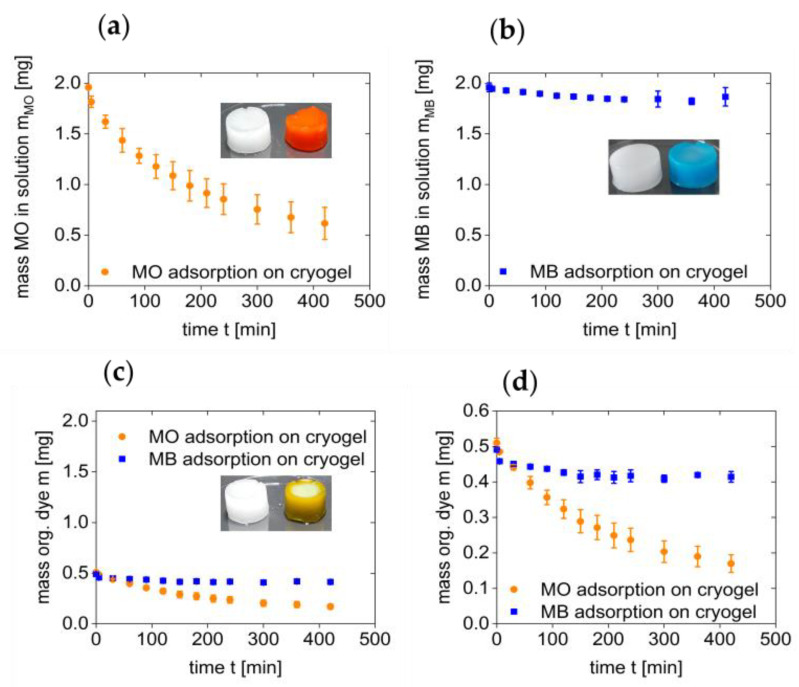
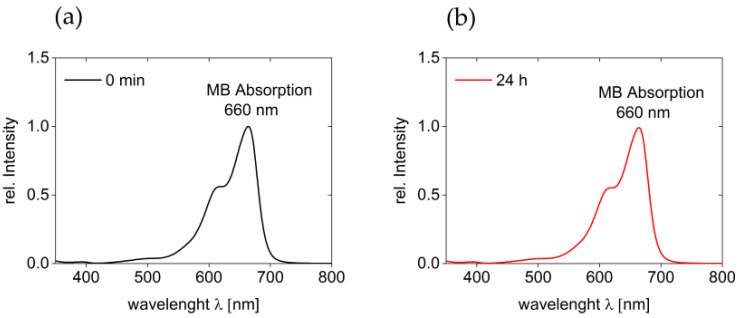
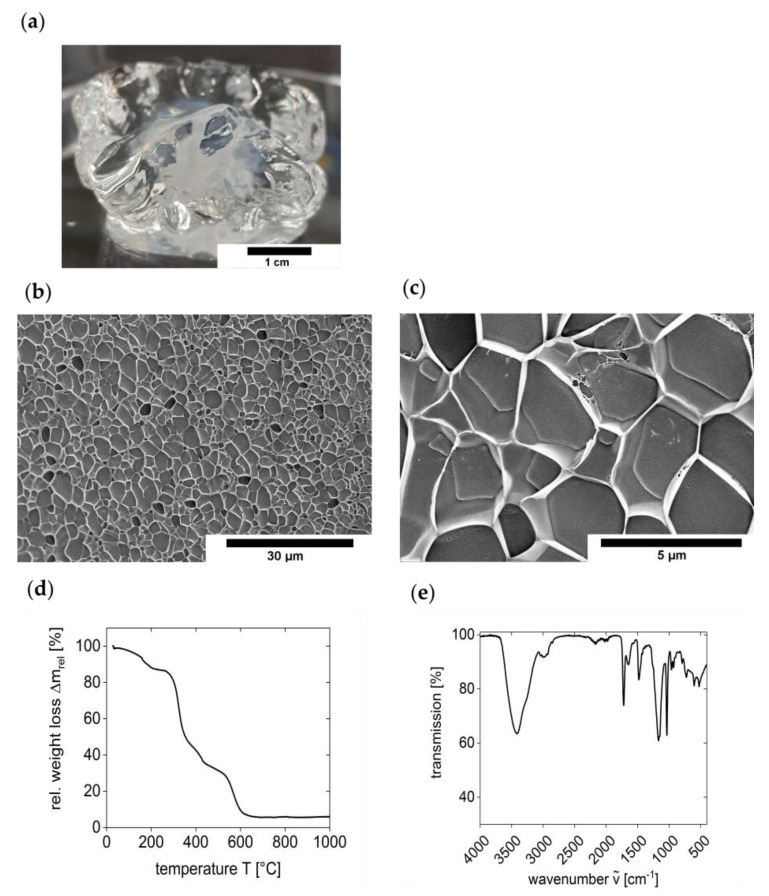
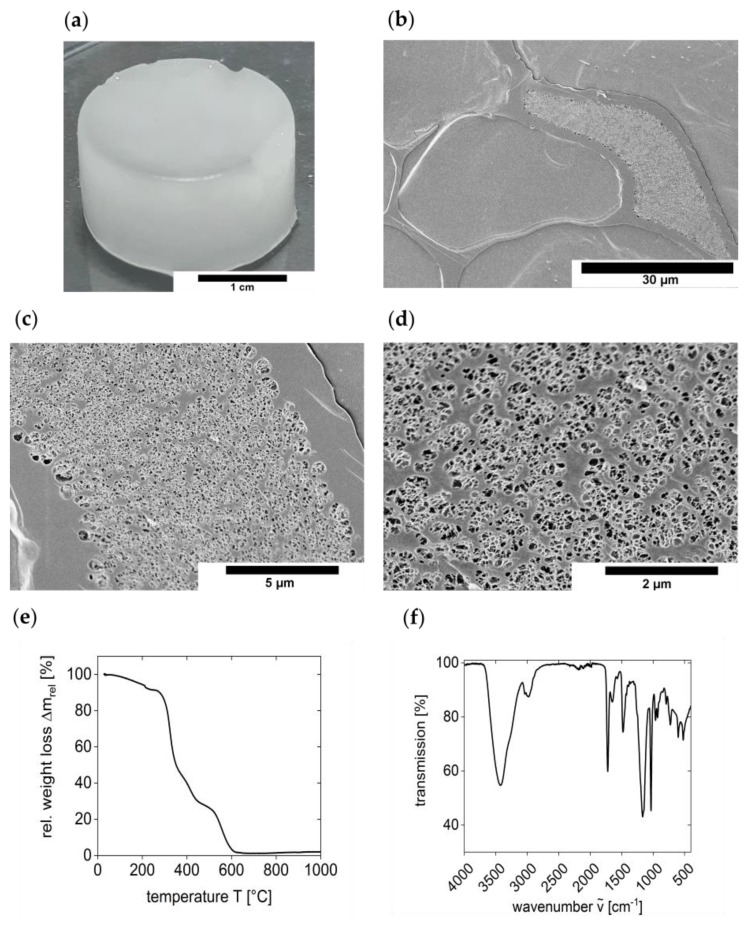
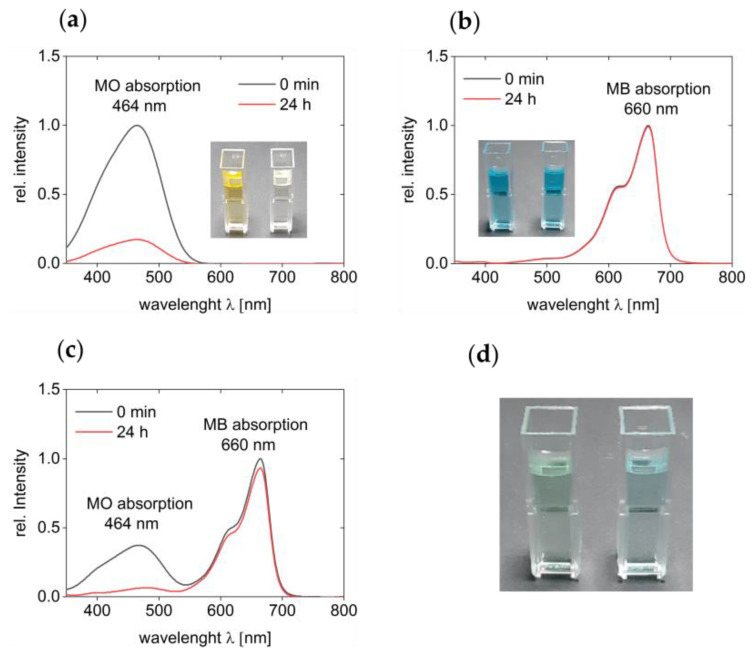
New cryogels for selective dye removal from aqueous solution were prepared by free radical polymerization from the highly water-soluble crosslinker N,N,N',N'-tetramethyl-N,N'-bis(2-ethylmethacrylate)-propyl-1,3-diammonium dibromide and the sulfobetaine monomer 2-(N-3-sulfopropyl-N,N-dimethyl ammonium)ethyl methacrylate. The resulting white and opaque cryogels have micrometer sized pores with a smaller substructure. They adsorb methyl orange (MO) but not methylene blue (MB) from aqueous solution. Mixtures of MO and MB can be separated through selective adsorption of the MO to the cryogels while the MB remains in solution. The resulting cryogels are thus candidates for the removal of hazardous organic substances, as exemplified by MO and MB, from water. Clearly, it is possible that the cryogels are also potentially interesting for removal of other compounds such as pharmaceuticals or pesticides, but this must be investigated further.
通过自由基聚合反应,以高水溶性交联剂N,N,N',N'-四甲基-N,N'-双(2-甲基丙烯酸乙酯)-丙基-1,3-二溴化铵和磺基甜菜碱单体甲基丙烯酸2-(N-3-磺丙基-N,N-二甲基铵)乙酯为原料,制备了用于从水溶液中选择性去除染料的新型冷冻凝胶。所得白色不透明冷冻凝胶具有微米级大小的孔隙以及较小的亚结构。它们能从水溶液中吸附甲基橙(MO),但不吸附亚甲基蓝(MB)。MO和MB的混合物可通过MO对冷冻凝胶的选择性吸附而分离,同时MB仍留在溶液中。因此,所得冷冻凝胶有望用于去除水中的有害有机物质,如MO和MB。显然,冷冻凝胶也有可能用于去除其他化合物,如药物或农药,但这还需要进一步研究。