Nanobiomagnetics and Bioelectronics Laboratory (NB2L), Department of Electrical Engineering, University of South Carolina, 301 Main Street, Columbia, SC, 29208, USA.
Sci Rep. 2021 Jan 12;11(1):733. doi: 10.1038/s41598-020-79871-1.
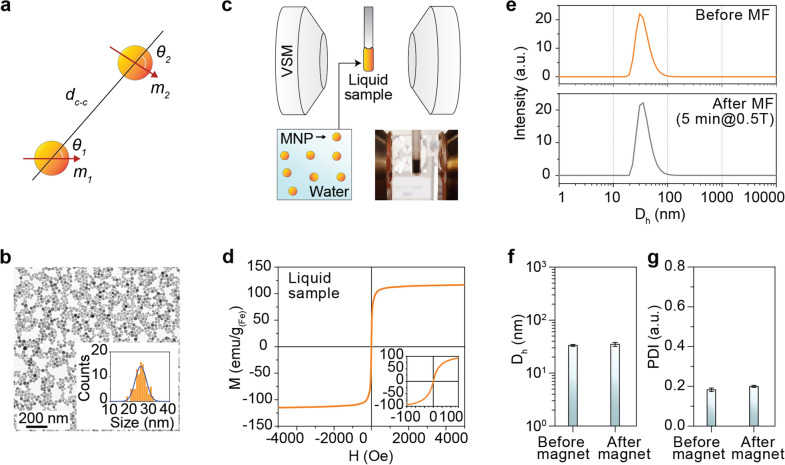
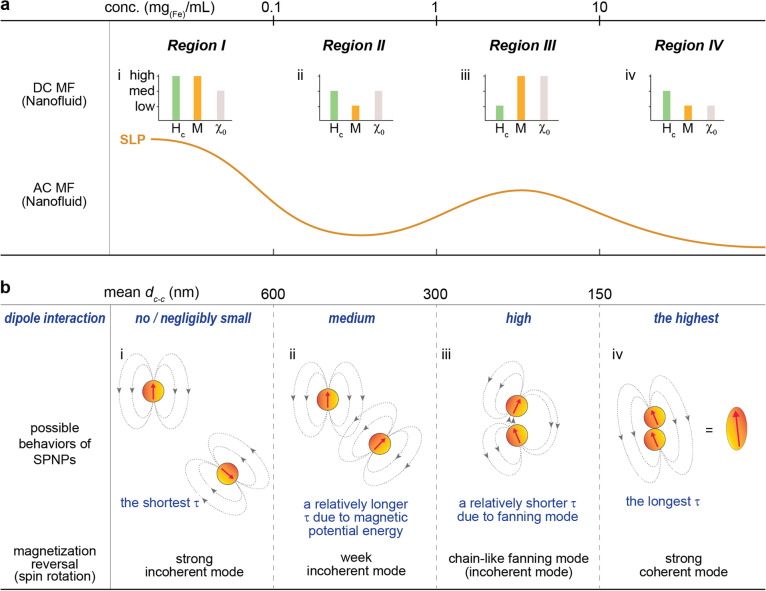
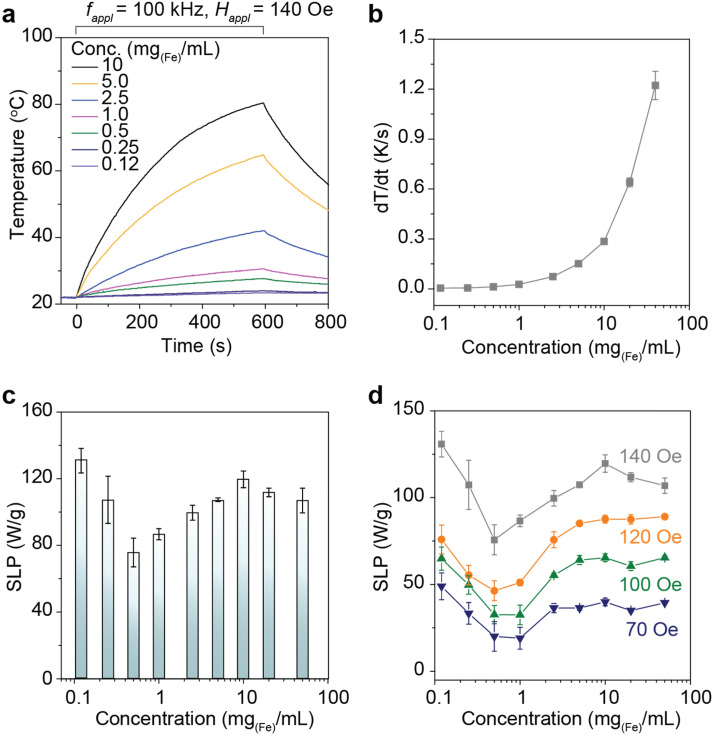
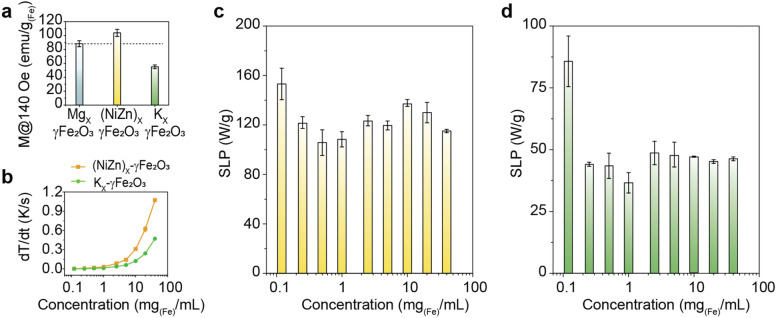
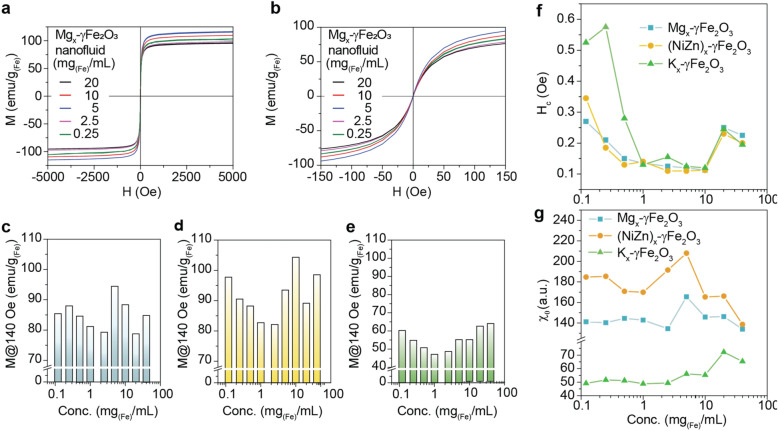
Magnetic dipole coupling between the colloidal superparamagnetic nanoparticles (SPNPs) depending on the concentration has been paid significant attention due to its critical role in characterizing the Specific Loss Power (SLP) in magnetic nanofluid hyperthermia (MNFH). However, despite immense efforts, the physical mechanism of concentration-dependent SLP change behavior is still poorly understood and some contradictory results have been recently reported. Here, we first report that the SLP of SPNP MNFH agent shows strong concentration-dependent oscillation behavior. According to the experimentally and theoretically analyzed results, the energy competition among the magnetic dipole interaction energy, magnetic potential energy, and exchange energy, was revealed as the main physical reason for the oscillation behavior. Empirically demonstrated new finding and physically established model on the concentration-dependent SLP oscillation behavior is expected to provide biomedically crucial information in determining the critical dose of an agent for clinically safe and highly efficient MNFH in cancer clinics.
由于胶体超顺磁纳米粒子(SPNP)的磁偶极耦合与浓度有关,因此在磁性纳米流体热疗(MNFH)中对其特征参量比吸收率(SLP)的研究中受到了极大关注。然而,尽管付出了巨大努力,浓度依赖型 SLP 变化行为的物理机制仍未得到很好的理解,最近也有一些相互矛盾的结果报道。在这里,我们首先报道了 SPNP MNFH 试剂的 SLP 表现出强烈的浓度依赖性振荡行为。根据实验和理论分析的结果,揭示了磁偶极相互作用能、磁位能和交换能之间的能量竞争是振荡行为的主要物理原因。对浓度依赖型 SLP 振荡行为的经验性新发现和物理模型的建立,有望为确定临床安全高效的 MNFH 治疗癌症时试剂的临界剂量提供至关重要的生物医学信息。