The Key Laboratory of Cardiovascular Remodeling and Function Research, Chinese Ministry of Education, Chinese National Health Commission and Chinese Academy of Medical Sciences, The State and Shandong Province Joint Key Laboratory of Translational Cardiovascular Medicine, Department of Cardiology, Qilu Hospital, Cheeloo College of Medicine, Shandong University, Jinan, 250012, Shandong, China.
Department of Critical Care Medicine, Qilu Hospital, Cheeloo College of Medicine, Shandong University, Jinan, 250012, Shandong, China.
Sci Rep. 2021 Jan 12;11(1):518. doi: 10.1038/s41598-020-80063-0.
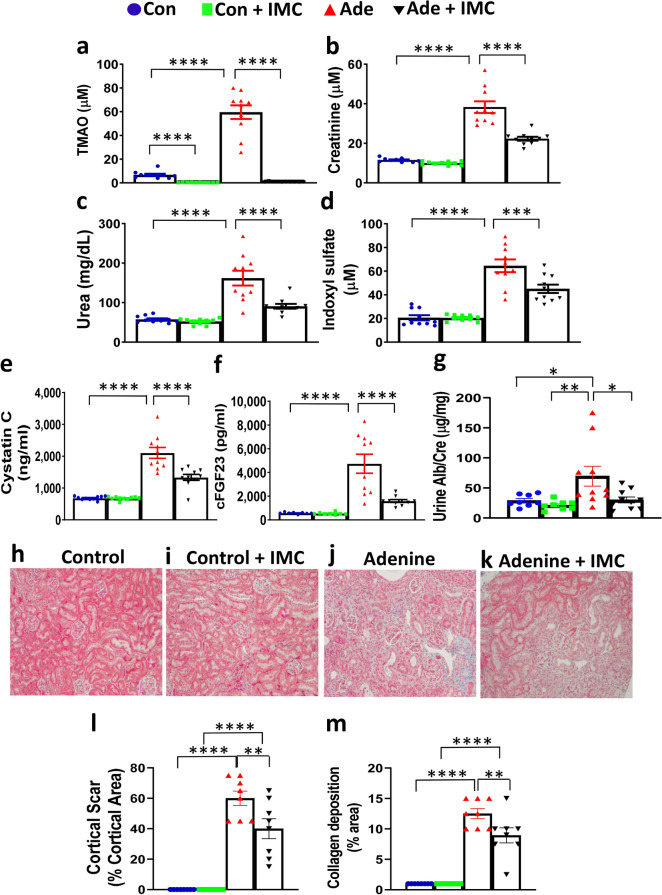
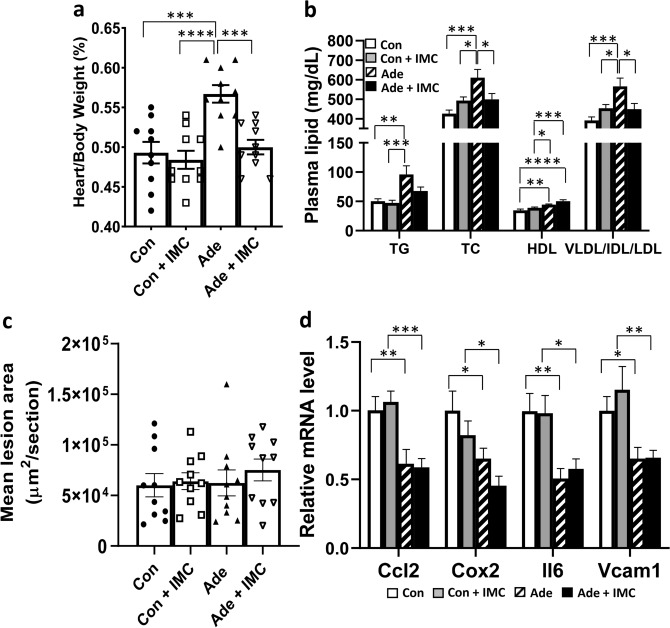
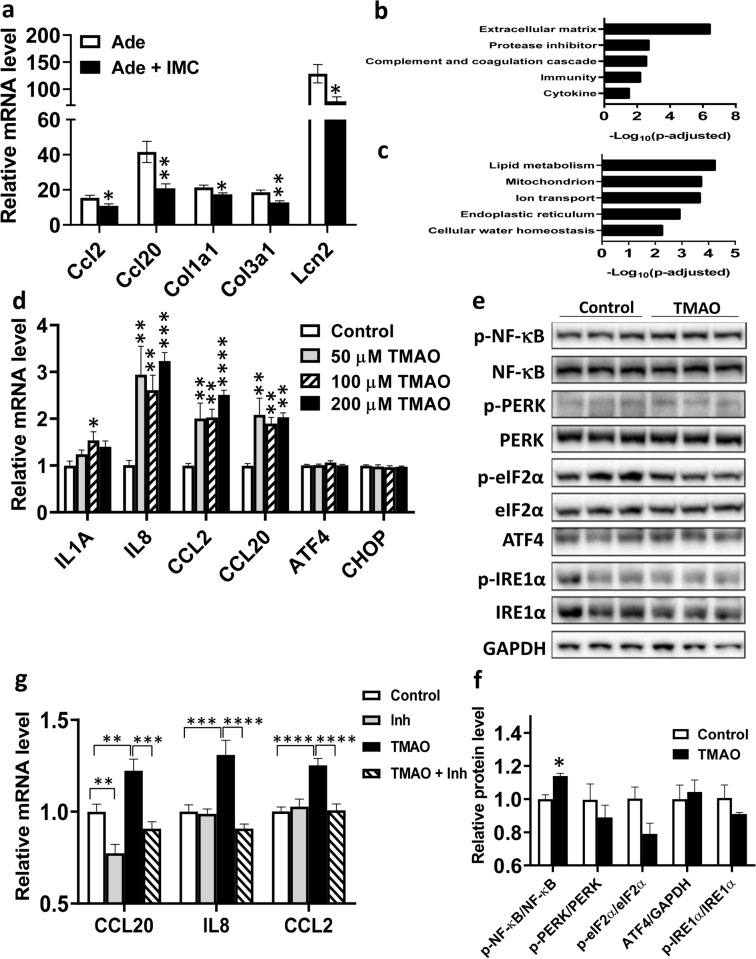
Patients with chronic kidney disease (CKD) have elevated circulating levels of trimethylamine N-oxide (TMAO), a metabolite derived from gut microbes and associated with cardiovascular diseases. High circulating levels of TMAO and its dietary precursor, choline, predict increased risk for development of CKD in apparently healthy subjects, and studies in mice fed TMAO or choline suggest that TMAO can contribute to kidney impairment and renal fibrosis. Here we examined the interactions between TMAO, kidney disease, and cardiovascular disease in mouse models. We observed that while female hyperlipidemic apoE KO mice fed a 0.2% adenine diet for 14 weeks developed CKD with elevated plasma levels of TMAO, provision of a non-lethal inhibitor of gut microbial trimethylamine (TMA) production, iodomethylcholine (IMC), significantly reduced multiple markers of renal injury (plasma creatinine, cystatin C, FGF23, and TMAO), reduced histopathologic evidence of fibrosis, and markedly attenuated development of microalbuminuria. In addition, while the adenine-induced CKD model significantly increased heart weight, a surrogate marker for myocardial hypertrophy, this was largely prevented by IMC supplementation. Surprisingly, adenine feeding did not increase atherosclerosis and significantly decreased the expression of inflammatory genes in the aorta compared to the control groups, effects unrelated to TMAO levels. Our data demonstrate that inhibition of TMAO production attenuated CKD development and cardiac hypertrophy in mice, suggesting that TMAO reduction may be a novel strategy in treating CKD and its cardiovascular disease complications.
患有慢性肾病(CKD)的患者循环中三甲胺氧化物(TMAO)水平升高,TMAO 是一种来源于肠道微生物的代谢产物,与心血管疾病有关。循环中 TMAO 和其膳食前体胆碱水平升高可预测在貌似健康的受试者中 CKD 的发展风险增加,并且在给予 TMAO 或胆碱的小鼠研究中表明,TMAO 可导致肾脏损害和肾纤维化。在这里,我们在小鼠模型中研究了 TMAO、肾脏疾病和心血管疾病之间的相互作用。我们观察到,在喂食 0.2%腺嘌呤饮食 14 周的高脂血症 apoE KO 雌性小鼠中,虽然发生了 CKD 并伴有 TMAO 血浆水平升高,但提供非致死性肠道微生物 TMA 生产抑制剂碘代甲胆碱(IMC)可显著降低多种肾脏损伤标志物(血浆肌酐、胱抑素 C、FGF23 和 TMAO),减少纤维化的组织病理学证据,并明显减轻微量白蛋白尿的发生。此外,虽然腺嘌呤诱导的 CKD 模型显著增加了心脏重量,这是心肌肥厚的替代标志物,但 IMC 补充剂在很大程度上预防了这一情况。令人惊讶的是,与对照组相比,腺嘌呤喂养并没有增加动脉粥样硬化,并且显著降低了主动脉中炎症基因的表达,这些影响与 TMAO 水平无关。我们的数据表明,抑制 TMAO 的产生可减轻小鼠 CKD 的发生和心脏肥大,表明减少 TMAO 可能是治疗 CKD 及其心血管疾病并发症的一种新策略。