Materno-Fetal and Obstetrics Research Unit, Department "Femme-Mère-Enfant"-"Woman-Mother-Child", University of Lausanne and Lausanne University Hospital, 1011, Lausanne, Switzerland.
Institute of Higher Education in Healthcare Research, University of Lausanne and Lausanne University Hospital, 1011 Lausanne, Switzerland.
Sci Rep. 2021 Jan 12;11(1):833. doi: 10.1038/s41598-020-80821-0.
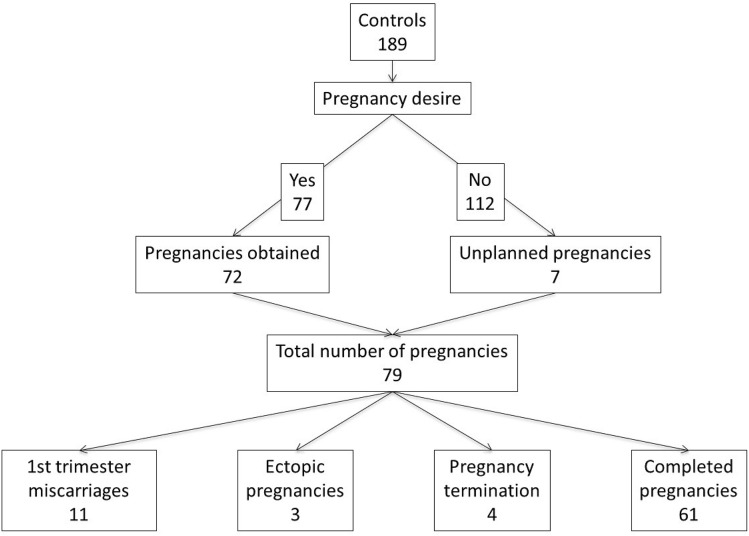
In this case control study, long-term gynecological, reproductive and sexual outcomes after uterine artery embolization (UAE) for postpartum hemorrhage (PPH) were evaluated. The study was performed in a single referral hospital for PPH in Lausanne from 2003 to 2013. Each woman whose delivery was complicated by PPH and treated by UAE was included, and compared to a control group of women whose delivery was uncomplicated. Cases were matched by maternal age, parity, ethnicity, year and mode of delivery, birth weight and gestational age in a 1-3 ratio. A total of 77 patients treated by UAE for PPH were identified in our obstetrical database. Among them, 63 were included and compared to 189 matched patients (no PPH). The mean interval time between UAE and this study was 8.1 years. Time to menstrual cycle recovery after delivery (3.9 vs 5.6 months, p = 0.66), spotting (7.9% vs 7.2%, p = 0.49), dysmenorrhea (25.4% vs 22.2%, p = 0.60) and amenorrhea (14.3% vs 12.2%, p = 0.66) were similar between the two groups. There was no difference in the FSFI score between the groups (23.2 ± 0.6 vs 23.8 ± 0.4; p = 0.41). However, the interval time to subsequent pregnancy was longer for patients after UAE than the control group (35 vs 18 months, p = 0.002). In case of pregnancy desire, the success rate was lower after UAE compared to controls (55% vs 93.5%, p < 0.001). The rate of PPH was higher in those with previous PPH (6.6% vs 36.4%, p = 0.010). Patients treated by UAE for PPH did not report higher rates of gynecological symptoms or sexual dysfunction compared to patients with uneventful deliveries. The inter-pregnancy interval was increased and the success rate was reduced. In subsequent pregnancies, a higher rate of PPH was observed in those that underwent UAE.
在这项病例对照研究中,评估了子宫动脉栓塞术(UAE)治疗产后出血(PPH)后长期的妇科、生殖和性功能结果。该研究于 2003 年至 2013 年在洛桑的一家 PPH 转诊医院进行。每位因 PPH 而分娩复杂并接受 UAE 治疗的女性均被纳入研究,并与分娩无并发症的对照组女性进行比较。通过产妇年龄、产次、种族、年份和分娩方式、出生体重和胎龄 1:3 比例进行匹配。在我们的产科数据库中,共确定了 77 例因 PPH 接受 UAE 治疗的患者。其中,有 63 例被纳入并与 189 例匹配患者(无 PPH)进行比较。UAE 治疗与本研究之间的平均时间间隔为 8.1 年。产后月经周期恢复时间(3.9 个月 vs 5.6 个月,p=0.66)、点滴出血(7.9% vs 7.2%,p=0.49)、痛经(25.4% vs 22.2%,p=0.60)和闭经(14.3% vs 12.2%,p=0.66)在两组之间相似。两组间 FSFI 评分无差异(23.2±0.6 vs 23.8±0.4;p=0.41)。然而,UAE 治疗后的患者再次妊娠的间隔时间长于对照组(35 个月 vs 18 个月,p=0.002)。在有妊娠意愿的情况下,UAE 治疗后的成功率低于对照组(55% vs 93.5%,p<0.001)。有既往 PPH 史的患者的 PPH 发生率更高(6.6% vs 36.4%,p=0.010)。与无并发症分娩的患者相比,接受 UAE 治疗 PPH 的患者并未报告更高的妇科症状或性功能障碍发生率。妊娠间隔时间延长,成功率降低。在随后的妊娠中,那些接受 UAE 治疗的患者中 PPH 的发生率更高。