Department of Clinical Microbiology and Applied Technology, Faculty of Medical Technology, Mahidol University, Salaya, Nakhon Pathom, Thailand.
Department of Orthopaedics, Faculty of Medicine Ramathibodi Hospital, Mahidol University, Bangkok, Thailand.
Int J Med Sci. 2021 Jan 1;18(3):744-755. doi: 10.7150/ijms.48492. eCollection 2021.
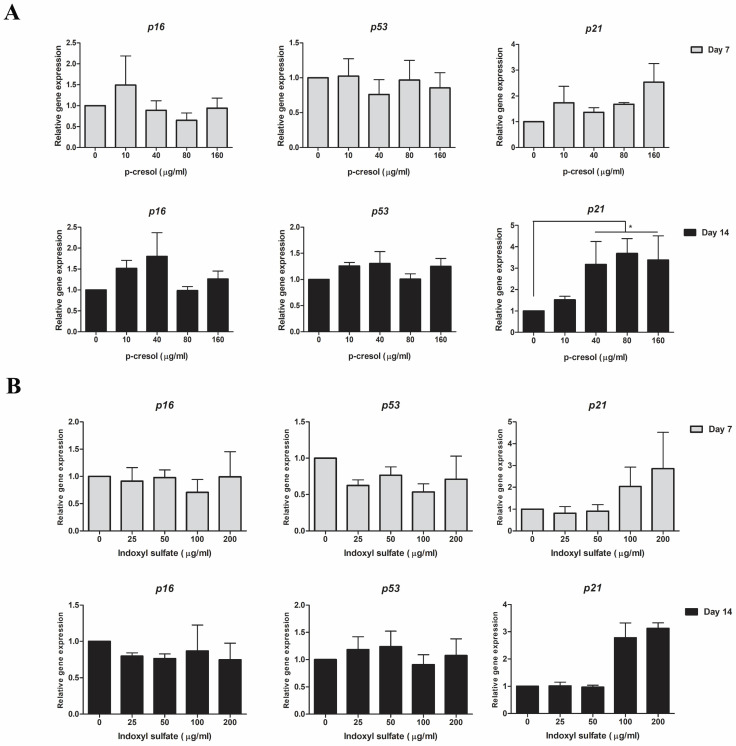
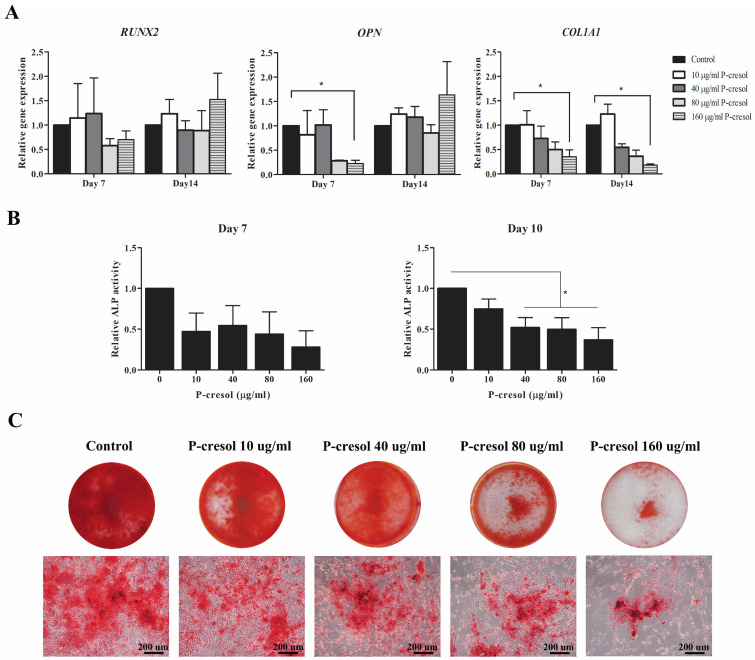
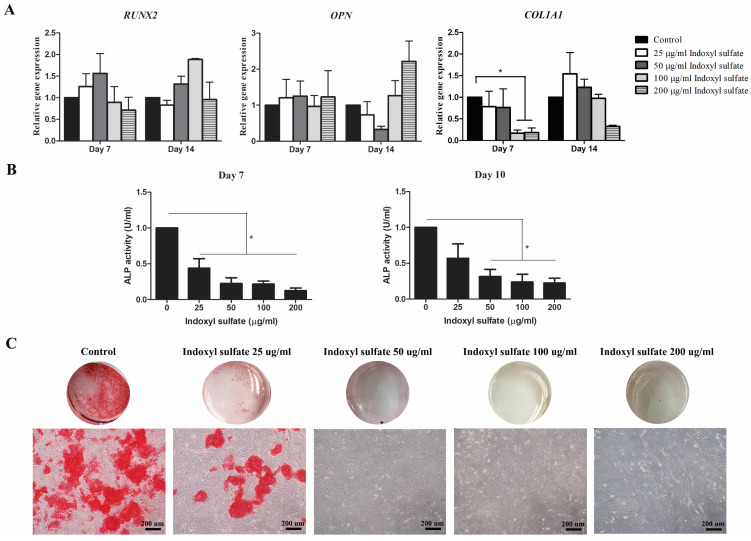
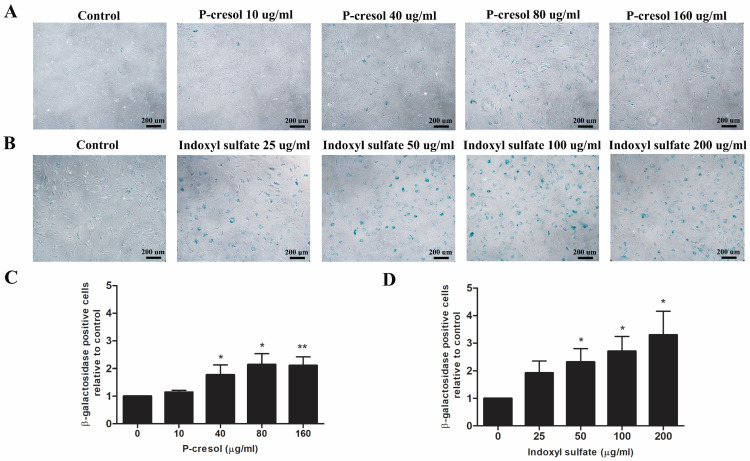
Chronic kidney disease (CKD) patients obtained high levels of uremic toxins progressively develop several complications including bone fractures. Protein-bound uremic toxins especially p-cresol and indoxyl sulfate are hardly eliminated due to their high molecular weight. Thus, the abnormality of bone in CKD patient could be potentially resulted from the accumulation of uremic toxins. To determine whether protein-bound uremic toxins have an impact on osteogenesis, mesenchymal stem cells were treated with either p-cresol or indoxyl sulfate under osteogenic differentiation. The effects of uremic toxins on MSC-osteoblastic differentiation were investigated by evaluation of bone phenotype. The results demonstrated that p-cresol and indoxyl sulfate down-regulated the transcriptional level of collagen type I, deceased alkaline phosphatase activity, and impaired mineralization of MSC-osteoblastic cells. Furthermore, p-cresol and indoxyl sulfate gradually increased senescence-associated beta-galactosidase positive cells while upregulated the expression of which participate in senescent process. Our findings clearly revealed that the presence of uremic toxins dose-dependently influenced a gradual deterioration of osteogenesis. The effects partially mediate through the activation of senescence-associated gene lead to the impairment of osteogenesis. Therefore, the management of cellular senescence triggered by uremic toxins could be considered as an alternative therapeutic approach to prevent bone abnormality in CKD patients.
慢性肾脏病(CKD)患者体内蓄积大量尿毒症毒素,逐渐出现多种并发症,包括骨折。由于蛋白质结合型尿毒症毒素(如对甲酚和吲哚硫酸酯)分子量较大,难以被清除。因此,CKD 患者的骨异常可能是由于尿毒症毒素的蓄积导致的。为了确定蛋白质结合型尿毒症毒素是否对成骨有影响,我们将骨髓间充质干细胞(MSC)在成骨分化条件下分别用对甲酚和吲哚硫酸酯处理。通过评估成骨表型来研究尿毒症毒素对 MSC-成骨细胞分化的影响。结果表明,对甲酚和吲哚硫酸酯下调了Ⅰ型胶原的转录水平,降低碱性磷酸酶活性,并损害 MSC-成骨细胞的矿化。此外,对甲酚和吲哚硫酸酯逐渐增加衰老相关β-半乳糖苷酶阳性细胞的数量,同时上调参与衰老过程的基因的表达。我们的研究结果清楚地表明,尿毒症毒素的存在以剂量依赖的方式影响成骨作用逐渐恶化。这些作用部分通过激活衰老相关基因介导,导致成骨作用受损。因此,针对尿毒症毒素引起的细胞衰老的管理可以被视为预防 CKD 患者骨异常的一种治疗选择。