Androsiuk Piotr, Chwedorzewska Katarzyna J, Dulska Justyna, Milarska Sylwia, Giełwanowska Irena
Department of Plant Physiology, Genetics and Biotechnology Faculty of Biology and Biotechnology University of Warmia and Mazury in Olsztyn Olsztyn Poland.
Department of Agronomy Warsaw University of Life Sciences-SGGW Warsaw Poland.
Ecol Evol. 2020 Dec 16;11(1):648-663. doi: 10.1002/ece3.7095. eCollection 2021 Jan.
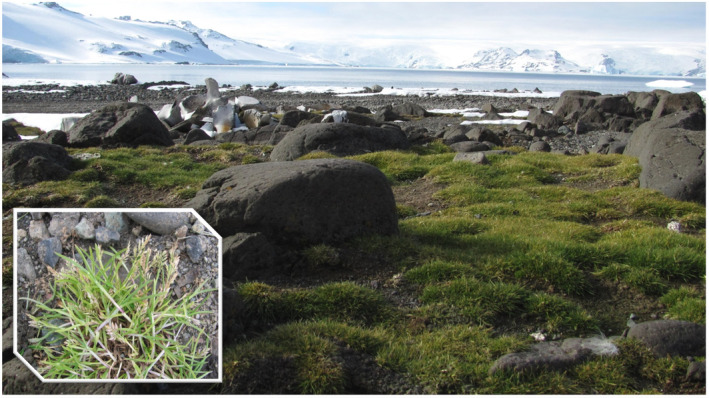
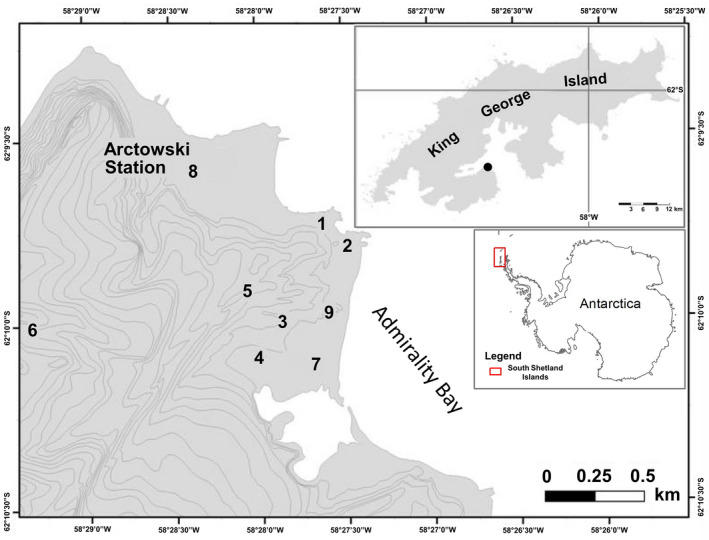
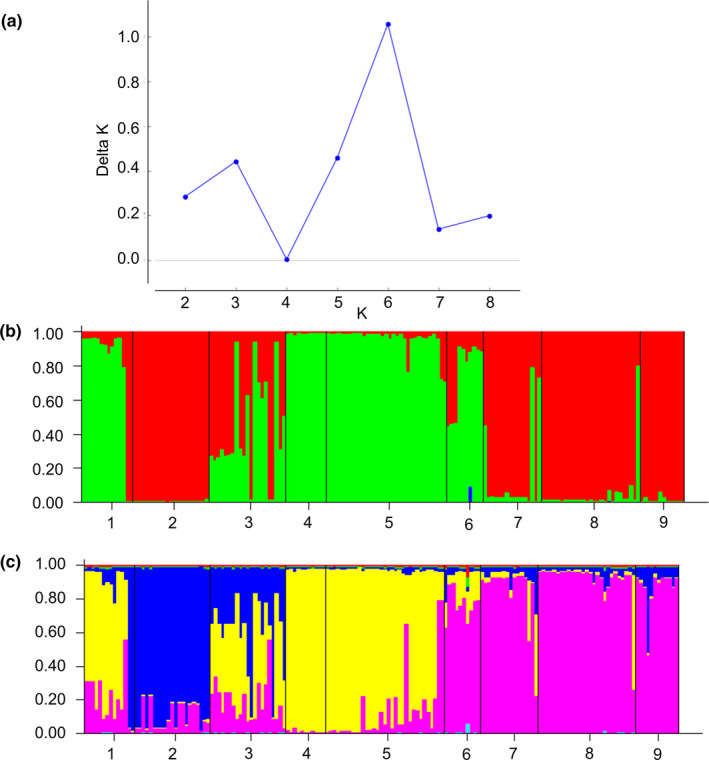
Desv. can be found in diverse Antarctic habitats which may vary considerably in terms of environmental conditions and soil properties. As a result, the species is characterized by wide ecotypic variation in terms of both morphological and anatomical traits. The species is a unique example of an organism that can successfully colonize inhospitable regions due to its phenomenal ability to adapt to both the local mosaic of microhabitats and to general climatic fluctuations. For this reason, has been widely investigated in studies analyzing morphophysiological and biochemical responses to various abiotic stresses (frost, drought, salinity, increased UV radiation). However, there is little evidence to indicate whether the observed polymorphism is accompanied by the corresponding genetic variation. In the present study, retrotransposon-based iPBS markers were used to trace the genetic variation of collected in nine sites of the Arctowski oasis on King George Island (Western Antarctic). The genotyping of 165 individuals from nine populations with seven iPBS primers revealed 125 amplification products, 15 of which (12%) were polymorphic, with an average of 5.6% polymorphic fragments per population. Only one of the polymorphic fragments, observed in population 6, was represented as a private band. The analyzed specimens were characterized by low genetic diversity (uH = 0.021, = 0.030) and high population differentiation ( = 0.4874). An analysis of Fu's statistics and mismatch distribution in most populations (excluding population 2, 6 and 9) revealed demographic/spatial expansion, whereas significant traces of reduction in effective population size were found in three populations (1, 3 and 5). The iPBS markers revealed genetic polymorphism of , which could be attributed to the mobilization of random transposable elements, unique features of reproductive biology, and/or geographic location of the examined populations.
Desv. 存在于多样的南极栖息地,这些栖息地在环境条件和土壤特性方面可能有很大差异。因此,该物种在形态和解剖特征方面具有广泛的生态型变异。该物种是一种独特的生物实例,由于其具有非凡的能力,能够适应局部微生境的镶嵌以及一般气候波动,从而成功地在不适宜居住的地区定殖。出于这个原因,在分析对各种非生物胁迫(霜冻、干旱、盐度、紫外线辐射增加)的形态生理和生化反应的研究中,它受到了广泛的研究。然而,几乎没有证据表明观察到的多态性是否伴随着相应的遗传变异。在本研究中,基于反转录转座子的iPBS标记被用于追踪在乔治王岛(南极西部)的阿克托夫斯基绿洲的九个地点采集的Desv. 的遗传变异。用七个iPBS引物对来自九个种群的165个个体进行基因分型,共产生了125个扩增产物,其中15个(12%)是多态性的,每个种群平均有5.6%的多态性片段。在种群6中观察到的多态性片段中,只有一个表现为私有带。分析的标本具有低遗传多样性(uH = 0.021, = 0.030)和高种群分化( = 0.4874)的特征。对大多数种群(不包括种群2、6和9)的Fu's 统计和错配分布分析表明存在种群统计/空间扩张,而在三个种群(1、3和5)中发现了有效种群大小减少的显著痕迹。iPBS标记揭示了Desv. 的遗传多态性,这可能归因于随机转座元件的移动、生殖生物学的独特特征和/或所研究种群的地理位置。