Mycobacteria Research Laboratories, Department of Microbiology, Immunology and Pathology, Colorado State University, Fort Collins, Colorado, USA.
CPT Pharmacometrics Syst Pharmacol. 2021 Mar;10(3):211-219. doi: 10.1002/psp4.12591. Epub 2021 Feb 13.
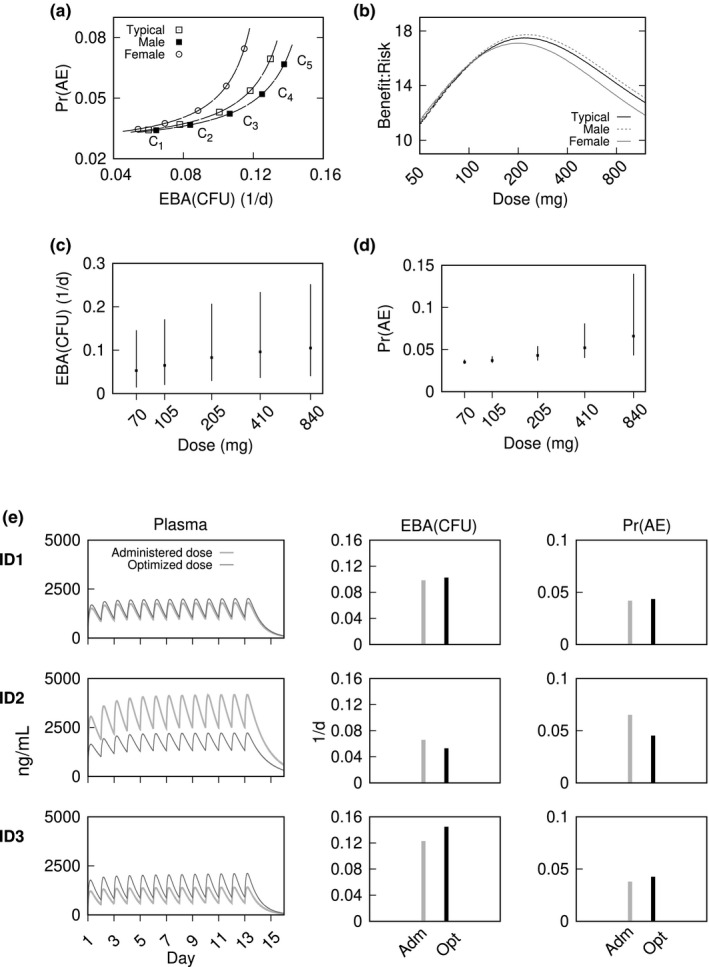
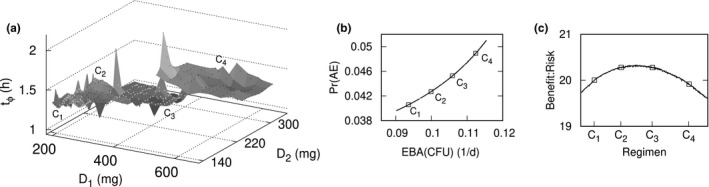
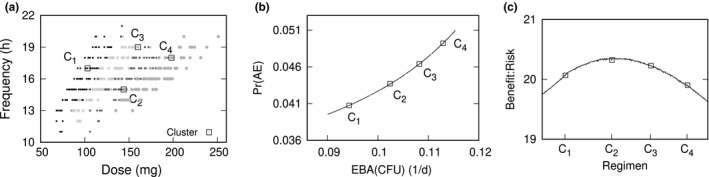
Clinical development of combination chemotherapies for tuberculosis (TB) is complicated by partial or restricted phase II dose-finding. Barriers include a propensity for drug resistance with monotherapy, practical limits on numbers of treatment arms for component dose combinations, and limited application of current dose selection methods to multidrug regimens. A multi-objective optimization approach to dose selection was developed as a conceptual and computational framework for currently evolving approaches to clinical testing of novel TB regimens. Pharmacokinetic-pharmacodynamic (PK-PD) modeling was combined with an evolutionary algorithm to identify dosage regimens that yield optimal trade-offs between multiple conflicting therapeutic objectives. The phase IIa studies for pretomanid, a newly approved nitroimidazole for specific cases of highly drug-resistant pulmonary TB, were used to demonstrate the approach with Pareto optimized dosing that best minimized sputum bacillary load and the probability of drug-related adverse events. Results include a population-typical characterization of the recommended 200 mg once daily dosage, the optimality of time-dependent dosing, examples of individualized therapy, and the determination of optimal loading doses. The approach generalizes conventional PK-PD target attainment to a design problem that scales to drug combinations, and provides a benefit-risk context for clinical testing of complex drug regimens.
结核病(TB)联合化疗的临床开发受到部分或受限的 II 期剂量发现的阻碍。障碍包括单药治疗的耐药性倾向、药物成分剂量组合的治疗臂数量的实际限制,以及当前剂量选择方法对多药物方案的应用有限。多目标优化方法用于剂量选择,作为当前新型结核病方案临床测试方法的概念和计算框架。药代动力学-药效学(PK-PD)建模与进化算法相结合,以确定在多个相互冲突的治疗目标之间取得最佳权衡的剂量方案。新批准的硝基咪唑类药物 pretomanid 的 IIa 期研究用于演示该方法,该方法采用 Pareto 优化剂量,可最大程度地降低痰菌负荷和药物相关不良事件的概率。结果包括推荐的 200mg 每日一次剂量的人群典型特征、时间依赖性剂量的最优性、个体化治疗的实例以及最佳负荷剂量的确定。该方法将传统的 PK-PD 目标实现推广到可扩展到药物组合的设计问题,并为复杂药物方案的临床测试提供了受益风险背景。