Ye Lu, Cai Li, Fu Yonghui, Zhuang Debao, Hu Xiaoqing, Jie Youkun
Department of Pathology, Jiangxi Maternal and Child Health Hospital, Nanchang, 330006, Jiangxi, China.
Department of Oncology, Jiangxi Maternal and Child Health Hospital, Nanchang, 330006, Jiangxi, China.
World J Surg Oncol. 2021 Jan 13;19(1):12. doi: 10.1186/s12957-020-02101-5.
Venous thromboembolism (VTE) in ovarian cancer (OC) patients has been widely investigated, but our knowledge on the role of VTE in OC patients receiving chemotherapy is limited. The aim of our study was to investigate the prevalence, risk factors, and prognostic value of chemotherapy-associated VTE in OC.
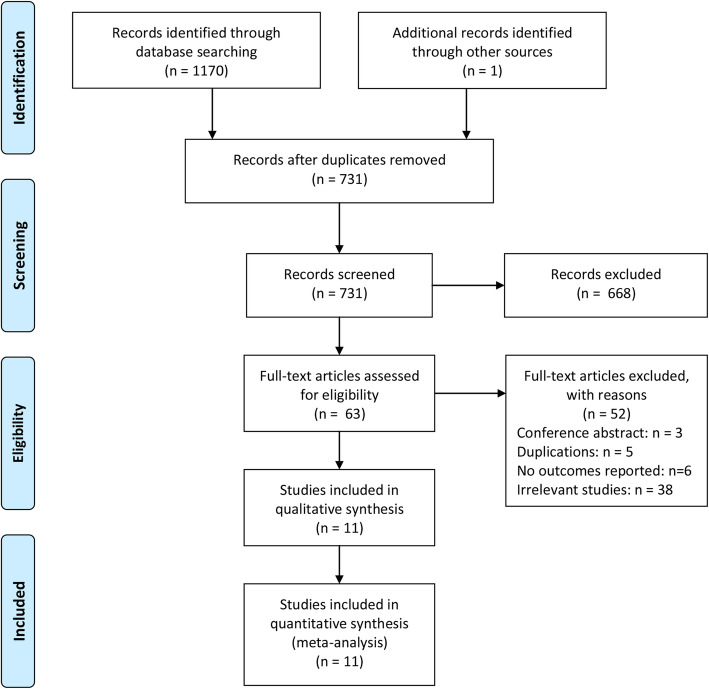
Three databases (PubMed, Embase, and the Cochrane Library) were systematically searched from inception to October 14, 2020. The primary outcome was the prevalence of VTE in OC patients receiving chemotherapy. The risk factors and prognostic value of VTE were the secondary outcomes. The pooled prevalence of VTE was estimated using the generic inverse-variance method. The statistical heterogeneity was evaluated with Cochran's Q test and I statistic. Funnel plot, Begg's test, and Egger's test were used to assess the potential publication bias in the meta-analysis.
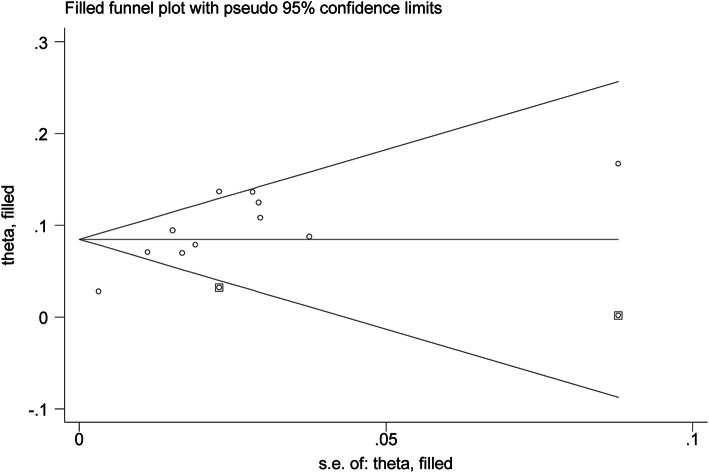
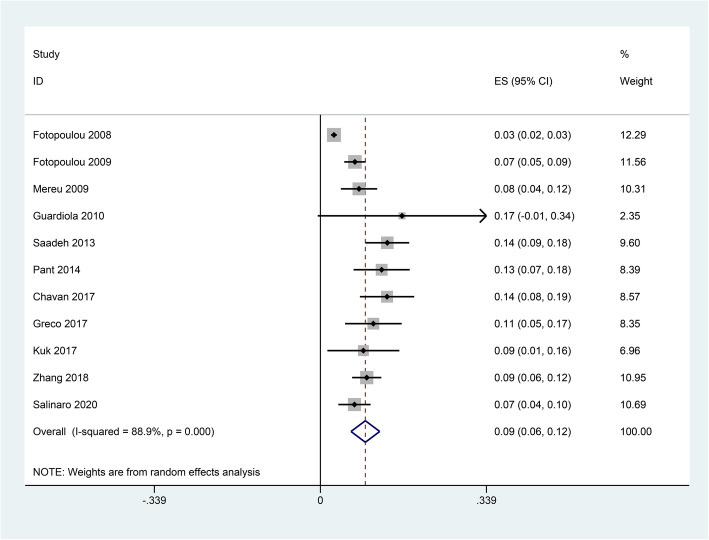
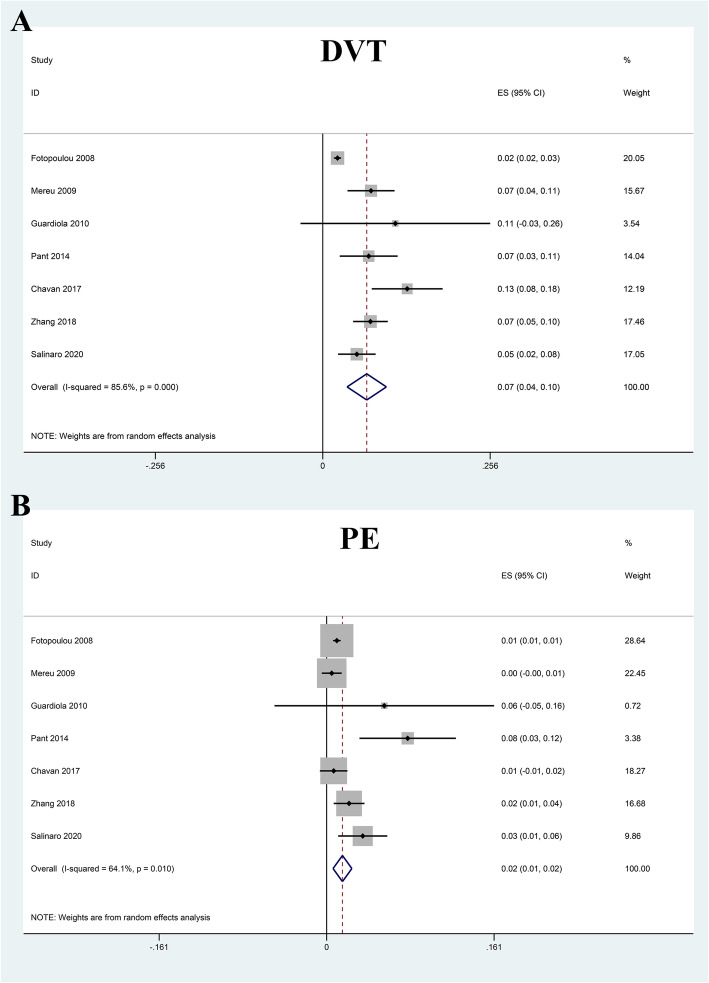
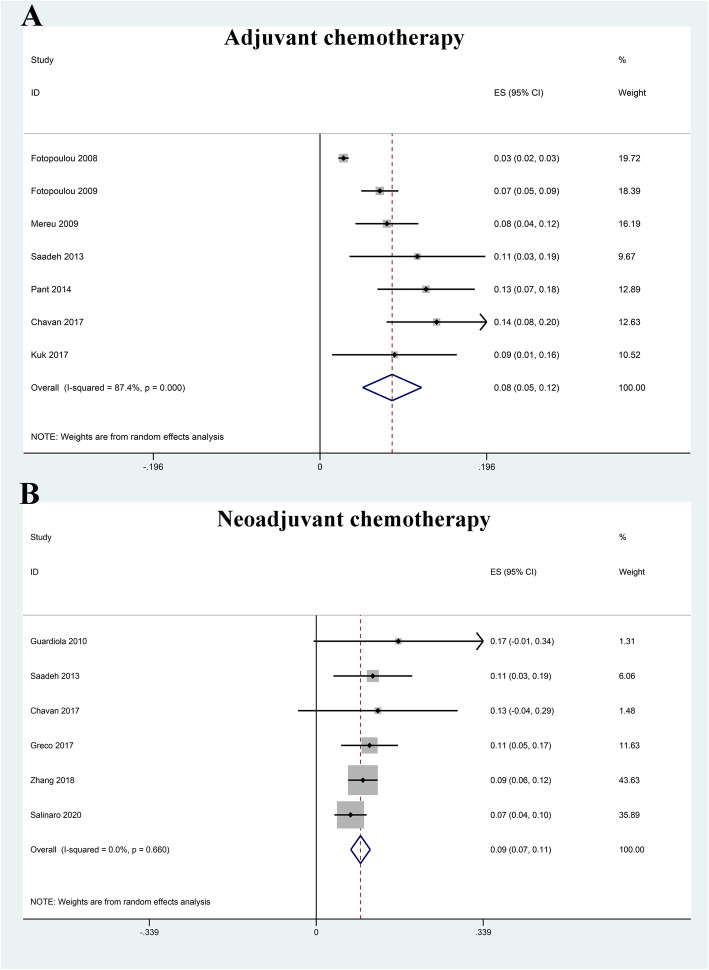
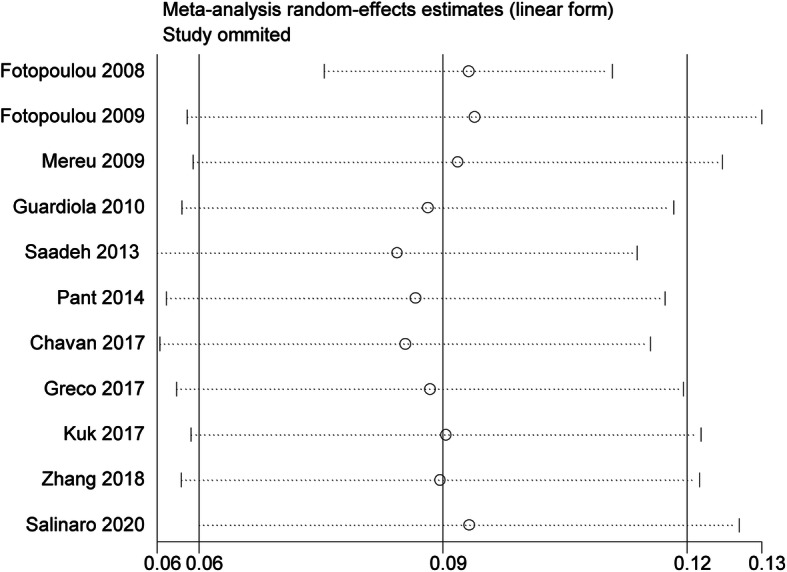
A total of eleven observational studies with 4759 OC patients were included. The pooled prevalence of VTE was 9% (95% CI, 0.06-0.12) in OC patients receiving chemotherapy. The results of subgroup analysis and sensitivity analysis were basically consistent with the overall pooled estimate. Multiple significant risk factors associated with VTE were also identified including advanced age, D-dimer > 0.5 mg/mL, and tumor diameter > 10 cm. Only two included studies reported the prognostic value of VTE in OC patients receiving chemotherapy, but with inconsistent results. Funnel plot showed that there existed potential publication bias, which was further verified by statistical test, but the results of the trim-and-fill method showed the pooled estimate kept stable after adding two "missing" studies.
This current study revealed that the pooled prevalence of chemotherapy-related VTE in OC was approximately 9% in OC patients. Risk factors for chemotherapy-related VTE were also identified which may contribute to targeting potentially preventative measures for VTE in OC.
卵巢癌(OC)患者的静脉血栓栓塞(VTE)已得到广泛研究,但我们对VTE在接受化疗的OC患者中的作用了解有限。本研究的目的是调查OC中化疗相关VTE的患病率、危险因素及预后价值。
系统检索了三个数据库(PubMed、Embase和Cochrane图书馆),检索时间从数据库建立至2020年10月14日。主要结局是接受化疗的OC患者中VTE的患病率。VTE的危险因素和预后价值为次要结局。采用通用逆方差法估计VTE的合并患病率。用Cochran's Q检验和I统计量评估统计异质性。采用漏斗图、Begg检验和Egger检验评估Meta分析中潜在的发表偏倚。
共纳入11项观察性研究,涉及4759例OC患者。接受化疗的OC患者中VTE的合并患病率为9%(95%CI,0.06 - 0.12)。亚组分析和敏感性分析结果与总体合并估计基本一致。还确定了多个与VTE相关的显著危险因素,包括高龄、D - 二聚体>0.5mg/mL和肿瘤直径>10cm。只有两项纳入研究报告了VTE在接受化疗的OC患者中的预后价值,但结果不一致。漏斗图显示存在潜在的发表偏倚,经统计检验进一步证实,但修剪填充法结果显示,在添加两项“缺失”研究后,合并估计值保持稳定。
本研究表明,OC患者中化疗相关VTE的合并患病率约为9%。还确定了化疗相关VTE的危险因素,这可能有助于针对OC中VTE采取潜在的预防措施。