Yoshimatsu Yusuke, Mikami Yohei, Kanai Takanori
Division of Gastroenterology and Hepatology, Department of Internal Medicine, Keio University School of Medicine, 35 Shinanomachi, Shinjuku-ku, Tokyo, 160-8582, Japan.
Inflamm Regen. 2021 Jan 13;41(1):3. doi: 10.1186/s41232-020-00153-4.
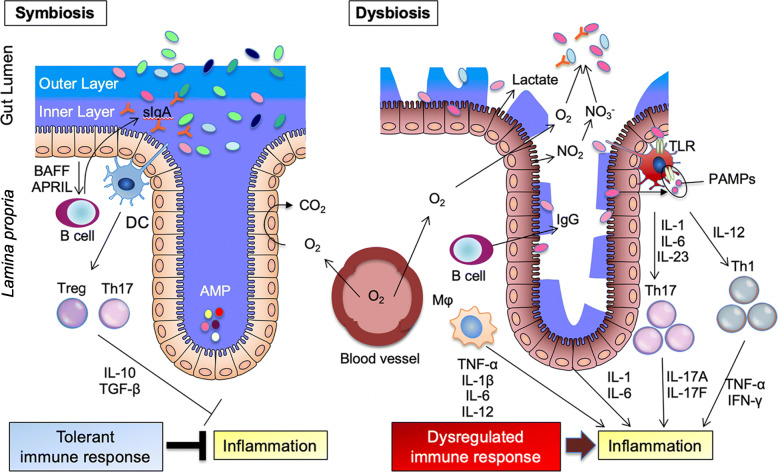
The number of patients with inflammatory bowel disease is rapidly increasing in developed countries. The main cause of this increase is thought not to be genetic, but secondary to rapidly modernized environmental change. Changes in the environment have been detrimental to enteric probiotics useful for fermentation, inducing an increase in pathobionts that survive by means other than fermentation. This dysregulated microbiota composition, the so-called dysbiosis, is believed to have increased the incidence of inflammatory bowel disease. Bacteriotherapy, a treatment that prophylactically and therapeutically corrects the composition of disturbed intestinal microbiota, is a promising recent development. In fact, fecal microbiome transplantation for recurrent Clostridioides difficile infection in 2013 was a significant contribution for bacteriotherapy. In this paper, we comprehensively review bacteriotherapy in an easy-to-understand format.
在发达国家,炎症性肠病患者的数量正在迅速增加。这种增加的主要原因被认为不是遗传因素,而是继发于快速现代化的环境变化。环境变化对有助于发酵的肠道益生菌有害,导致通过非发酵方式存活的致病共生菌增加。这种失调的微生物群组成,即所谓的生态失调,被认为增加了炎症性肠病的发病率。细菌疗法是一种预防性和治疗性纠正肠道微生物群紊乱组成的治疗方法,是最近一项很有前景的进展。事实上,2013年用于复发性艰难梭菌感染的粪便微生物群移植对细菌疗法做出了重大贡献。在本文中,我们以通俗易懂的形式全面综述细菌疗法。