Univ Rennes, CNRS, IGDR (Institut de génétique et développement de Rennes) UMR6290, 35000, Rennes, France.
Sorbonne University, Paris, France.
Sci Rep. 2021 Jan 13;11(1):877. doi: 10.1038/s41598-020-80332-y.
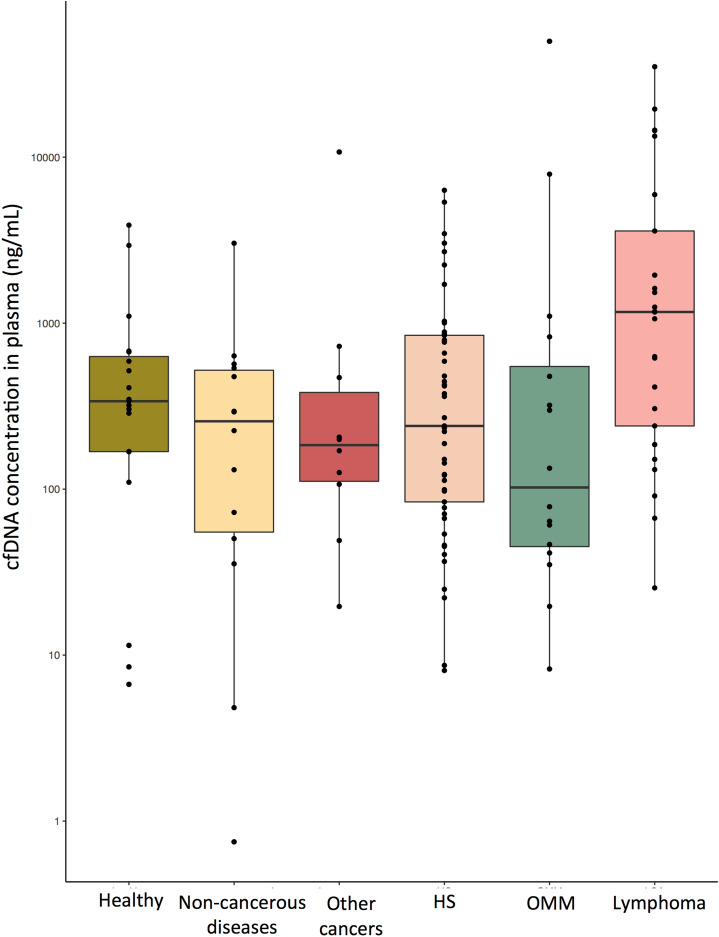
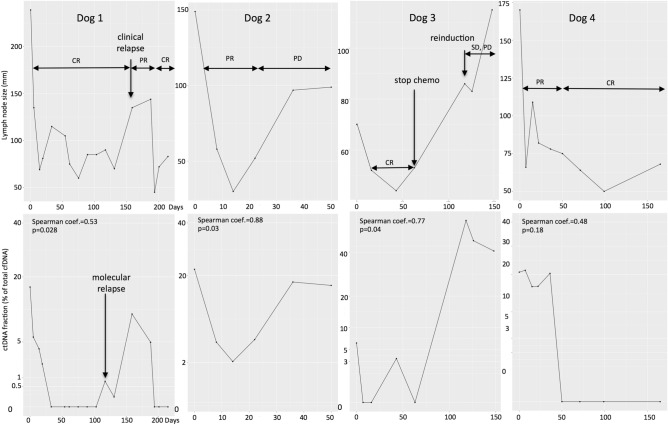
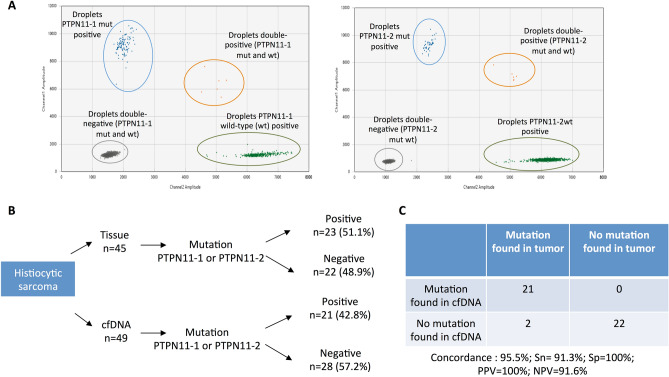
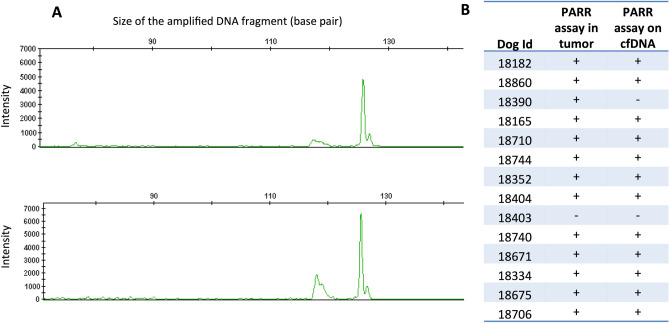
Circulating tumor DNA (ctDNA) has become an attractive biomarker in human oncology, and its use may be informative in canine cancer. Thus, we used droplet digital PCR or PCR for antigen receptor rearrangement, to explore tumor-specific point mutations, copy number alterations, and chromosomal rearrangements in the plasma of cancer-affected dogs. We detected ctDNA in 21/23 (91.3%) of histiocytic sarcoma (HS), 2/8 (25%) of oral melanoma, and 12/13 (92.3%) of lymphoma cases. The utility of ctDNA in diagnosing HS was explored in 133 dogs, including 49 with HS, and the screening of recurrent PTPN11 mutations in plasma had a specificity of 98.8% and a sensitivity between 42.8 and 77% according to the clinical presentation of HS. Sensitivity was greater in visceral forms and especially related to pulmonary location. Follow-up of four dogs by targeting lymphoma-specific antigen receptor rearrangement in plasma showed that minimal residual disease detection was concordant with clinical evaluation and treatment response. Thus, our study shows that ctDNA is detectable in the plasma of cancer-affected dogs and is a promising biomarker for diagnosis and clinical follow-up. ctDNA detection appears to be useful in comparative oncology research due to growing interest in the study of natural canine tumors and exploration of new therapies.
循环肿瘤 DNA(ctDNA)已成为人类肿瘤学中一种有吸引力的生物标志物,其在犬肿瘤中的应用可能具有信息价值。因此,我们使用液滴数字 PCR 或抗原受体重排 PCR,以探索受癌症影响的犬血浆中的肿瘤特异性点突变、拷贝数改变和染色体重排。我们在 23 例(91.3%)组织细胞肉瘤(HS)、8 例(25%)口腔黑色素瘤和 13 例(92.3%)淋巴瘤病例中检测到了 ctDNA。我们在 133 只犬中探索了 ctDNA 在 HS 诊断中的应用,包括 49 只 HS 犬,根据 HS 的临床表现,血浆中 PTPN11 突变的筛查特异性为 98.8%,敏感性为 42.8%至 77%。在内脏形式中敏感性更高,尤其是与肺部位置有关。对 4 只犬进行的血浆淋巴瘤特异性抗原受体重排靶向治疗显示,微小残留病检测与临床评估和治疗反应一致。因此,我们的研究表明,ctDNA 可在受癌症影响的犬的血浆中检测到,是一种有前途的诊断和临床随访生物标志物。由于对自然犬肿瘤研究和探索新疗法的兴趣日益浓厚,ctDNA 检测在比较肿瘤学研究中似乎很有用。