Faculty of Dentistry, Prince Philip Dental Hospital, University of Hong Kong, Street 34 Hospital Rd, Sai Ying Pun, Hong Kong, SAR, China.
Oral Diagnostic and Surgical Sciences, School of Dentistry, International Medical University, Kuala Lumpur, Malaysia.
Sci Rep. 2021 Jan 13;11(1):1181. doi: 10.1038/s41598-020-80859-0.
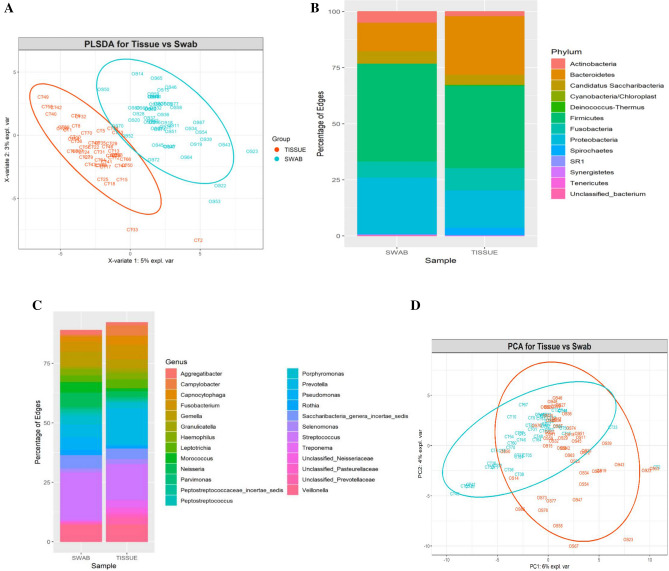
Microbial dysbiosis has been implicated in the pathogenesis of oral cancer. We analyzed the compositional and metabolic profile of the bacteriome in three specific niches in oral cancer patients along with controls using 16SrRNA sequencing (Illumina Miseq) and DADA2 software. We found major differences between patients and control subjects. Bacterial communities associated with the tumor surface and deep paired tumor tissue differed significantly. Tumor surfaces carried elevated abundances of taxa belonging to genera Porphyromonas, Enterobacteriae, Neisseria, Streptococcus and Fusobacteria, whereas Prevotella, Treponema, Sphingomonas, Meiothermus and Mycoplasma genera were significantly more abundant in deep tissue. The most abundant microbial metabolic pathways were those related to fatty-acid biosynthesis, carbon metabolism and amino-acid metabolism on the tumor surface: carbohydrate metabolism and organic polymer degradation were elevated in tumor tissues. The bacteriome of saliva from patients with oral cancer differed significantly from paired tumor tissue in terms of community structure, however remained similar at taxonomic and metabolic levels except for elevated abundances of Streptococcus, Lactobacillus and Bacteroides, and acetoin-biosynthesis, respectively. These shifts to a pro-inflammatory profile are consistent with other studies suggesting oncogenic properties. Importantly, selection of the principal source of microbial DNA is key to ensure reliable, reproducible and comparable results in microbiome studies.
微生物失调与口腔癌的发病机制有关。我们使用 16SrRNA 测序(Illumina Miseq)和 DADA2 软件,分析了口腔癌患者和对照者三个特定部位的细菌组的组成和代谢特征。我们发现患者和对照组之间存在明显差异。与肿瘤表面和配对肿瘤组织相关的细菌群落存在显著差异。肿瘤表面携带的属 Porphyromonas、Enterobacteriae、Neisseria、Streptococcus 和 Fusobacteria 的丰度明显升高,而 Prevotella、Treponema、Sphingomonas、Meiothermus 和 Mycoplasma 的丰度在深部组织中显著增加。最丰富的微生物代谢途径与肿瘤表面的脂肪酸生物合成、碳代谢和氨基酸代谢有关:肿瘤组织中的碳水化合物代谢和有机聚合物降解升高。与配对的肿瘤组织相比,口腔癌患者的唾液细菌组在群落结构上存在显著差异,但在分类和代谢水平上仍相似,除了链球菌、乳杆菌和拟杆菌的丰度升高,以及乙酰酮的生物合成分别升高。这些向促炎表型的转变与其他研究表明的致癌特性一致。重要的是,选择微生物 DNA 的主要来源是确保微生物组研究中获得可靠、可重复和可比结果的关键。