Dos Santos Marques Isabel C, Theiss Lauren M, Baker Samantha J, Liwo Amandiy, Wood Lauren N, Cannon Jamie A, Morris Melanie S, Kennedy Gregory D, Fouad Mona N, Davis Terry C, Chu Daniel I
Division of Gastrointestinal Surgery, University of Alabama at Birmingham, Birmingham, Alabama, USA.
Department of Anesthesiology, University of Alabama at Birmingham, Birmingham, Alabama, USA.
Crohns Colitis 360. 2020 Oct;2(4). doi: 10.1093/crocol/otaa076. Epub 2020 Oct 12.
Low health literacy is common in general populations, but its prevalence in the inflammatory bowel disease (IBD) population is unclear. The objective of this study was to assess the prevalence of low health literacy in a diverse IBD population and to identify risk factors for low health literacy.
Adult patients with IBD at a single institution from November 2017 to May 2018 were assessed for health literacy using the Newest Vital Sign (NVS). Demographic and socioeconomic data were also collected. Primary outcome was the prevalence of low health literacy. Secondary outcomes were length-of-stay (LOS) and 30-day readmissions after surgical encounters. Bivariate comparisons and multivariable regression were used for analyses.
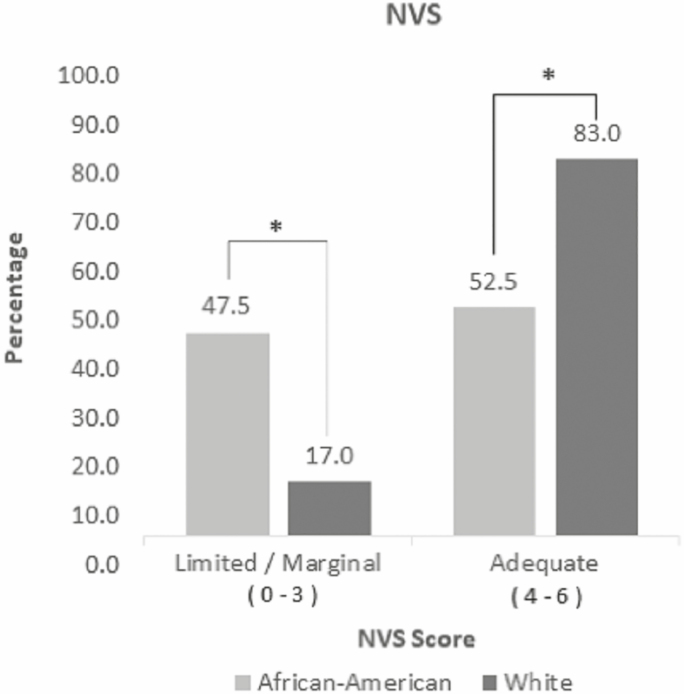
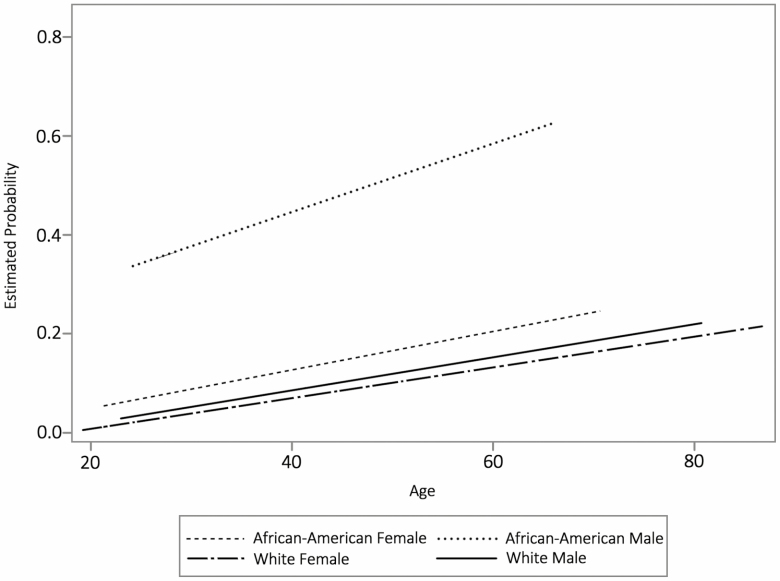
Of 175 IBD patients, 59% were women, 23% were African Americans, 91% had Crohn disease, and mean age was 46 years (SD = 16.7). The overall prevalence of low health literacy was 24%. Compared to white IBD patients, African Americans had significantly higher prevalence of low health literacy (47.5% vs 17.0%, < 0.05). On multivariable analysis, low health literacy was associated with older age and African American race ( < 0.05). Of 83 IBD patients undergoing abdominal surgery, mean postoperative LOS was 5.5 days and readmission rate was 28.9%. There was no significant difference between LOS and readmissions rates by health literacy levels.
Low health literacy is present in IBD populations and more common among older African Americans. Opportunities exist for providing more health literacy-sensitive care in IBD to address disparities and to benefit those with low health literacy.
健康素养较低在普通人群中很常见,但在炎症性肠病(IBD)人群中的患病率尚不清楚。本研究的目的是评估不同IBD人群中健康素养较低的患病率,并确定健康素养较低的风险因素。
2017年11月至2018年5月在一家机构的成年IBD患者使用最新生命体征(NVS)评估健康素养。还收集了人口统计学和社会经济数据。主要结局是健康素养较低的患病率。次要结局是手术治疗后的住院时间(LOS)和30天再入院率。采用双变量比较和多变量回归进行分析。
175例IBD患者中,59%为女性,23%为非裔美国人,91%患有克罗恩病,平均年龄为46岁(标准差=16.7)。健康素养较低的总体患病率为24%。与白人IBD患者相比,非裔美国人健康素养较低的患病率显著更高(47.5%对17.0%,<0.05)。多变量分析显示,健康素养较低与年龄较大和非裔美国人种族相关(<0.05)。83例接受腹部手术的IBD患者中,术后平均住院时间为5.5天,再入院率为28.9%。健康素养水平不同,住院时间和再入院率无显著差异。
IBD人群中存在健康素养较低的情况,在老年非裔美国人中更为常见。在IBD中存在提供更多对健康素养敏感的护理的机会,以解决差异问题并使健康素养较低的人受益。