Noninvasive Brain Stimulation Unit, Scientific Institute for Research, Hospitalisation and Health Care Santa Lucia Foundation, Rome, Italy.
Department of Medical Sciences and Public health, Institute of Neurology, University of Cagliari, Cagliari, Italy.
Neurol Sci. 2021 Mar;42(3):817-823. doi: 10.1007/s10072-020-04991-5. Epub 2021 Jan 14.
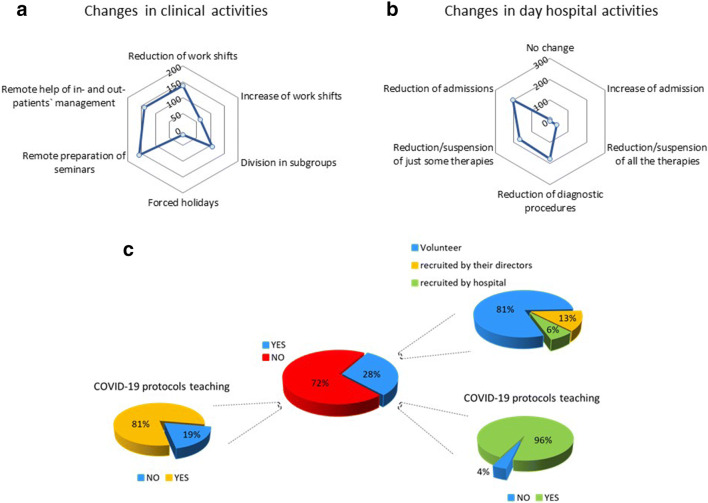
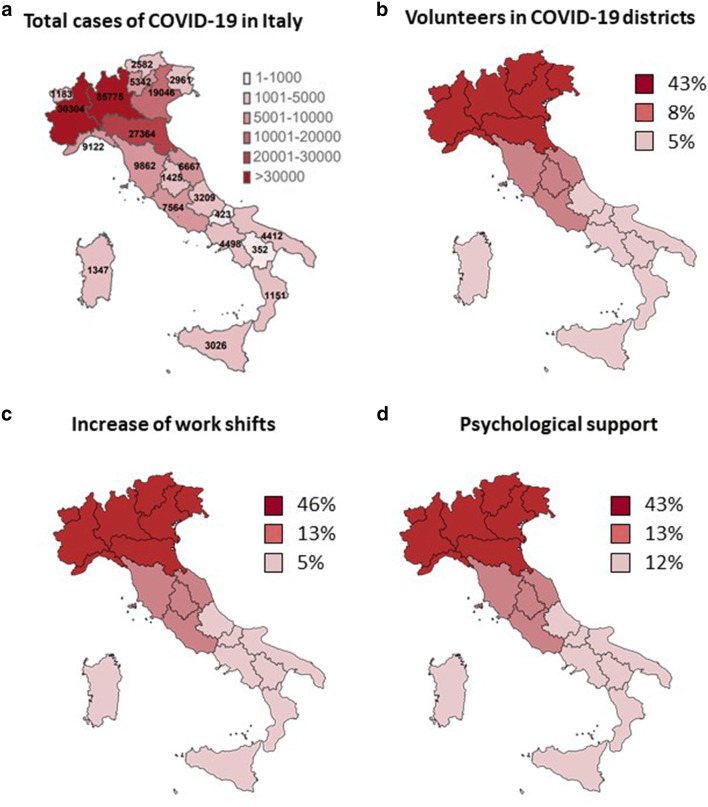
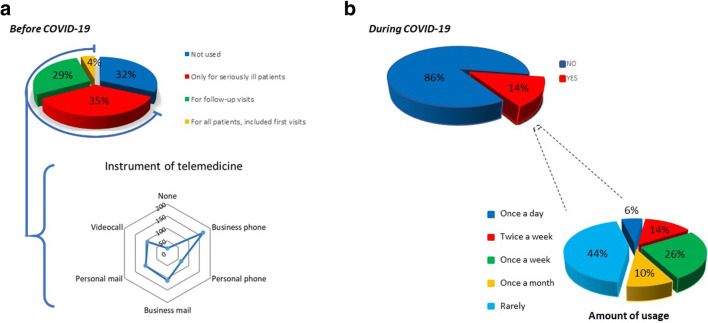
The ongoing COVID-19 pandemic is having a huge impact on clinical activity of all hospitals, including the ones involved in training of residents. In addition, neurology residents underwent substantial modifications of their training program. Aim of our investigation was to evaluate the impact of COVID-19 pandemic on the educational activities of Italian neurology residents through an online questionnaire delivered to neurology residents. The results obtained showed that almost 30% of the respondents were redistributed to COVID-19 units. Neurology departments underwent substantial modifications of their organization influencing clinical educational activities; lessons and seminars were rescheduled online and research protocols were stopped and transferred to remote working, when feasible. There was a relevant use of telemedicine approach even if most of the respondents had never been trained before. Some of the changes had a North-South gradient, following the epidemiology of the pandemic. The data obtained from our survey highlight those points to address to be prepared for possible future emergencies.
正在持续的 COVID-19 大流行对所有医院的临床活动都产生了巨大影响,包括参与住院医师培训的医院。此外,神经科住院医师的培训计划也进行了重大修改。我们的调查目的是通过向神经科住院医师发放在线问卷,评估 COVID-19 大流行对意大利神经科住院医师教育活动的影响。调查结果显示,近 30%的受访者被重新分配到 COVID-19 病房。神经内科部门的组织发生了重大变化,影响了临床教育活动;课程和研讨会已在线重新安排,研究方案已停止,并在可行的情况下转移到远程工作。即使大多数受访者以前从未接受过培训,远程医疗方法也得到了广泛应用。一些变化存在南北梯度,与大流行的流行病学有关。我们的调查数据突出了需要解决的问题,以便为可能发生的未来紧急情况做好准备。