Fundación Instituto Leloir-CONICET, Buenos Aires, Argentina.
Universidad de Buenos Aires, Facultad de Farmacia y Bioquímica, Hospital de Clínicas José de San Martin, Departamento de Bioquímica Clínica, Buenos Aires, Argentina.
PLoS Pathog. 2021 Jan 14;17(1):e1009161. doi: 10.1371/journal.ppat.1009161. eCollection 2021 Jan.
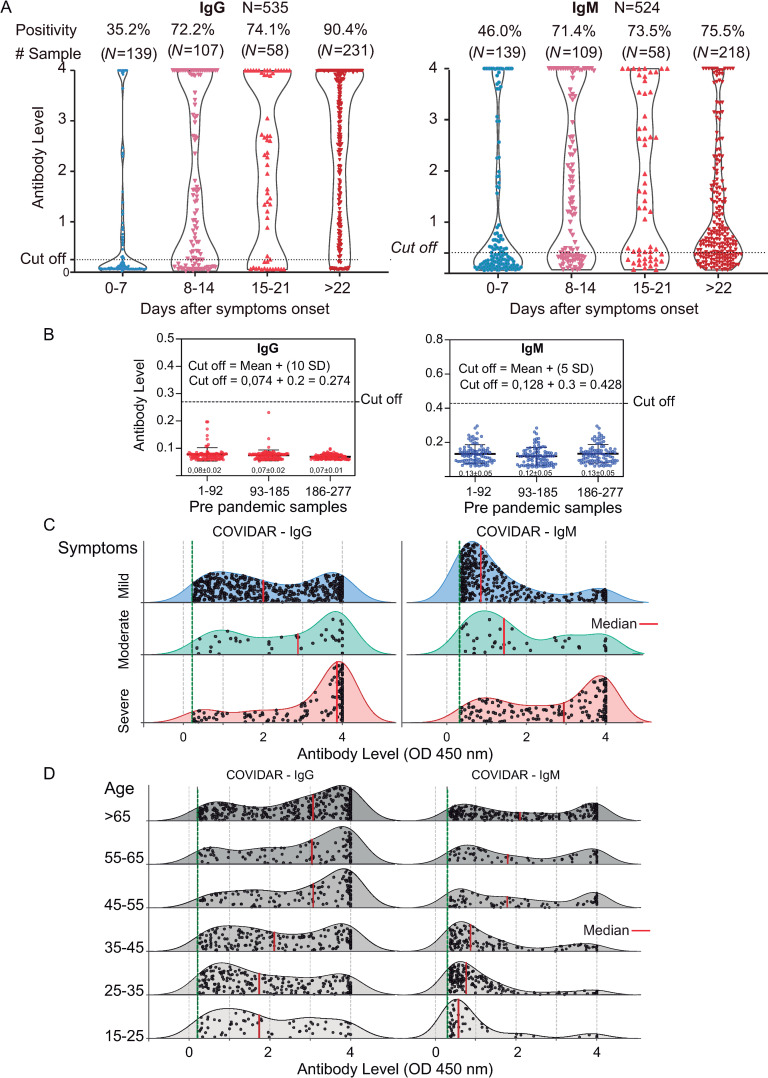
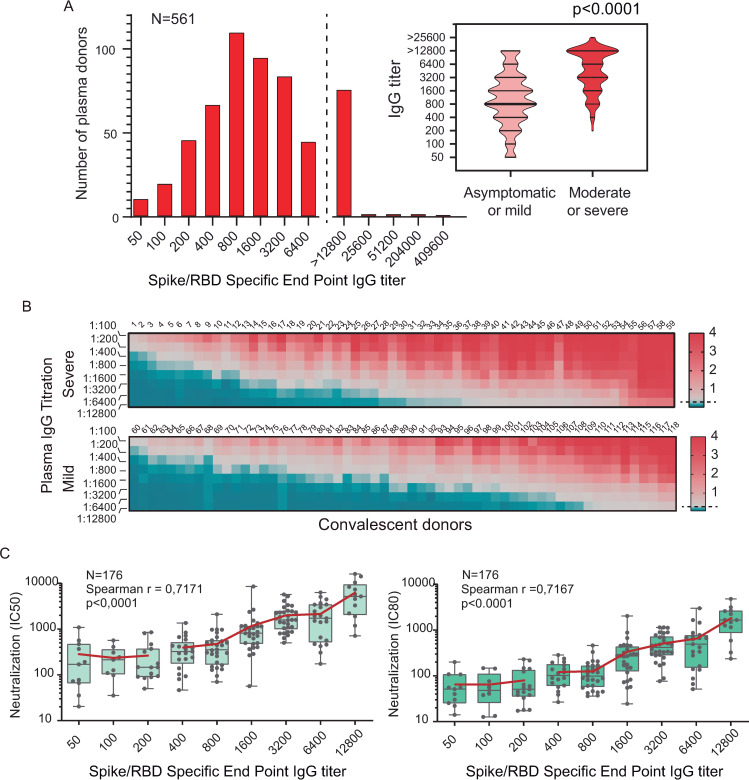
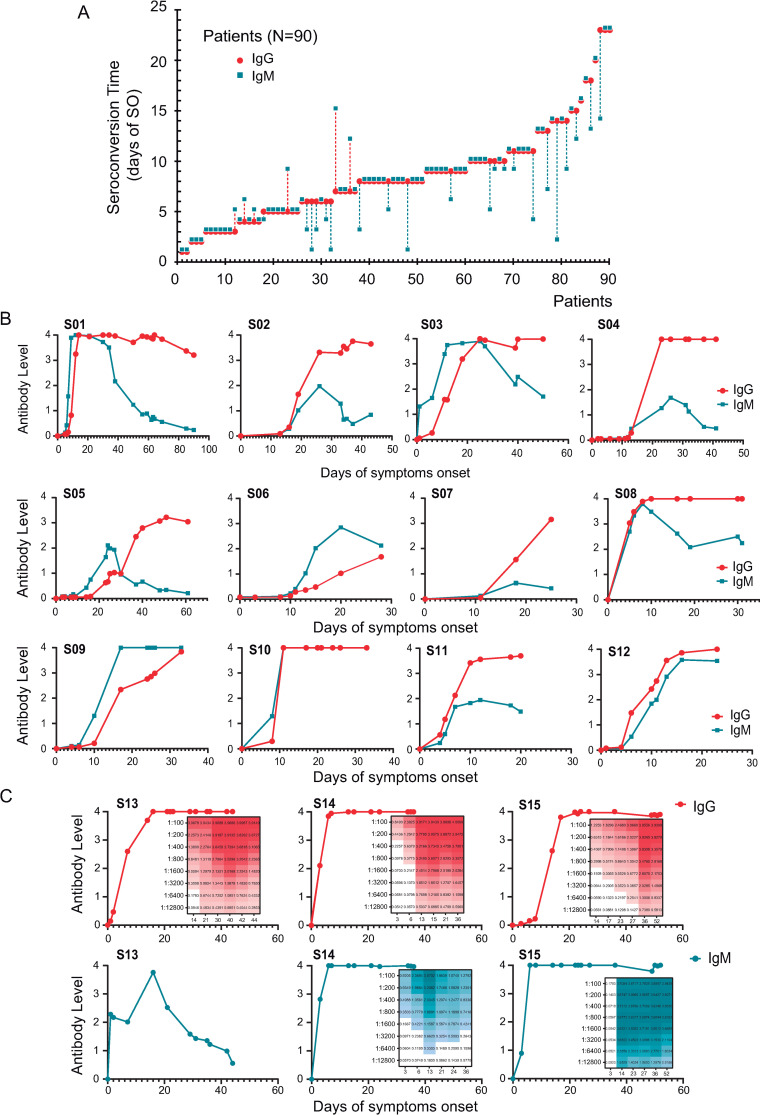
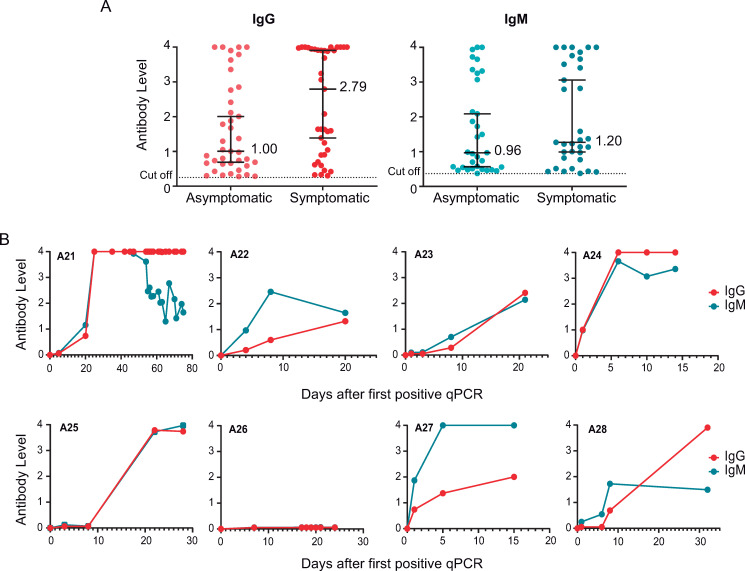
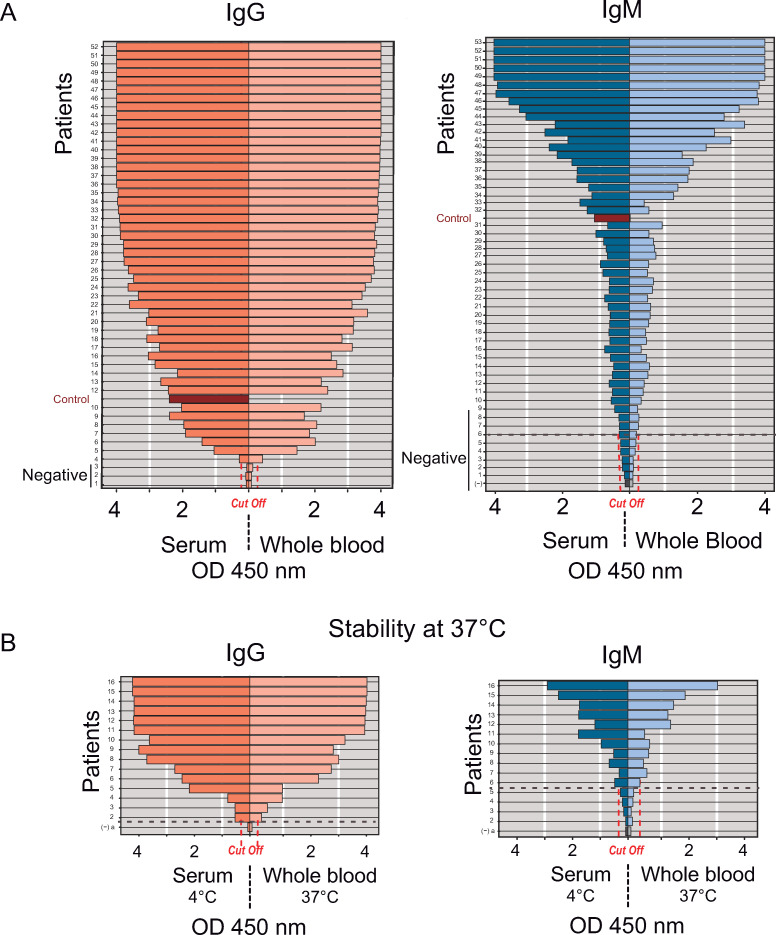
We report the emergency development and application of a robust serologic test to evaluate acute and convalescent antibody responses to SARS-CoV-2 in Argentina. The assays, COVIDAR IgG and IgM, which were produced and provided for free to health authorities, private and public health institutions and nursing homes, use a combination of a trimer stabilized spike protein and the receptor binding domain (RBD) in a single enzyme-linked immunosorbent assay (ELISA) plate. Over half million tests have already been distributed to detect and quantify antibodies for multiple purposes, including assessment of immune responses in hospitalized patients and large seroprevalence studies in neighborhoods, slums and health care workers, which resulted in a powerful tool for asymptomatic detection and policy making in the country. Analysis of antibody levels and longitudinal studies of symptomatic and asymptomatic SARS-CoV-2 infections in over one thousand patient samples provided insightful information about IgM and IgG seroconversion time and kinetics, and IgM waning profiles. At least 35% of patients showed seroconversion within 7 days, and 95% within 45 days of symptoms onset, with simultaneous or close sequential IgM and IgG detection. Longitudinal studies of asymptomatic cases showed a wide range of antibody responses with median levels below those observed in symptomatic patients. Regarding convalescent plasma applications, a protocol was standardized for the assessment of end point IgG antibody titers with COVIDAR with more than 500 plasma donors. The protocol showed a positive correlation with neutralizing antibody titers, and was used for clinical trials and therapies across the country. Using this protocol, about 80% of convalescent donor plasmas were potentially suitable for therapies. Here, we demonstrate the importance of providing a robust and specific serologic assay for generating new information about antibody kinetics in infected individuals and mitigation policies to cope with pandemic needs.
我们报告了一种稳健的血清学检测方法的紧急开发和应用,用于评估阿根廷急性和恢复期 SARS-CoV-2 抗体反应。该检测方法 COVIDAR IgG 和 IgM 由我们生产并免费提供给卫生当局、公私卫生机构和养老院,使用三聚体稳定的刺突蛋白和受体结合域(RBD)的组合,在单个酶联免疫吸附测定(ELISA)板上进行检测。已经分发了超过 50 万次检测,用于检测和量化多种目的的抗体,包括评估住院患者的免疫反应以及在社区、贫民窟和卫生保健工作者中进行大规模血清流行率研究,这为该国的无症状检测和决策提供了有力工具。对一千多个患者样本中 SARS-CoV-2 感染的抗体水平和纵向研究进行分析,提供了关于 IgM 和 IgG 血清转化时间和动力学以及 IgM 衰减谱的深入信息。至少 35%的患者在症状出现后 7 天内出现血清转化,95%的患者在 45 天内出现血清转化,同时或接近连续检测到 IgM 和 IgG。对无症状病例的纵向研究显示,抗体反应范围广泛,中位数水平低于有症状患者。关于恢复期血浆的应用,我们制定了一个使用 COVIDAR 评估终点 IgG 抗体滴度的方案,该方案有超过 500 个血浆供体。该方案与中和抗体滴度呈正相关,并在全国范围内用于临床试验和治疗。使用该方案,约 80%的恢复期供体血浆可能适合治疗。在这里,我们证明了提供一种稳健和特异性的血清学检测方法的重要性,该方法可以生成有关感染个体中抗体动力学的新信息,并制定减轻政策以应对大流行需求。