Department of Psychiatry, the Eighth People's Hospital of Xinjiang Uygur Autonomous Region, Urumqi, Xinjiang Uygur Autonomous Region, China.
Center for Reproductive Medicine, the Eighth People's Hospital of Xinjiang Uygur Autonomous Region, Urumqi, Xinjiang Uygur Autonomous Region, China.
J Psychiatr Res. 2021 Mar;135:37-46. doi: 10.1016/j.jpsychires.2020.12.067. Epub 2021 Jan 5.
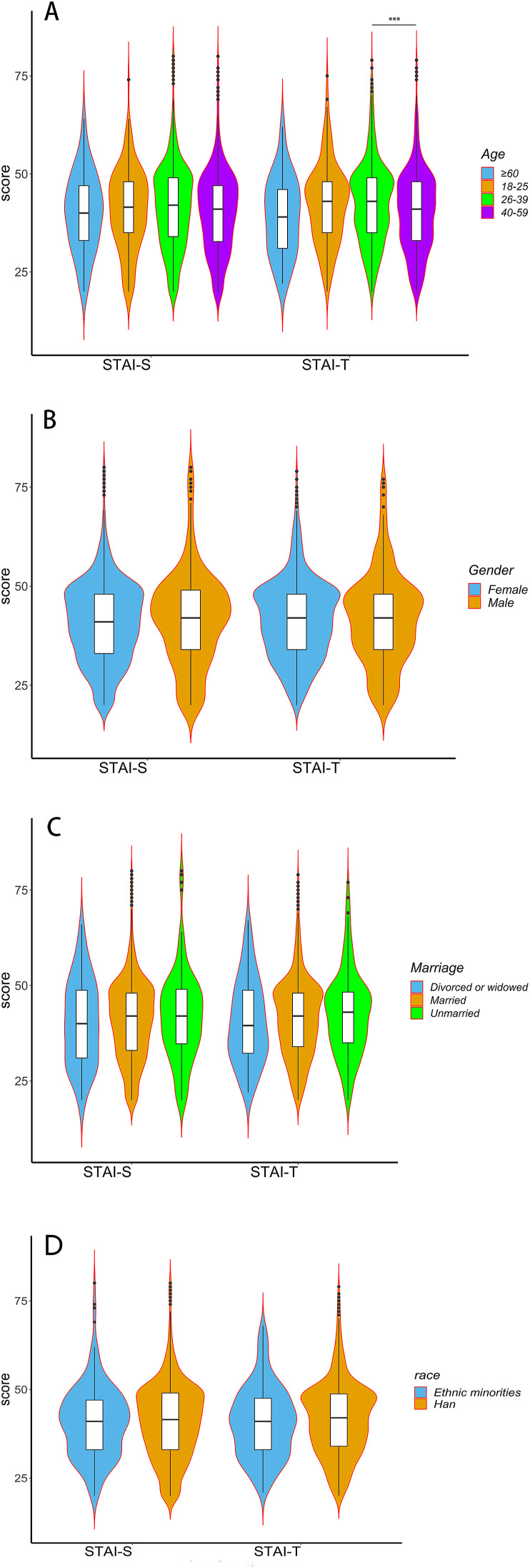
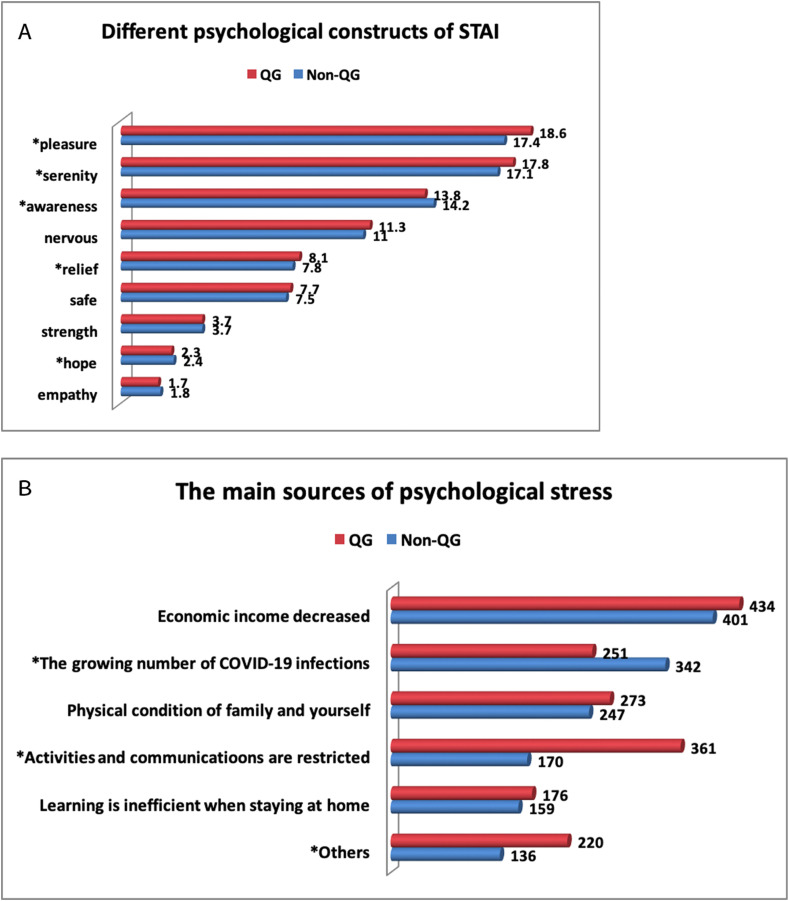
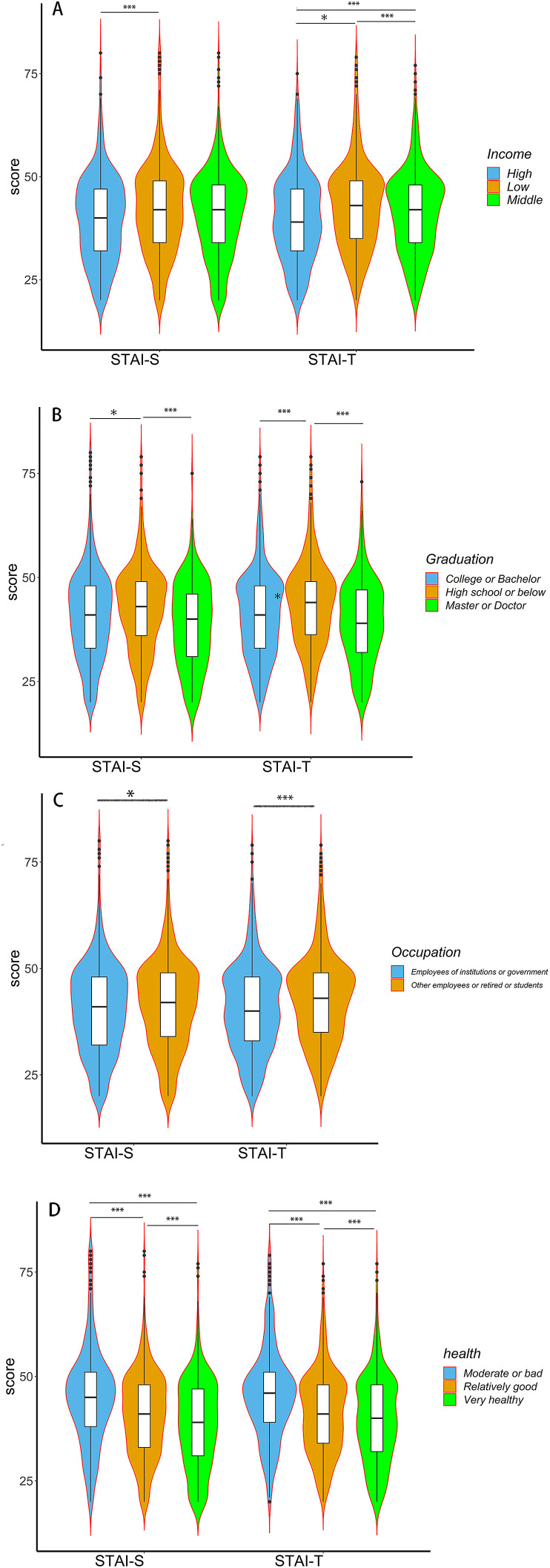
Only a few studies investigated the impact of quarantine on anxiety of general population during a second wave of COVID-19 breakout. We aimed to compare anxiety levels of quarantined and non-quarantined people and investigate factors affecting anxiety during the second COVID-19 pandemic. A total of 1837 participants were included in this cross-sectional study. Anxiety was measured by the State-Trait Anxiety Inventory (STAI). Participants were divided into the quarantined group (QG) and non-quarantined group (Non-QG). The mean STAI-S score in the QG was significantly higher than Non-QG (41.8 ± 11.2 vs 40.01 ± 9.9), so was the proportion of severe state anxiety (11.6% vs 5.5%). Males in the QG were significantly more anxious than females evaluated by both STAI-S and STAI-T. High income was independent protective factors while moderate or bad health status and high trait anxiety level were independent risk factors for severe state anxiety. In conclusion, the COVID-19 confinement could significantly increase anxiety of quarantined people. Males were more vulnerable to the quarantine of COVID-19 with significantly increased anxiety level than females. The results suggest that attention should be paid to anxiety during a second round of quarantine due to COVID-19 and are of help in planning psychological interventions.
仅有少数研究调查了在 COVID-19 第二波爆发期间隔离对普通人群焦虑的影响。我们旨在比较隔离和未隔离人群的焦虑水平,并探讨在第二波 COVID-19 大流行期间影响焦虑的因素。这项横断面研究共纳入了 1837 名参与者。采用状态-特质焦虑量表(STAI)测量焦虑。参与者被分为隔离组(QG)和非隔离组(Non-QG)。QG 的 STAI-S 评分均值明显高于 Non-QG(41.8±11.2 与 40.01±9.9),严重状态焦虑的比例也更高(11.6%与 5.5%)。QG 中的男性在 STAI-S 和 STAI-T 评估中均明显比女性更焦虑。高收入是独立的保护因素,而中等或较差的健康状况和较高的特质焦虑水平是严重状态焦虑的独立危险因素。总之,COVID-19 隔离可显著增加隔离人群的焦虑。与女性相比,男性在 COVID-19 隔离期间更易受到焦虑的影响,焦虑水平显著升高。这些结果表明,由于 COVID-19,第二轮隔离期间应注意焦虑问题,这有助于规划心理干预措施。