Department of Science and Technology for Humans and the Environment, Campus Bio-Medico University of Rome, 00128 Rome, Italy.
Department of Engineering, Campus Bio-Medico University of Rome, 00128 Rome, Italy.
Sensors (Basel). 2021 Jan 12;21(2):489. doi: 10.3390/s21020489.
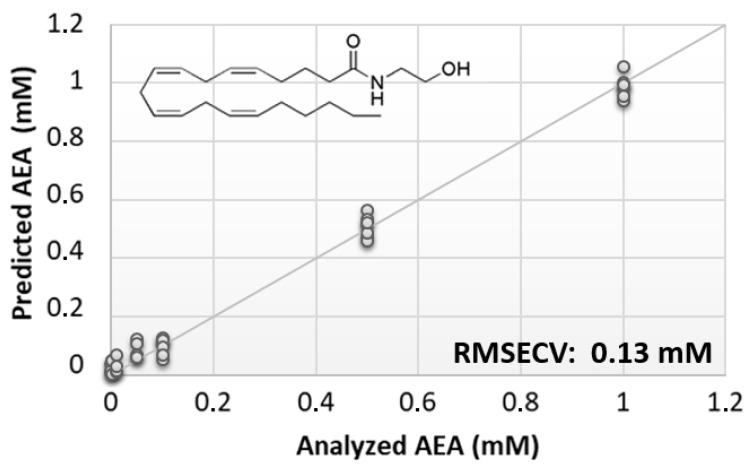
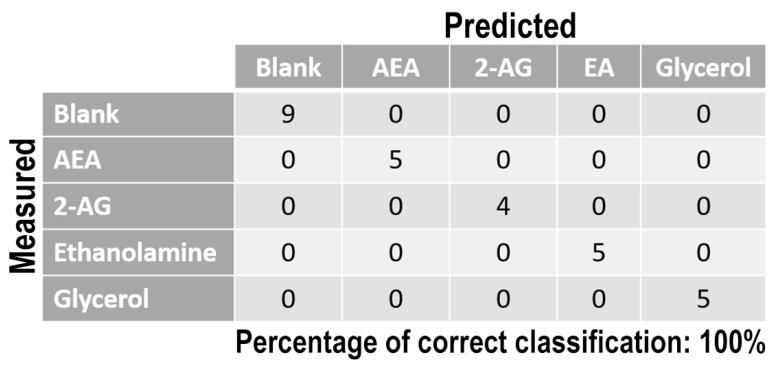
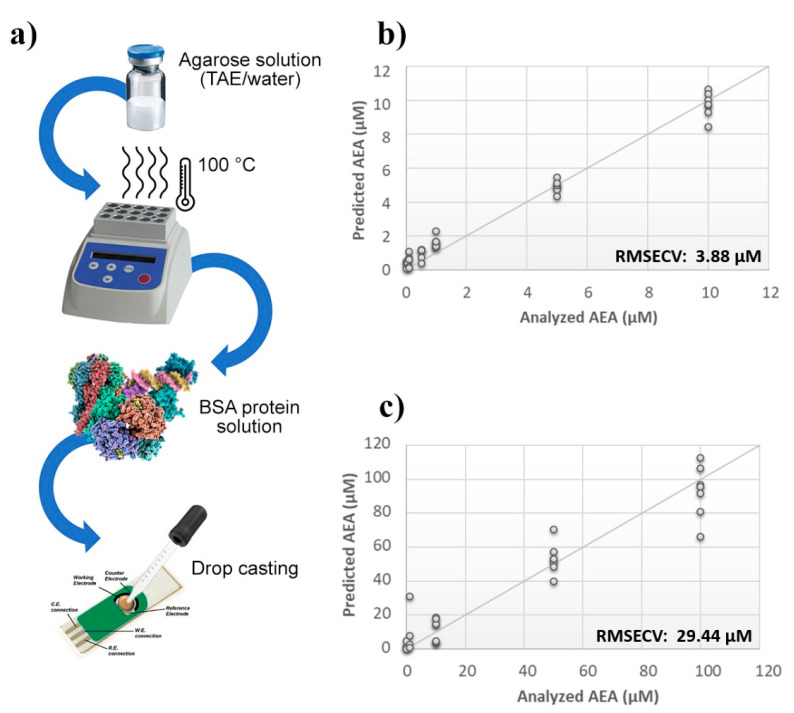
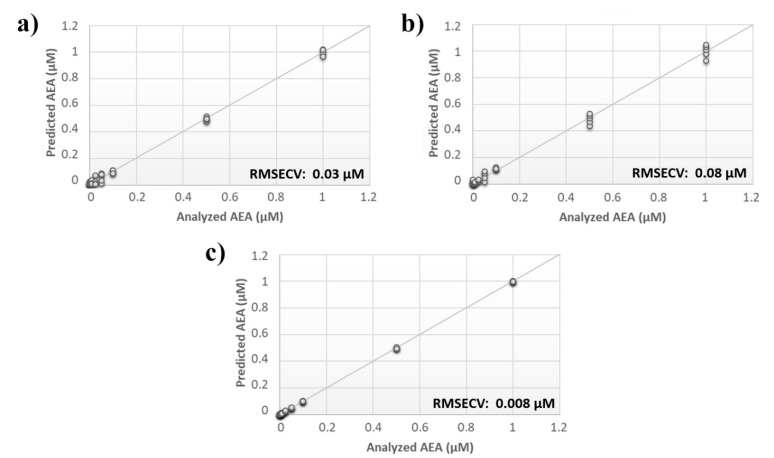
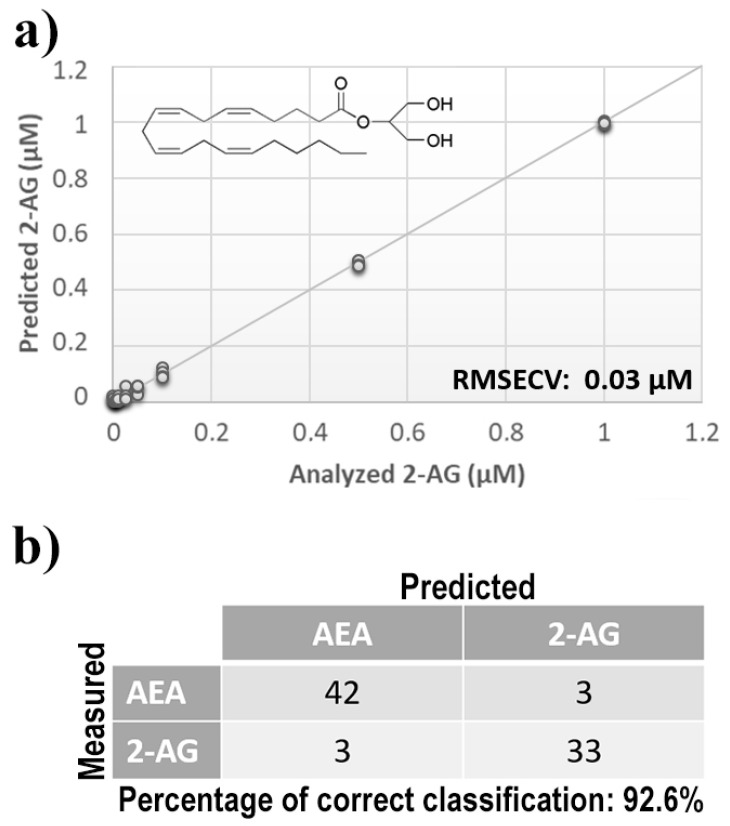
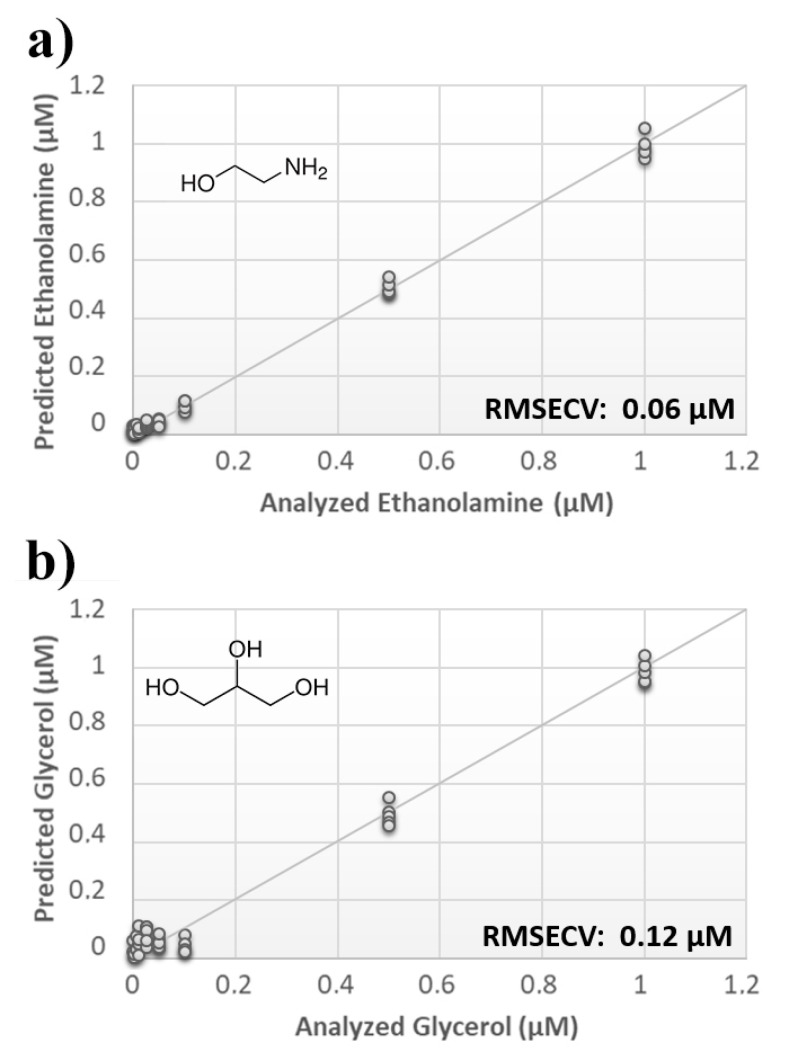
In this study, a novel approach was developed to quantify endocannabinoids (eCBs), and was based on the liquid biosensor BIONOTE. This device is composed of a probe that can be immersed in a solution, and an electronic interface that can record a current related to the oxy-reductive reactions occurring in the sample. The two most representative members of eCBs have been analysed in vitro by BIONOTE: anandamide (-arachidonoylethanolamine, AEA) and 2-arachidonoylglycerol (2-AG). Bovine serum albumin was used to functionalize the probe and improve the sensibility of the whole analytical system. We show that BIONOTE is able to detect both AEA and 2-AG at concentrations in the low nanomolar range, and to discriminate between these eCBs and their moieties arachidonic acid, ethanolamine and glycerol. Notably, BIONOTE distinguished these five different molecules, and it was also able to quantify AEA in human plasma. Although this is just a proof-of-concept study, we suggest BIONOTE as a cheap and user-friendly prototype sensor for high throughput quantitation of eCB content in biological matrices, with an apparent diagnostic potential for tomorrow's medicine.
在这项研究中,开发了一种新的方法来定量内源性大麻素(eCBs),该方法基于液体生物传感器 BIONOTE。该设备由一个可以浸入溶液中的探头和一个电子接口组成,该接口可以记录与样品中发生的氧化还原反应相关的电流。BIONOTE 体外分析了 eCBs 中两个最具代表性的成员:花生四烯酸乙醇胺(anandamide,AEA)和 2-花生四烯酸甘油(2-arachidonoylglycerol,2-AG)。牛血清白蛋白(bovine serum albumin)被用来修饰探头,以提高整个分析系统的灵敏度。我们证明,BIONOTE 能够以低纳摩尔浓度检测到 AEA 和 2-AG,并能够区分这些 eCBs 与其部分的花生四烯酸、乙醇胺和甘油。值得注意的是,BIONOTE 区分了这五种不同的分子,并且还能够定量检测人血浆中的 AEA。尽管这只是一个概念验证研究,但我们建议 BIONOTE 作为一种廉价且易于使用的原型传感器,用于高通量定量生物基质中的 eCB 含量,具有明显的诊断潜力,用于未来的医学。