Center for AIDS Health Disparities Research, Meharry Medical College, Nashville, TN, 37208, USA.
Center for Molecular and Behavioral Neuroscience, Meharry Medical College, Nashville, TN, 37208, USA.
Sci Rep. 2021 Jan 14;11(1):1422. doi: 10.1038/s41598-020-80917-7.
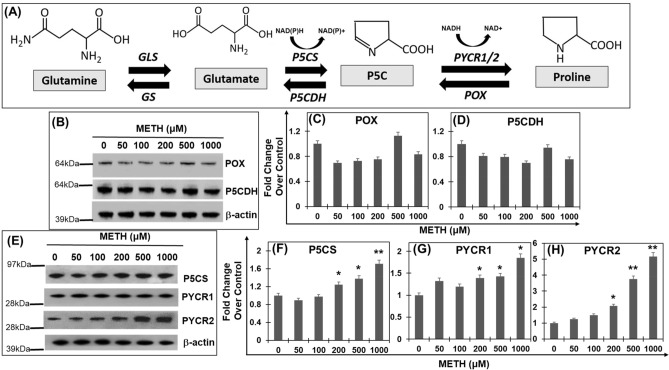
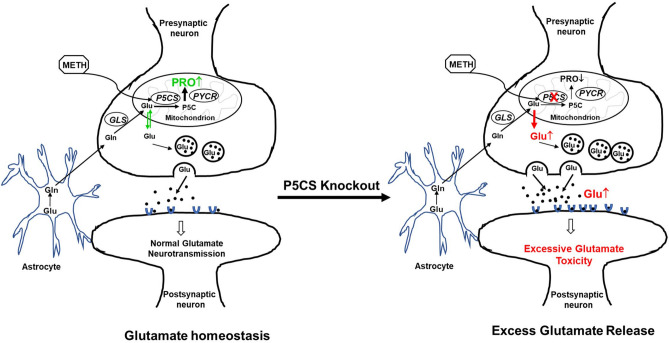
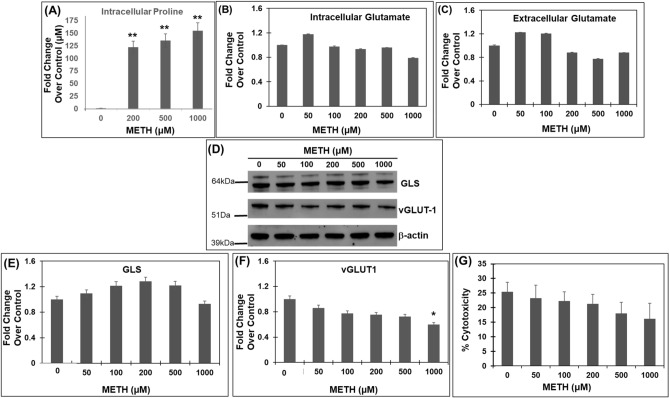
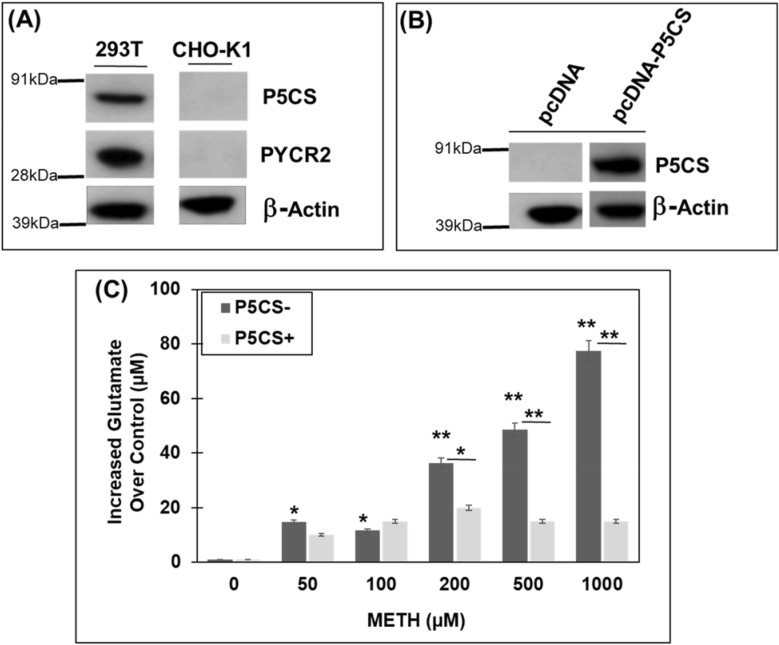
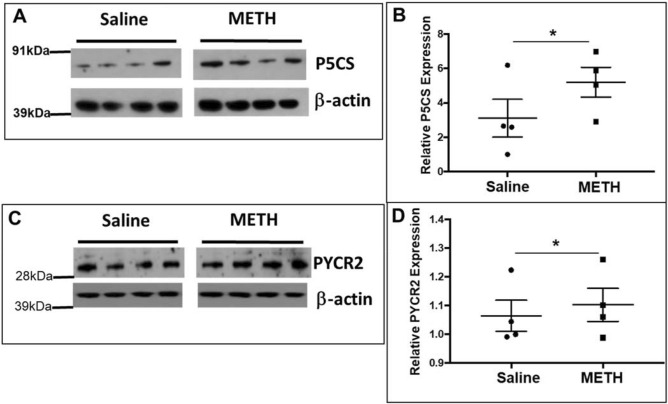
Methamphetamine (METH) is a highly addictive psychostimulant that causes long-lasting effects in the brain and increases the risk of developing neurodegenerative diseases. The cellular and molecular effects of METH in the brain are functionally linked to alterations in glutamate levels. Despite the well-documented effects of METH on glutamate neurotransmission, the underlying mechanism by which METH alters glutamate levels is not clearly understood. In this study, we report an essential role of proline biosynthesis in maintaining METH-induced glutamate homeostasis. We observed that acute METH exposure resulted in the induction of proline biosynthetic enzymes in both undifferentiated and differentiated neuronal cells. Proline level was also increased in these cells after METH exposure. Surprisingly, METH treatment did not increase glutamate levels nor caused neuronal excitotoxicity. However, METH exposure resulted in a significant upregulation of pyrroline-5-carboxylate synthase (P5CS), the key enzyme that catalyzes synthesis of proline from glutamate. Interestingly, depletion of P5CS by CRISPR/Cas9 resulted in a significant increase in glutamate levels upon METH exposure. METH exposure also increased glutamate levels in P5CS-deficient proline-auxotropic cells. Conversely, restoration of P5CS expression in P5CS-deficient cells abrogated the effect of METH on glutamate levels. Consistent with these findings, P5CS expression was significantly enhanced in the cortical brain region of mice administered with METH and in the slices of cortical brain tissues treated with METH. Collectively, these results uncover a key role of P5CS for the molecular effects of METH and highlight that excess glutamate can be sequestered for proline biosynthesis as a protective mechanism to maintain glutamate homeostasis during drug exposure.
甲基苯丙胺(METH)是一种高度成瘾的精神兴奋剂,会对大脑造成持久影响,并增加患神经退行性疾病的风险。METH 在大脑中的细胞和分子效应与谷氨酸水平的改变功能相关。尽管 METH 对谷氨酸神经传递的影响已有充分记录,但 METH 改变谷氨酸水平的潜在机制尚不清楚。在这项研究中,我们报告了脯氨酸生物合成在维持 METH 诱导的谷氨酸稳态中的重要作用。我们观察到,急性 METH 暴露会导致未分化和分化神经元细胞中脯氨酸生物合成酶的诱导。METH 暴露后,这些细胞中的脯氨酸水平也增加了。令人惊讶的是,METH 处理不会增加谷氨酸水平,也不会导致神经元兴奋性毒性。然而,METH 暴露会导致吡咯啉-5-羧酸合成酶(P5CS)的显著上调,P5CS 是一种关键酶,可催化谷氨酸合成脯氨酸。有趣的是,通过 CRISPR/Cas9 敲除 P5CS 会导致 METH 暴露后谷氨酸水平显著增加。METH 暴露也会增加 P5CS 缺陷型脯氨酸营养细胞中的谷氨酸水平。相反,在 P5CS 缺陷型细胞中恢复 P5CS 表达会消除 METH 对谷氨酸水平的影响。与这些发现一致的是,给予 METH 的小鼠大脑皮质区域和用 METH 处理的皮质脑组织切片中的 P5CS 表达显著增强。总的来说,这些结果揭示了 P5CS 在 METH 的分子效应中的关键作用,并强调了过量的谷氨酸可以被隔离用于脯氨酸生物合成,作为一种保护机制,以维持谷氨酸稳态在药物暴露期间。