Department of Neurosurgery, The Second Affiliated Hospital of Chongqing Medical University, Chongqing 400010, People's Republic of China.
Institute of Ultrasound Imaging, The Second Affiliated Hospital of Chongqing Medical University, Chongqing 400010, People's Republic of China.
Int J Nanomedicine. 2021 Jan 8;16:185-199. doi: 10.2147/IJN.S286221. eCollection 2021.
Therapy for glioblastoma (GBM) has always been very challenging, not only because of the presence of the blood-brain barrier (BBB) but also due to susceptibility to drug resistance. Recently, the clustered regularly interspaced short palindromic repeats (CRISPR)-associated protein 9 (CRISPR/Cas9) has revolutionized gene editing technology and is capable of treating a variety of genetic diseases, including human tumors, but there is a lack of safe and effective targeting delivery systems in vivo, especially in the central nervous system (CNS).
Lipid-polymer hybrid nanoparticles (LPHNs-cRGD) were constructed for efficient and targeting delivery of CRISPR/Cas9 plasmids targeting O6-methylguanine-DNA methyltransferase (MGMT), a drug-resistance gene to temozolomide (TMZ). Focused ultrasound (FUS)-microbubbles (MBs) were used to non-invasively and locally open the BBB to further facilitate gene delivery into glioblastoma in vivo. The gene editing efficiency and drug sensitivity changes were evaluated both in vitro and in vivo.
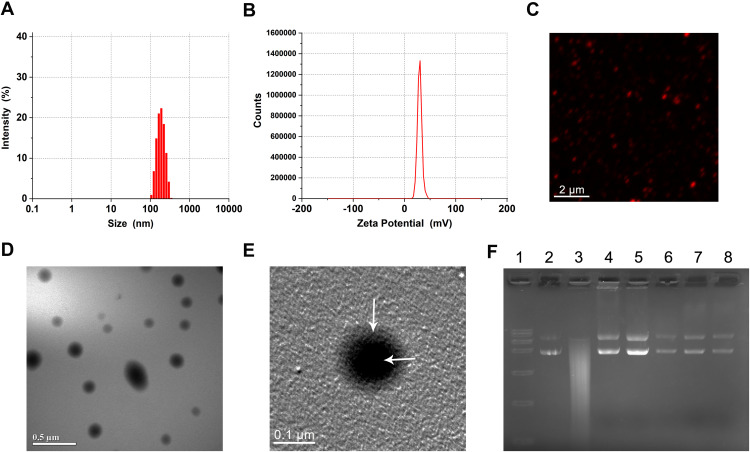
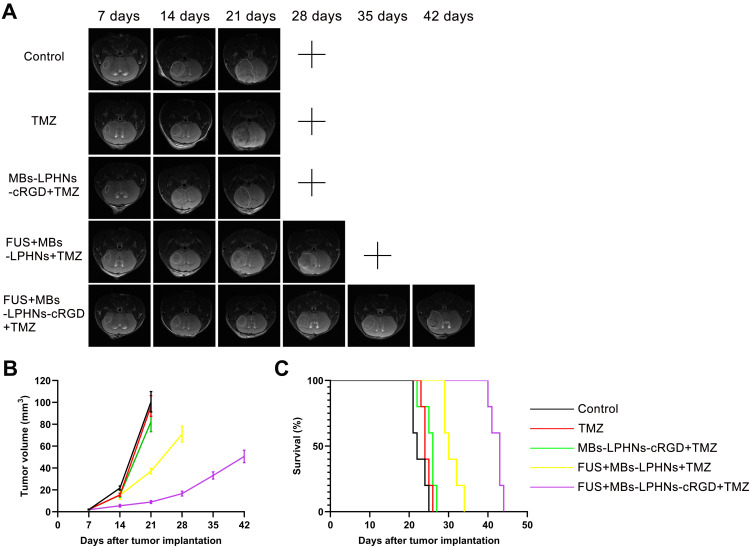
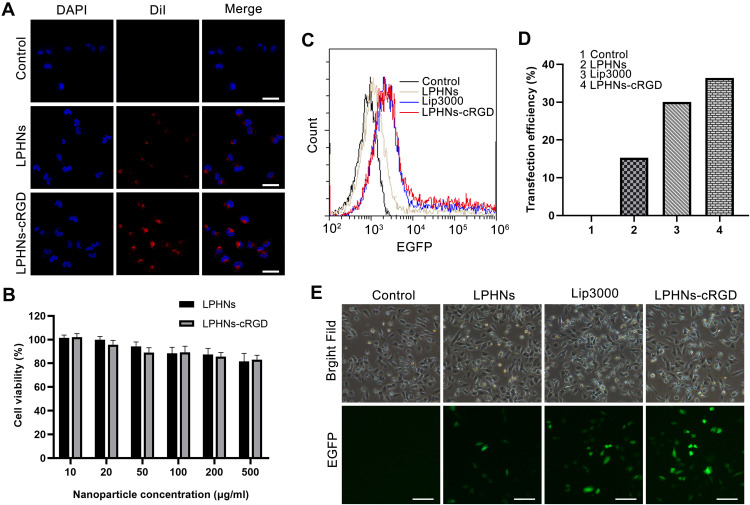
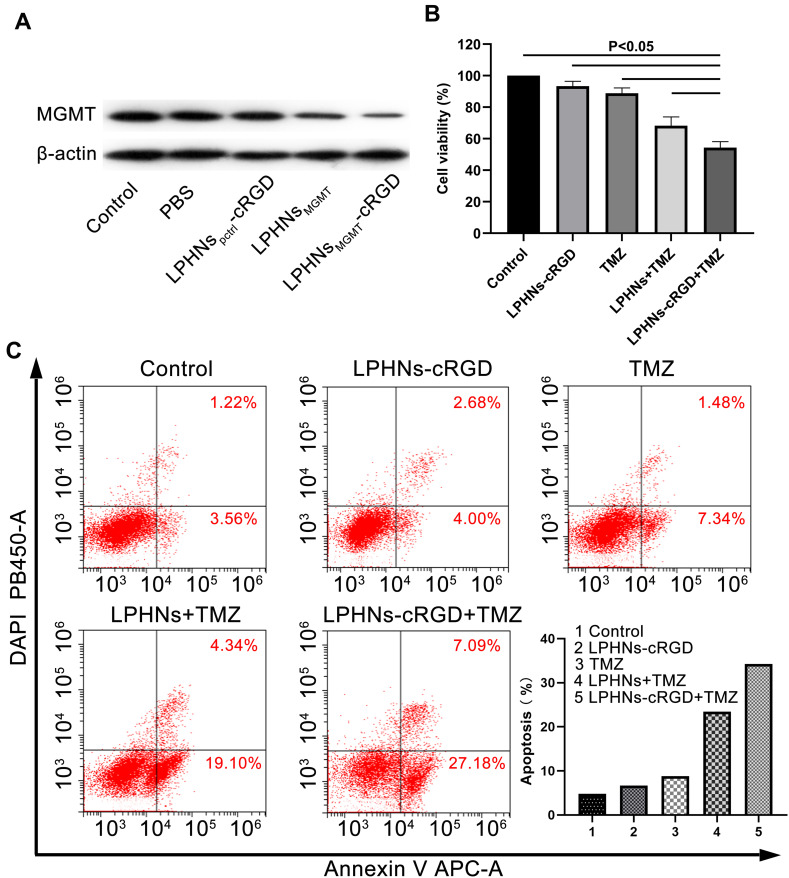
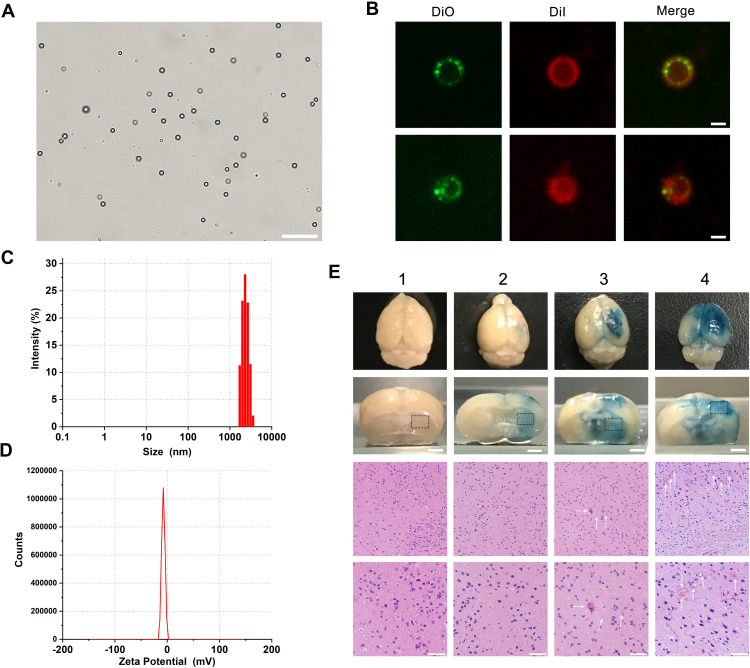
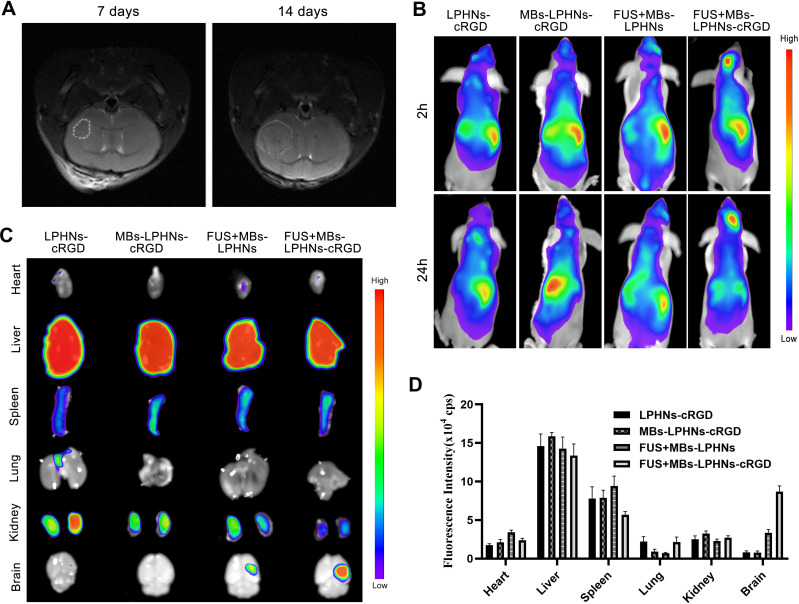
The gene-loaded LPHNs-cRGD were successfully synthesized and could protect pCas9/MGMT from enzyme degradation. LPHNs-cRGD could target GBM cells and mediate the transfection of pCas9/MGMT to downregulate the expression of MGMT, resulting in an increased sensitivity of GBM cells to TMZ. MBs-LPHNs-cRGD complexes could safely and locally increase the permeability of the BBB with FUS irradiation in vivo and facilitated the accumulation of nanoparticles at the tumor region in orthotopic tumor-bearing mice. Furthermore, the FUS-assisted MBs-LPHNs-cRGD enhanced the therapeutic effects of TMZ in glioblastoma, inhibited tumor growth, and prolonged survival of tumor-bearing mice, with a high level of biosafety.
In this work, we constructed LPHNs-cRGD for targeting delivery of the CRISPR/Cas9 system, in combination with FUS-MBs to open the BBB. The MBs-LPHNs-cRGD delivery system could be a potential alternative for efficient targeting gene delivery for the treatment of glioblastoma.
胶质母细胞瘤(GBM)的治疗一直极具挑战性,不仅因为存在血脑屏障(BBB),还因为易产生药物耐药性。最近,成簇规律间隔短回文重复(CRISPR)相关蛋白 9(CRISPR/Cas9)彻底改变了基因编辑技术,能够治疗多种遗传性疾病,包括人类肿瘤,但体内缺乏安全有效的靶向递送系统,尤其是在中枢神经系统(CNS)中。
构建了用于有效靶向递送针对 O6-甲基鸟嘌呤-DNA 甲基转移酶(MGMT)的 CRISPR/Cas9 质粒的脂质-聚合物混合纳米颗粒(LPHNs-cRGD),MGMT 是替莫唑胺(TMZ)的耐药基因。聚焦超声(FUS)-微泡(MBs)用于非侵入性和局部打开 BBB,以进一步促进体内胶质母细胞瘤的基因递送。在体外和体内评估了基因编辑效率和药物敏感性变化。
成功合成了载基因的 LPHNs-cRGD,可保护 pCas9/MGMT 免受酶降解。LPHNs-cRGD 可以靶向 GBM 细胞并介导 pCas9/MGMT 的转染,下调 MGMT 的表达,从而增加 GBM 细胞对 TMZ 的敏感性。MBs-LPHNs-cRGD 复合物可在体内通过 FUS 照射安全且局部增加 BBB 的通透性,并促进纳米颗粒在原位荷瘤小鼠肿瘤区域的积累。此外,FUS 辅助的 MBs-LPHNs-cRGD 增强了 TMZ 在胶质母细胞瘤中的治疗效果,抑制了肿瘤生长,延长了荷瘤小鼠的生存时间,且具有较高的生物安全性。
在这项工作中,我们构建了用于靶向递送 CRISPR/Cas9 系统的 LPHNs-cRGD,并结合 FUS-MBs 打开 BBB。MBs-LPHNs-cRGD 递送系统可能是治疗胶质母细胞瘤的高效靶向基因递送的潜在替代方案。